From Policy Change to Action: Why Timing Matters in Insurance
We’ve heard people in mortgage servicing use verification and tracking as if they’re interchangeable, and honestly, for a lot of daily work, treating them that way doesn’t break anything.


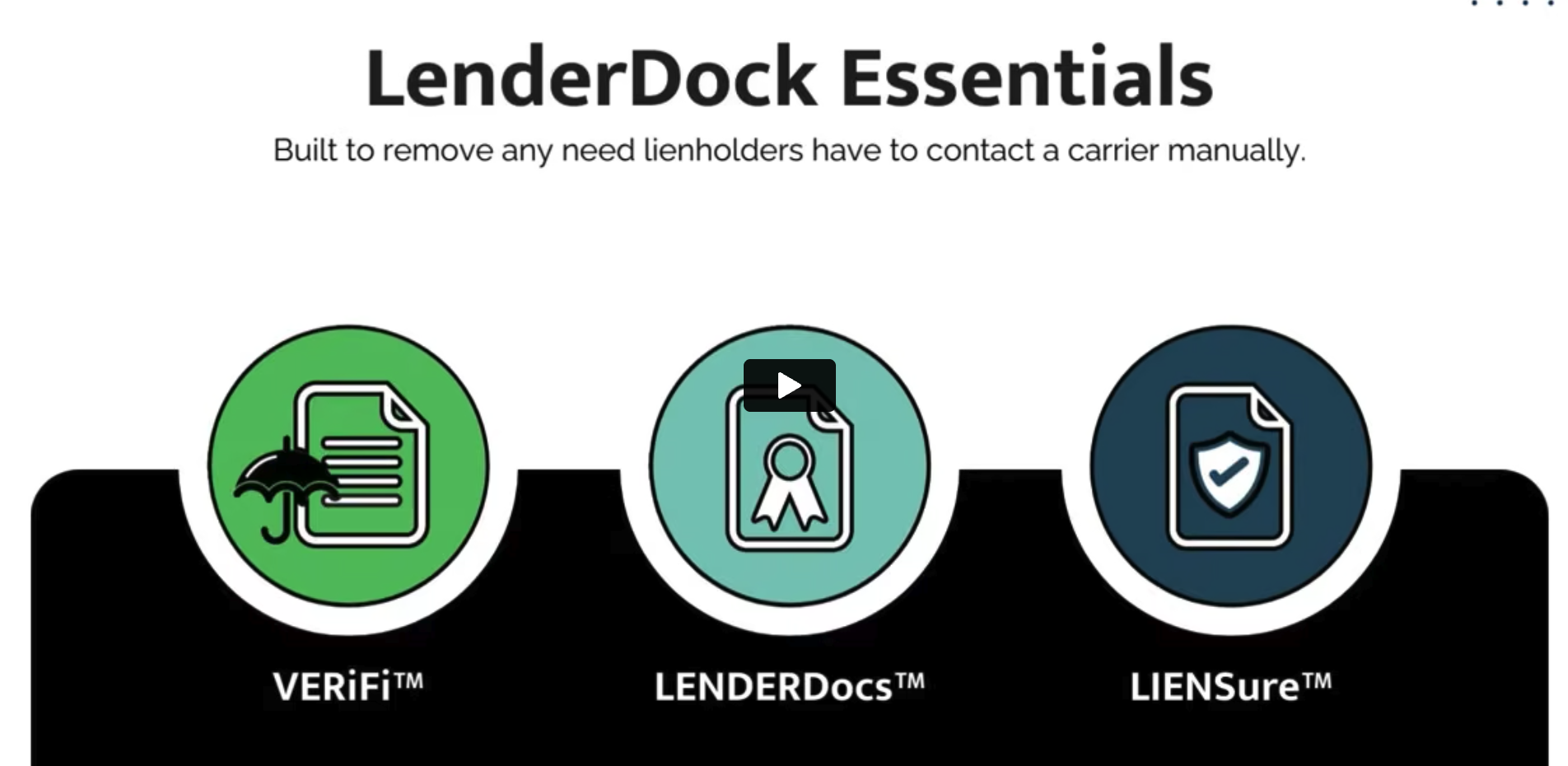
LenderDock provides real-time, insurance policy details through its magical web portal or its APIs.

LIENSure sends corrections digitally, straight from the financial source of truth and in bulk for easy processing.

ESCROWPay verifies what’s actually due before the money moves, then sends the payment and reconciliation data digitally.

NOTiFi delivers required policy, coverage, and billing notices in the formats lienholders actually use
At least check out the genesis of LenderDock Video. It’ll all make sense, the eco-system, that is.
Learn more about our great leadership team and our amazing, people-first, company culture.
There’s a lot going on at LenderDock and in our industries. We threw it all here to make it easier to keep up.
We go to a lot of events and we love to eat. See our calendar of where we’ll be.
New webinars will be coming quite frequently. Educational, success, and sales.
Top corporate priorities in 2024 will include innovation, digital acceleration, and cybersecurity. These will also influence how life insurers will approach their fintech investments. Technology leaders at life and annuity companies, both individually and collectively, are closely assessing how their business and investment objectives mesh with their IT requirements, as reported in the Celent research Dimensions: Life Insurance IT Pressures & Priorities 2024: North American Edition. The following highlights findings from a survey conducted among chief information officers of life insurance companies.
Growth is still impacting IT spending overall, and insurers are optimistic about the industry’s state. This trend shows that the industry is embracing tech investments as a catalyst for success, demonstrating that it has not just recovered from the economic hardships faced in the years following the pandemic. Insurance companies are concentrating on cost containment and reduction at the same time, which means that there is more control over expenditure than there was during the previous three years.
The goal of insurers is to achieve a balance between innovation (pursuing new technologies) and legacy (maintaining basic systems). A little under half of IT spending is allocated to the upkeep and improvement of current systems, both new and old. Additionally, insurers are putting their recent investments into practice.
It is evident that the insurance business is pursuing a dual-purpose investment strategy to uphold established institutions and take advantage of the disruptive opportunities presented by new technologies. The distribution of an IT budget across the primary activities—greenfield projects, innovation, and transformation, deploying new and upgraded systems, and maintenance and upkeep of existing ones—depends on the company’s size (small, midsize, or large).
North American life insurers’ IT spending has returned to pre-pandemic levels, indicating a reduction in IT budgets and an emphasis on cost management in comparison to the preceding three years. Chief information officers are closely reviewing IT spending and how it fits with priorities and economic conditions after years of digital investments.
While 2023 IT budgets were lower than 2022 budgets, most insurers anticipate raising their 2024 budgets; nonetheless, one-third of insurers plan to either cut or freeze their budget. The average predicted increase for insurers of all sizes is expected to be 8.9% this year, with an average budget of 4.6% of premiums expected by 2024.
Many budgetary resources are going toward improving and implementing recent purchases. Most CIOs’ expenditures are devoted to sustaining their present systems.
Some notable points are as follows:
Cybersecurity is one notable area where spending has surged. Cybersecurity has risen from fourth place to the top this year, with spending being driven mostly by this priority. Today, over 90% of insurers rank cybersecurity as a major or high concern, mostly because of the increasing risks posed by ransomware and computer breaches. The amount of the budget allocated to cybersecurity in 2023 (6.9%) does not commensurate with the importance of tackling cyber hazards, notwithstanding the claimed priority. According to Celent’s projection, the amount spent on cybersecurity would rise by 8.6% in 2024 as insurers search for the right instruments to combat emerging risks. To completely stop the ever-evolving cyber threats, nothing has been successful. There will be a need for additional investment.
Large language models (LLMs) and generative artificial intelligence (GenAI), though they have been a hot topic for the past year, are not yet being actively employed by life insurers in North America, but many of them plan to use them and are developing use cases for them. While just 5% of respondents claimed that GenAI/LLM technologies are now being produced, 75% stated that they had budgeted for GenAI/LLM projects that are either planned for 2024 or are already in the research stage. This suggests that these technologies are being actively pursued.
In life insurance, the areas where GenAI and LLMs are regarded to be most valuable are customer experience (CX), onboarding, marketing, code development, servicing and operations, underwriting, and rating. Two AI application cases that are now being used in many different industries are automated data science pipelines and speech-to-text processing. Relatively speaking, based on reports, the AI use case that the property and casualty insurance side of the business is now adopting the most is geographical analysis or picture recognition. This demonstrates how AI technologies and use cases that are most suited for their specific needs are being adopted by the insurance sector.
The ease of access to the data, the quality of the data, the data/information repositories, and the auditability of the data are all factors that insurers must carefully consider as they prepare to adopt GenAI use cases. Ensuring the data is viable for GenAI activities and addressing any shortcomings requires well-thought-out plans for data infrastructure and governance.
To meet their immediate and long-term requirements, insurers must carefully consider their investments in technology, whether it be new or old. Successful implementations will require a strategic evaluation of fast shifting factors, ranging from the possibility of AI-driven solutions to the impact of cyber threats.
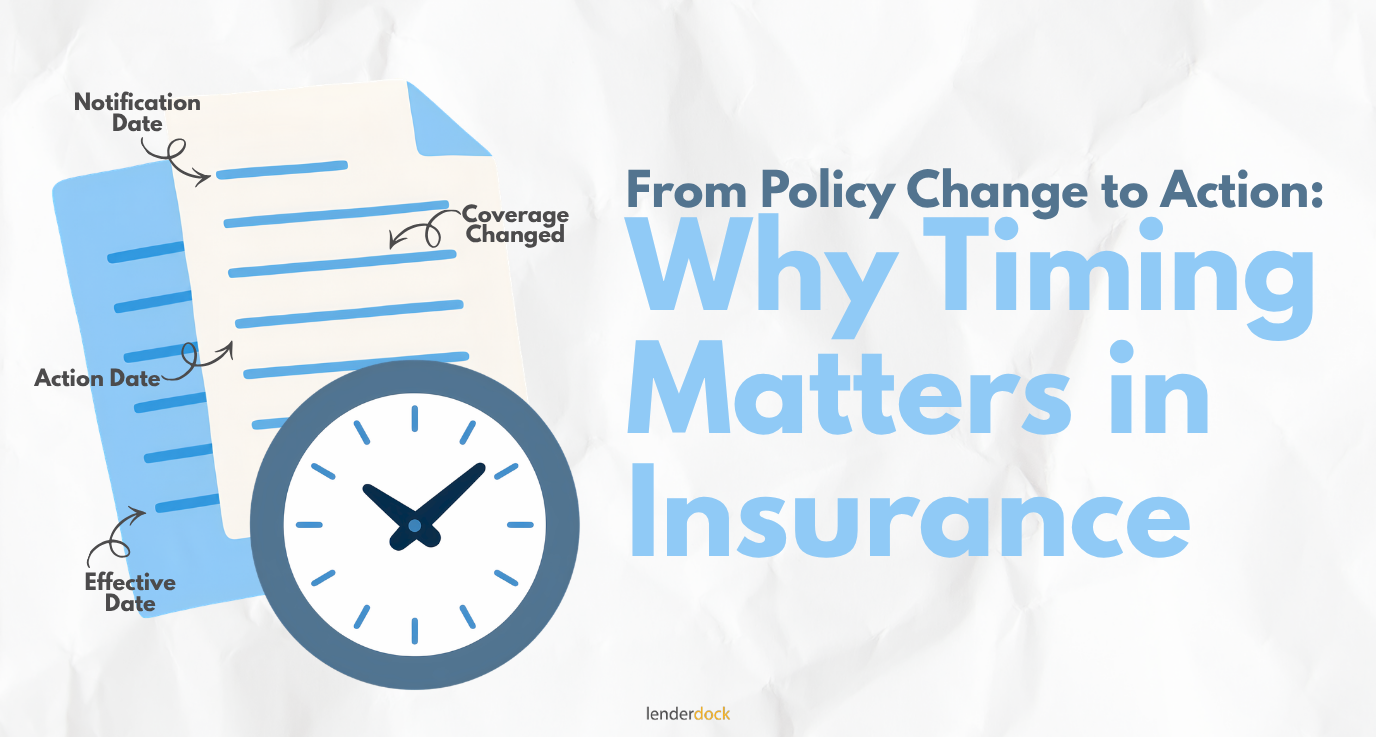
We’ve heard people in mortgage servicing use verification and tracking as if they’re interchangeable, and honestly, for a lot of daily work, treating them that way doesn’t break anything.
A two-day lag between a policy change and everyone finding out about it used to be annoying, not dangerous. Someone made a call, waited, got an answer, and moved on with their day.

We’ve heard people in mortgage servicing use verification and tracking as if they’re interchangeable, and honestly, for a lot of daily work, treating them that way doesn’t break anything.

Insurance verification is a routine part of the lending and insurance process. A lender needs to know whether a policy is active. A mortgage servicer may need to confirm coverage or mortgagee information. An insurance…
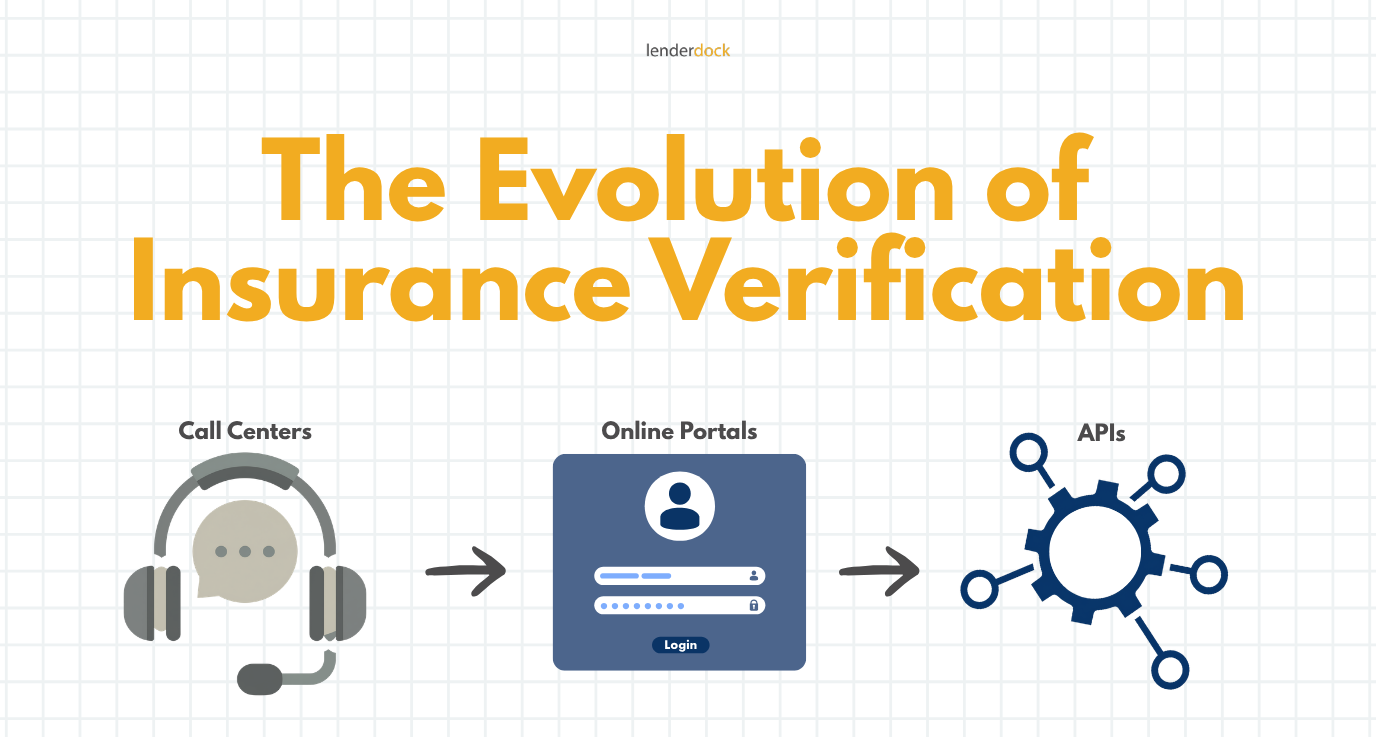
In the earliest version of insurance verification, the person answering the phone actually had to know things. They pulled a physical file, checked handwriting against a ledger, and made a judgment call about whether what…
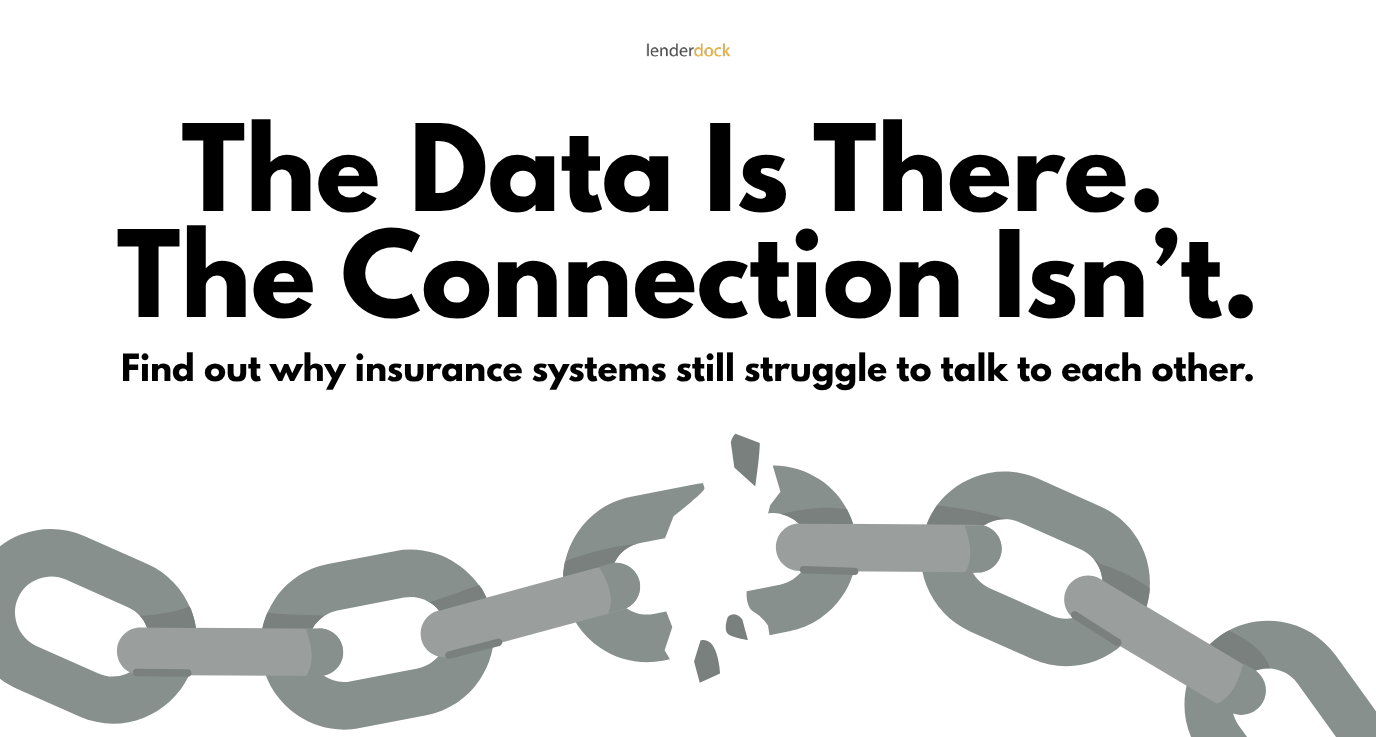
Two insurers can each have perfectly accurate, well-maintained policy databases and still fail to exchange a single piece of usable data between them.
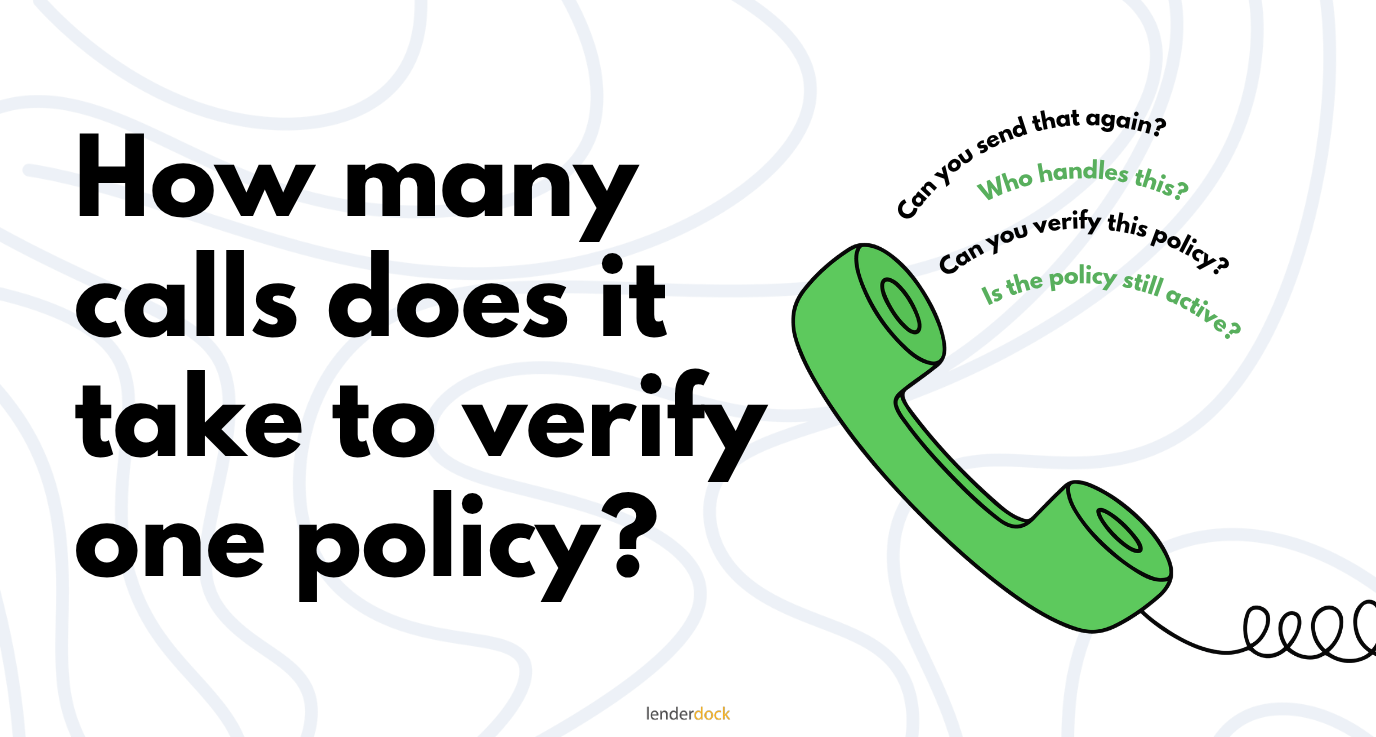
Every single day, insurance workers face a mountain of simple questions. Are they tired of answering the same questions about policy coverage all day long? Yes, they are. When banks or lenders need to check…
A title company closing a home sale needs to confirm the seller’s policy is active before the deal can move. An auto lender needs the same thing before releasing funds on a car loan. A…
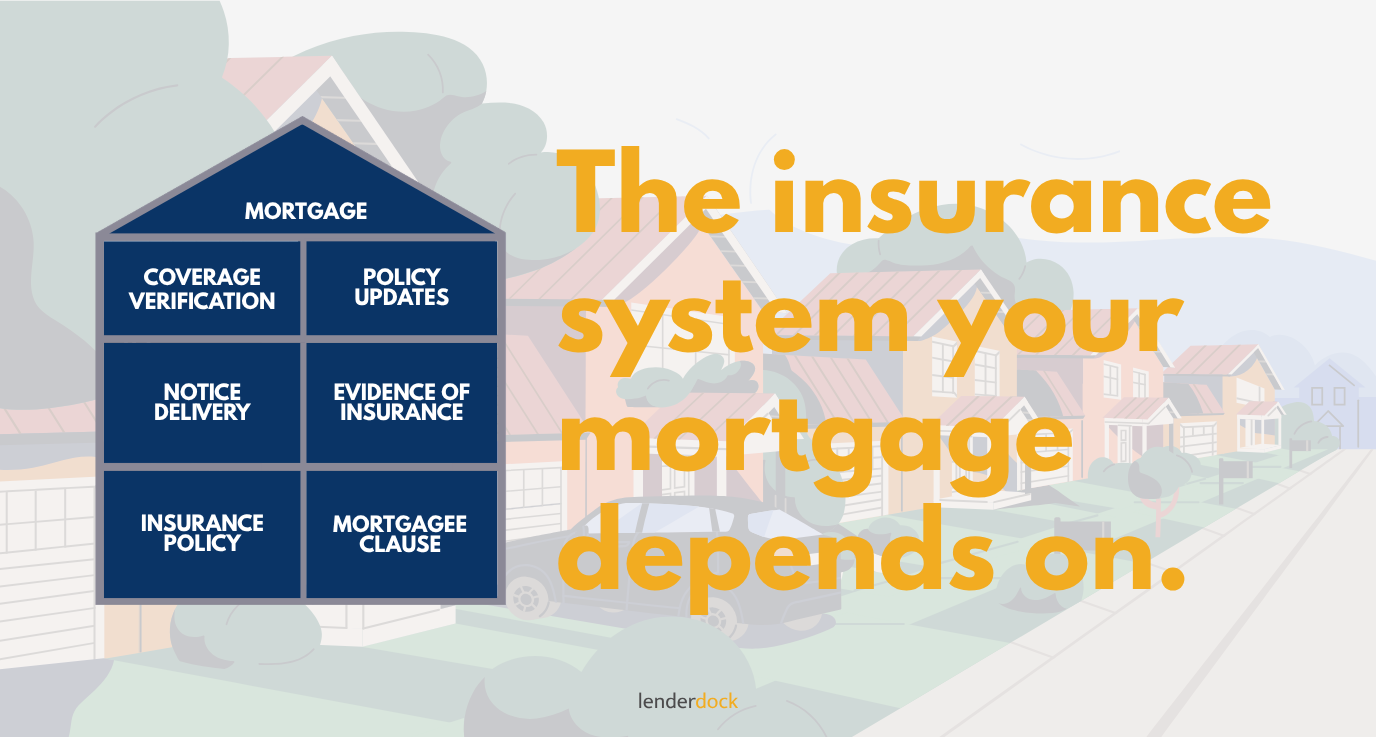
Most people who take out a mortgage never think about insurance as part of the loan itself. It feels adjacent, a separate purchase, something the lender requires but does not really participate in beyond checking…
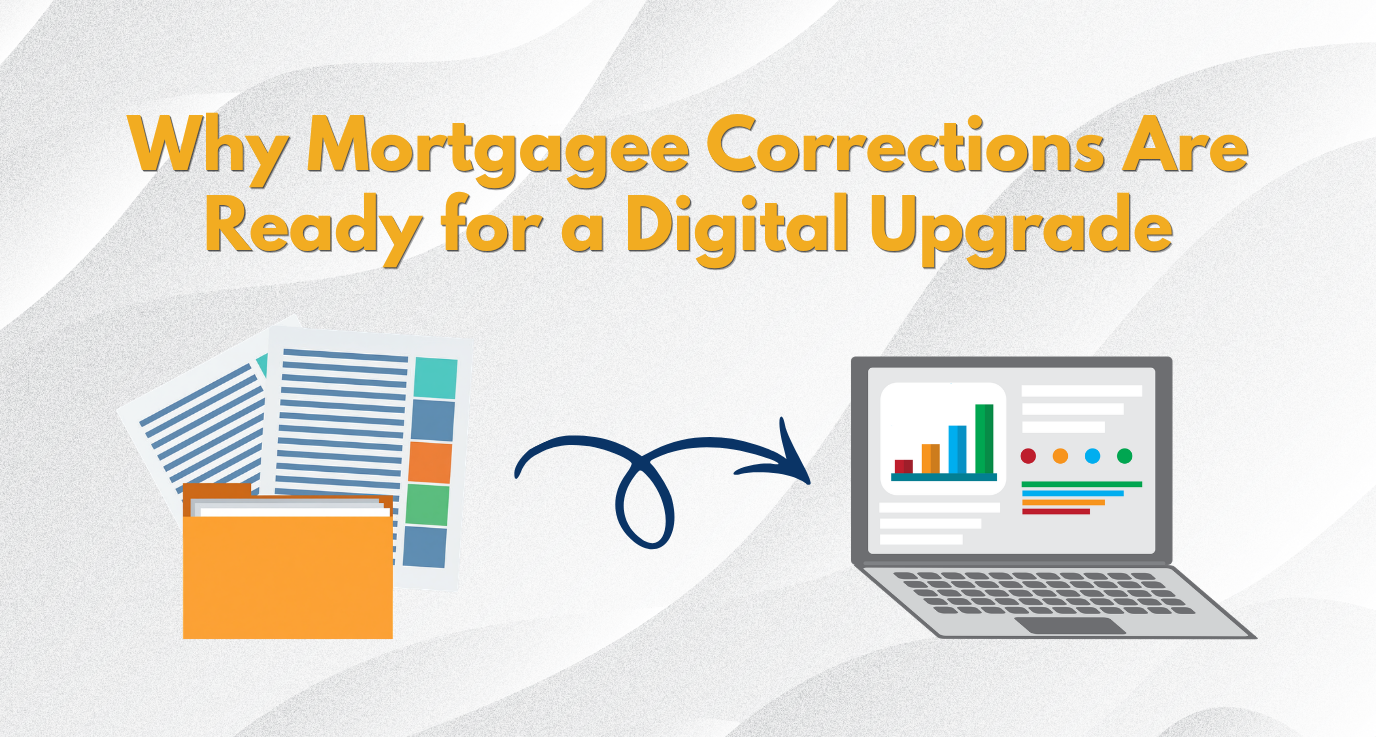
Mortgagee corrections are a routine part of insurance servicing, but the process behind them is often anything but simple. A lender may find that the mortgagee’s name or address on a policy is out of…


We consectetur adipiscing elit tempor incididunt ut labore. Wondering ipsum dolor sit amet? We consectetur adipiscing ipsum nulla glavrida elit tempor incididunt.