From Policy Change to Action: Why Timing Matters in Insurance
We’ve heard people in mortgage servicing use verification and tracking as if they’re interchangeable, and honestly, for a lot of daily work, treating them that way doesn’t break anything.


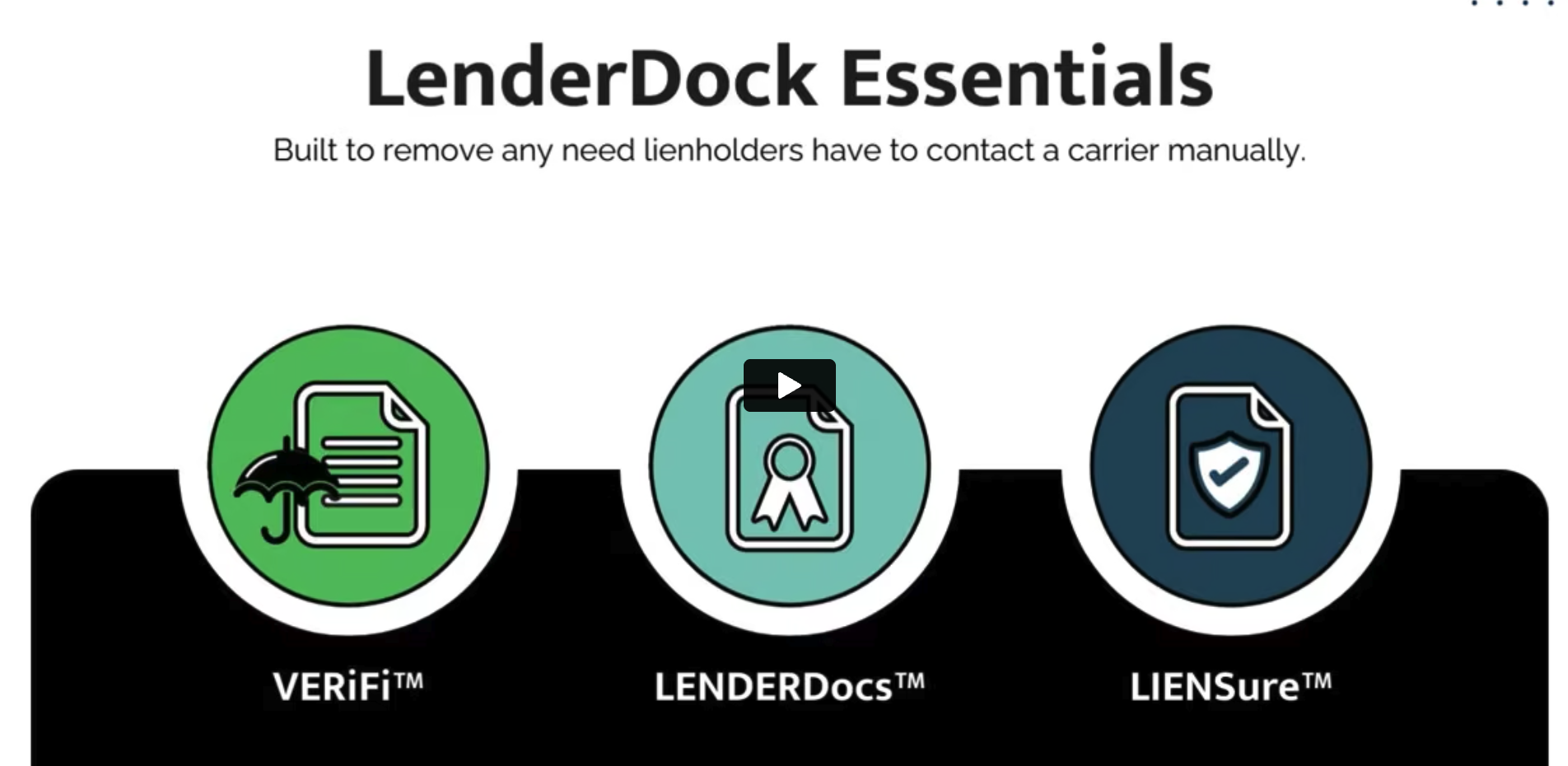
LenderDock provides real-time, insurance policy details through its magical web portal or its APIs.

LIENSure sends corrections digitally, straight from the financial source of truth and in bulk for easy processing.

ESCROWPay verifies what’s actually due before the money moves, then sends the payment and reconciliation data digitally.

NOTiFi delivers required policy, coverage, and billing notices in the formats lienholders actually use
At least check out the genesis of LenderDock Video. It’ll all make sense, the eco-system, that is.
Learn more about our great leadership team and our amazing, people-first, company culture.
There’s a lot going on at LenderDock and in our industries. We threw it all here to make it easier to keep up.
We go to a lot of events and we love to eat. See our calendar of where we’ll be.
New webinars will be coming quite frequently. Educational, success, and sales.
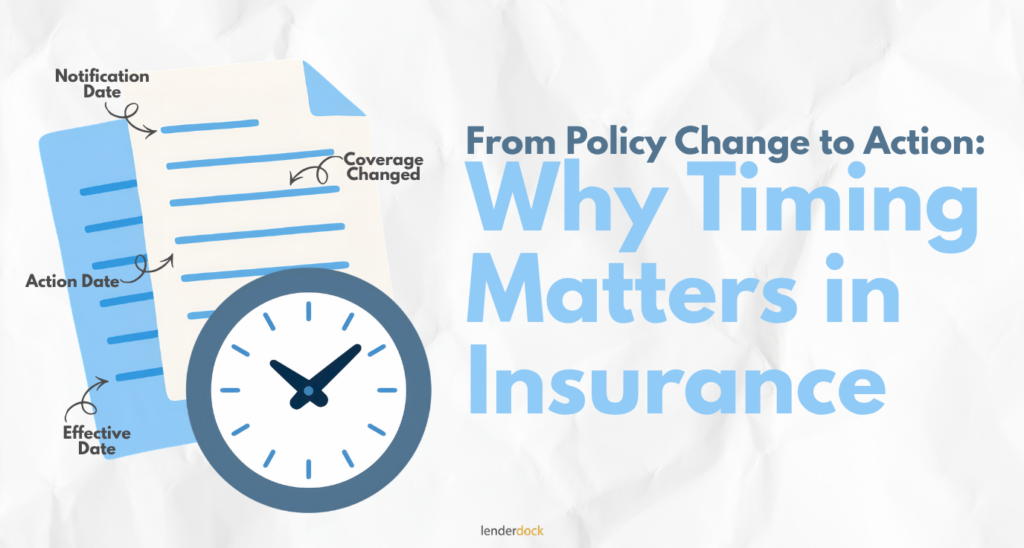
When an insurer cancels a policy, the lender named on it gets some amount of time to respond, though the lender has very little say over how much. That depends on when the word reaches them, which might be the next day or might be weeks later when it happens to turn up in an audit.
For a mortgage servicer, the date a notification arrives probably matters more than what it says. What it says is usually simple (the policy ended; here is the effective date), but the date it lands decides how many days are left to call the borrower and find out what happened before anything gets charged or escalated.
Regulation X sets out part of that timing on the force-placed side. Before charging a borrower for force-placed insurance, a servicer must send a first written notice at least 45 days in advance, then a reminder at least 30 days after the first and at least 15 days before any charge, giving the borrower time to provide proof that coverage exists.
The servicer also needs a reasonable basis to believe coverage has lapsed before any of that starts, so the 45 days can’t begin until the servicer knows something. If a cancellation takes eight days to reach them, those eight days go by with a coverage question hanging over the property and the lender unaware of it.
The same rule works in the other direction as well. Once a servicer receives evidence that the borrower had compliant coverage in place, it has 15 days to cancel the force-placed policy and refund any overlapping premium.
A reinstatement or a new policy that reaches the servicer quickly can head off the charge in the first place, whereas one that arrives late ends up as a refund, and a borrower who wants to know why they were billed.
Lapses for a missed premium behave differently from outright cancellations, since some of them get fixed if someone raises it in time. The insurer’s billing system sees the missed payment right away, and the cause can be as ordinary as an expired card, so a call from the lender can sometimes do more good than waiting for the cancellation notice and dealing with what follows.
Non-renewals give the lender the most room, at least on paper. States generally require insurers to give advance notice before declining to renew a homeowners policy (the length varies by state), and that window is the borrower’s time to find a replacement.
A servicer that learns when the notice goes out can reach out while the borrower still has options. One that learns two weeks before expiry is in a different spot, especially where several carriers have been pulling back from homeowners’ business. Replacement policies are harder to find or cost a lot more.
Coverage changes get noticed the latest, mostly because they rarely look urgent. A higher deductible or a dropped endorsement can leave a property under what the loan agreement requires, and the lender usually finds out during a claim or a review, at about the same time the borrower does.
Faster notice does not fix everything. A servicer that knows on day one still has to reach the borrower, who might not answer or might assume the new insurer already took care of it, and an earlier call only helps if somebody picks up.
Last but not least, it also adds volume. More alerts arrive, and some resolve on their own a couple of days later (a lapse that gets reinstated, for example), so a team receiving everything instantly still has to decide which ones are worth a call, and getting that information sooner does nothing to make that decision easier.
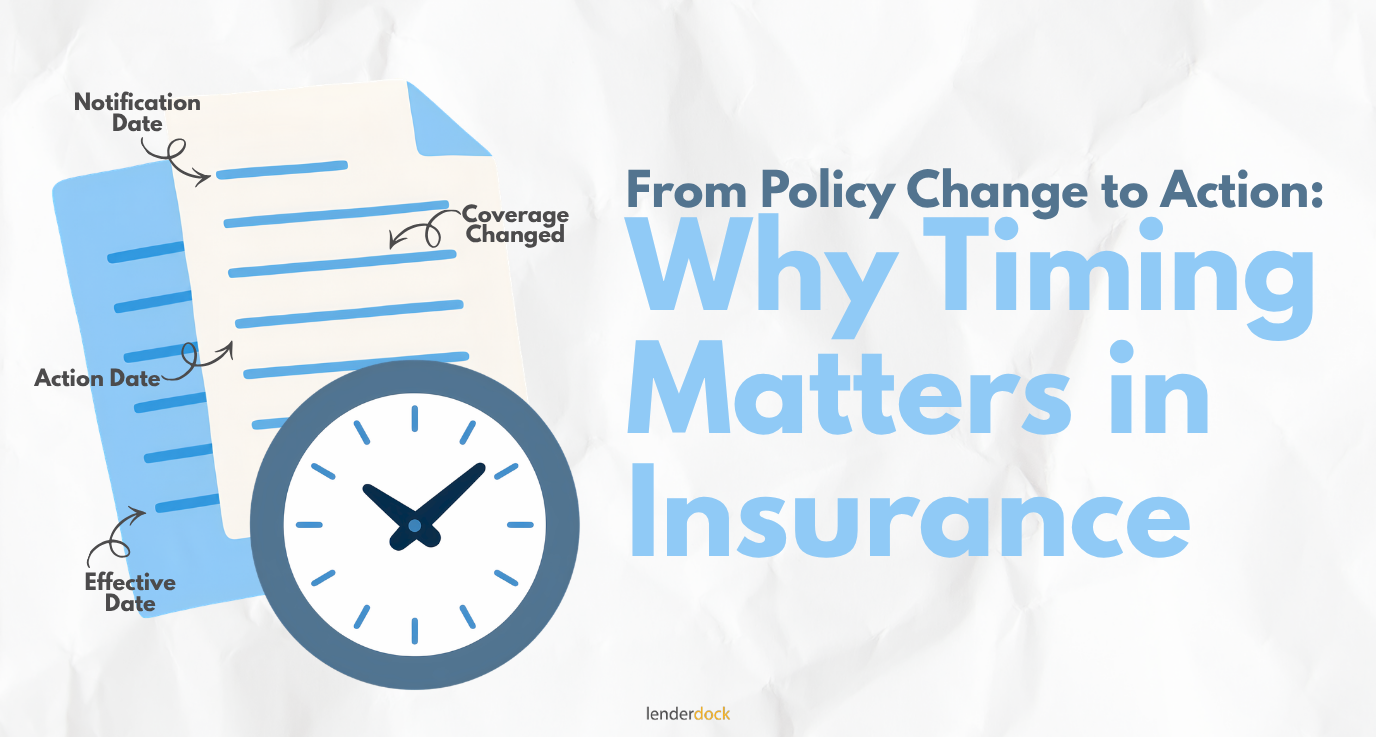
We’ve heard people in mortgage servicing use verification and tracking as if they’re interchangeable, and honestly, for a lot of daily work, treating them that way doesn’t break anything.
A two-day lag between a policy change and everyone finding out about it used to be annoying, not dangerous. Someone made a call, waited, got an answer, and moved on with their day.

We’ve heard people in mortgage servicing use verification and tracking as if they’re interchangeable, and honestly, for a lot of daily work, treating them that way doesn’t break anything.
Insurance verification is a routine part of the lending and insurance process. A lender needs to know whether a policy is active. A mortgage servicer may need to confirm coverage or mortgagee information. An insurance…

In the earliest version of insurance verification, the person answering the phone actually had to know things. They pulled a physical file, checked handwriting against a ledger, and made a judgment call about whether what…

Two insurers can each have perfectly accurate, well-maintained policy databases and still fail to exchange a single piece of usable data between them.
Every single day, insurance workers face a mountain of simple questions. Are they tired of answering the same questions about policy coverage all day long? Yes, they are. When banks or lenders need to check…
A title company closing a home sale needs to confirm the seller’s policy is active before the deal can move. An auto lender needs the same thing before releasing funds on a car loan. A…
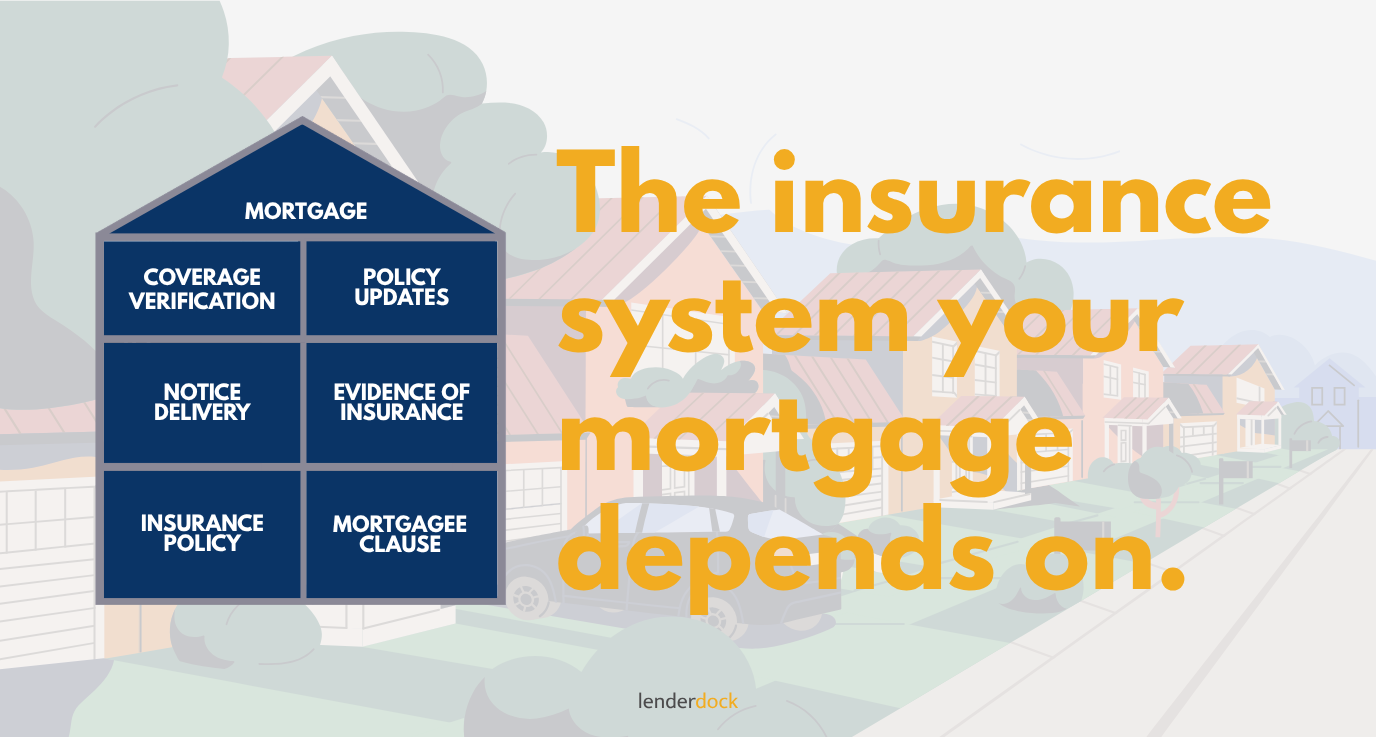
Most people who take out a mortgage never think about insurance as part of the loan itself. It feels adjacent, a separate purchase, something the lender requires but does not really participate in beyond checking…
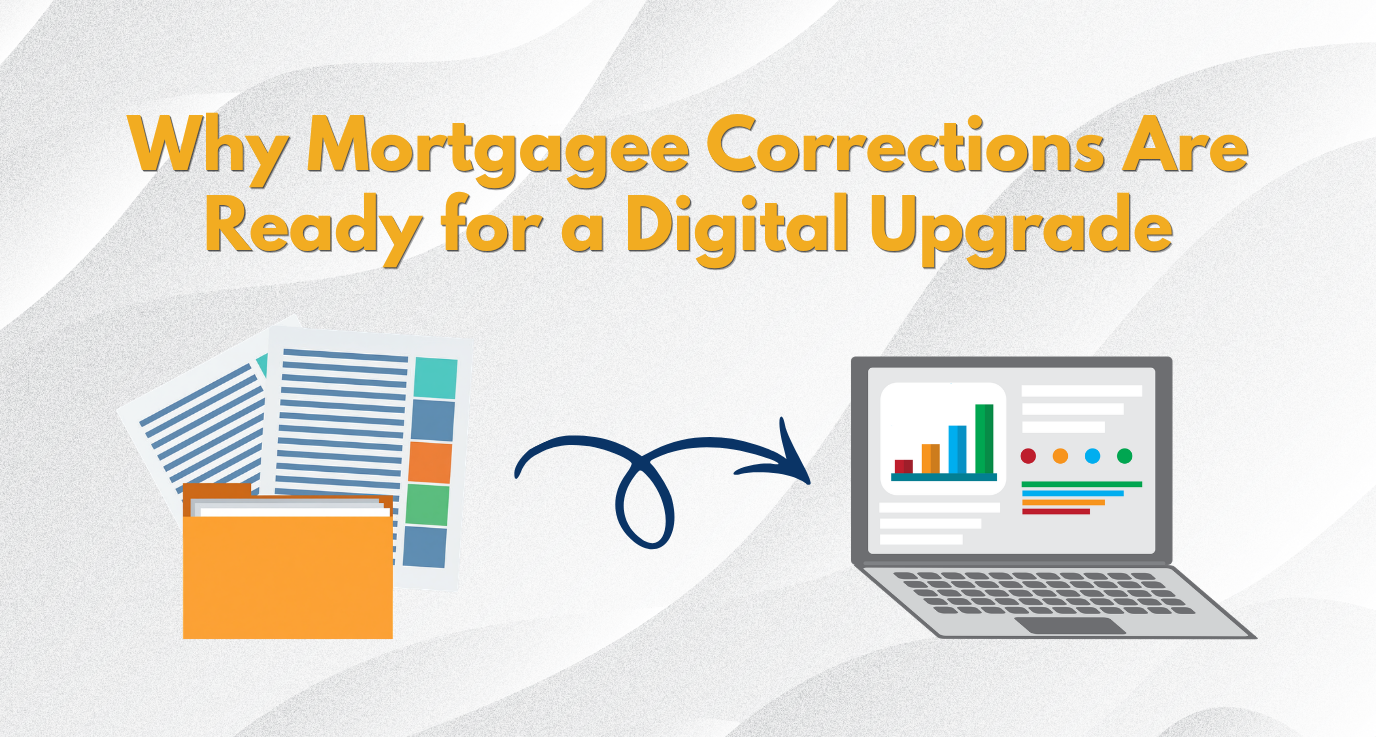
Mortgagee corrections are a routine part of insurance servicing, but the process behind them is often anything but simple. A lender may find that the mortgagee’s name or address on a policy is out of…


We consectetur adipiscing elit tempor incididunt ut labore. Wondering ipsum dolor sit amet? We consectetur adipiscing ipsum nulla glavrida elit tempor incididunt.