From Policy Change to Action: Why Timing Matters in Insurance
We’ve heard people in mortgage servicing use verification and tracking as if they’re interchangeable, and honestly, for a lot of daily work, treating them that way doesn’t break anything.


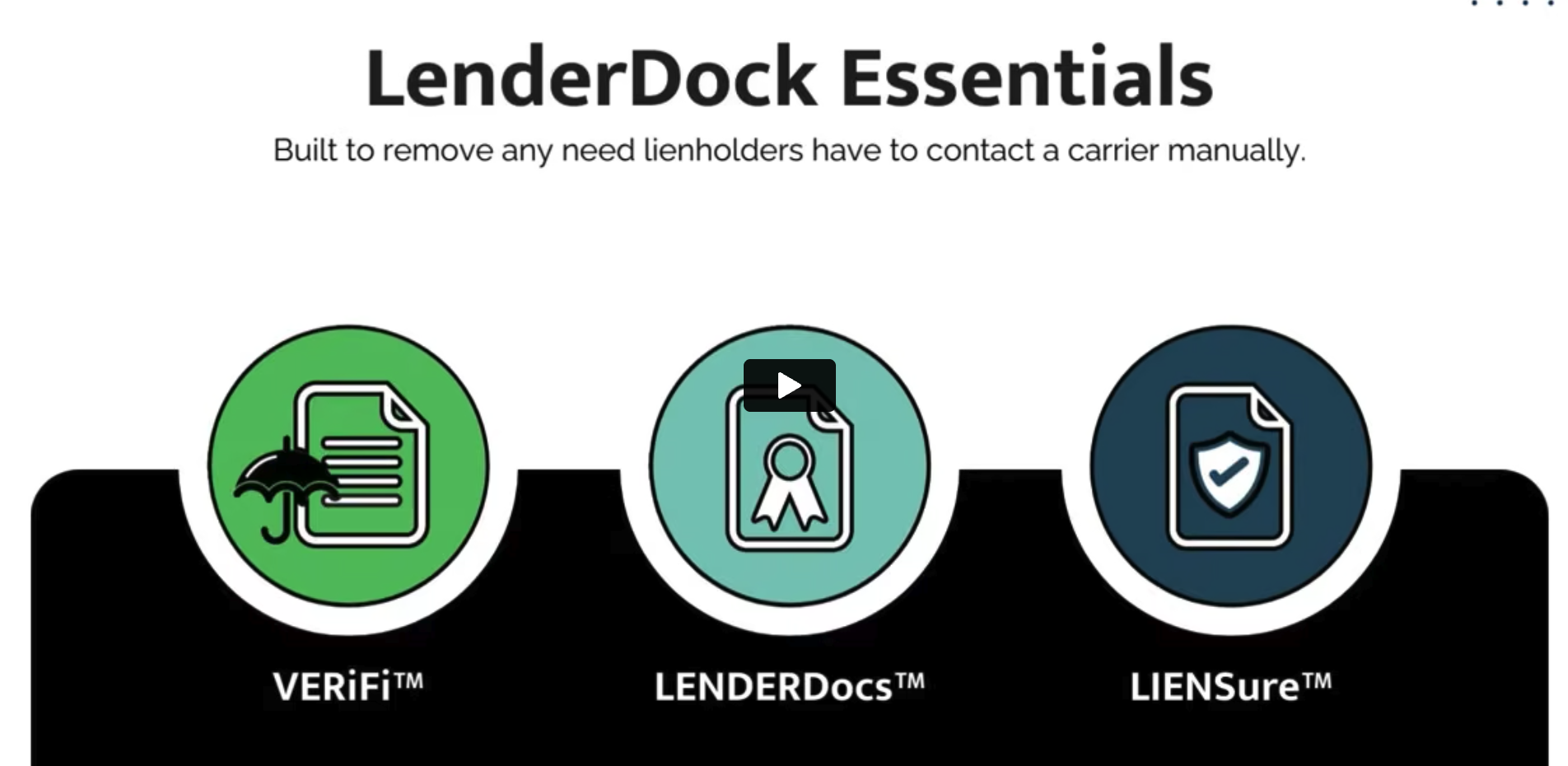
LenderDock provides real-time, insurance policy details through its magical web portal or its APIs.

LIENSure sends corrections digitally, straight from the financial source of truth and in bulk for easy processing.

ESCROWPay verifies what’s actually due before the money moves, then sends the payment and reconciliation data digitally.

NOTiFi delivers required policy, coverage, and billing notices in the formats lienholders actually use
At least check out the genesis of LenderDock Video. It’ll all make sense, the eco-system, that is.
Learn more about our great leadership team and our amazing, people-first, company culture.
There’s a lot going on at LenderDock and in our industries. We threw it all here to make it easier to keep up.
We go to a lot of events and we love to eat. See our calendar of where we’ll be.
New webinars will be coming quite frequently. Educational, success, and sales.
In today’s unpredictable environment, spreadsheets have become an overwhelming and imprecise way to manage risk. This approach is prone to mistakes due to the manual effort needed for its upkeep.
Despite the abundance of sophisticated technology-based solutions like RMIS software, risk managers continue to rely on legacy strategies such as spreadsheets due to their hectic workloads. This is illustrated in a 2018 survey which revealed that 60% still use spreadsheet tools while only 10% depend on integrated data management systems.
In this era of unforgiving risk terrain, spreadsheets are no longer up to the task. Instead, risk professionals face an uphill burden by trying to keep track of plenty of spreadsheets with little assurance that the data is accurate.
Rather than relying on outdated methods, industry professionals should seek out innovative solutions that can maximize efficiencies and provide valuable data analytics. With these tools at their disposal, they’ll be able to gain deeper insights into their operations for better decision-making capabilities.
The function of spreadsheets
Spreadsheets have been designed to aggregate data and serve as a repository for information retrieval. While this was initially related to risk management efforts, the nature of risk scrutiny has further developed over time due to internal and external forces. This is exacerbated by the fact that changes in the global risk landscape during only these last ten years are significant.
Spreadsheets are becoming an antiquated tool for businesses and their risk management teams, hindering them from achieving success.
In 2023, how much will using spreadsheets cost you?
Utilizing spreadsheets can be dangerous due to the following reasons:
Harness the power of a risk management platform
By harnessing the power of technology, organizations can streamline their insurance and risk management efforts to enhance efficiency.
Take “Company A,” an automotive brand, for example. In the past year, this company has witnessed the advantages of digitizing its insurance process firsthand. Before digitally transforming their system, Company A’s insurance and risk department depended on spreadsheets with various data sources as well as employees’ personal knowledge to determine which information was traceable, what processes were in place, and the history behind existing details.
Company A identified the shortcomings and risks involved with its current system and decided that it was essential to retrieve all pertinent data from multiple sources and compile them into a single RMIS structure.
By introducing its advanced software, Company A’s insurance and risk division were better able to control and take advantage of the data already at its disposal. Previously, most of the claims management had been done internally by a handful of third-party vendors; this resulted in an uncoordinated system that spanned several spreadsheets for policy administration as well. Fortunately, these scattered spreadsheets have now all been combined into one convenient platform – the new risk management software – thus allowing Company A to automate select assessment tasks quickly and seamlessly.
By leveraging an RMIS system and application programming interface (API) technology, Company A is able to collect data rapidly and effectively while also providing insights to insurers and other stakeholders in novel ways. This dependable, proficient, speedy platform allows the team at Company A to prioritize risk handling over administrative tasks so they can spend more time concentrating on what really matters.
NIP Group is a prime example of how AI-based insurance and risk management technology implementation can be successful through the use of spreadsheets. With such an abundance of data in over 25 different industries, their intricate claims demand required a solution that could not only meet their unique needs but also provide efficiency far beyond what simple spreadsheets could offer.
The company incorporated AI-based software to assist with data and claims management, devising a secure system that allowed for the tailored customization of hierarchies based on business needs. This was made possible by integrating an Extract/Load/Transfer (ELT) tool into the process in order to automate traditional spreadsheet operations, which are usually more linear.
By replacing the outdated spreadsheets of their data, NIP Group has harnessed the power of an AI-based insurance and risk management platform. Now they are able to access much more information than before, helping them gain a richer understanding while saving time! As a result, this new solution has enabled them to manage different lines of coverage and industries on one unified system.
Not only has this solution provided improved internal reporting and file management capabilities, but it now also offers greater capacity for managing comprehensive carrier reports and tower insurance company groups. Furthermore, the system can effortlessly abide by state banking regulations as well as provide accurate annual report data to relevant entities.
Unlock the potential of risk and claims software: discover the numerous benefits
By taking advantage of modern, AI-driven RMIS solutions available in the market today, companies can avoid having to rely solely on dated spreadsheets for data input and tracking. This legacy management technique carries inherent risks such as human error or misuse of risk managers’ proficiency.
By utilizing the appropriate software, businesses can minimize the risk of data breaches and errors, streamline their processes, and ultimately save time and money.
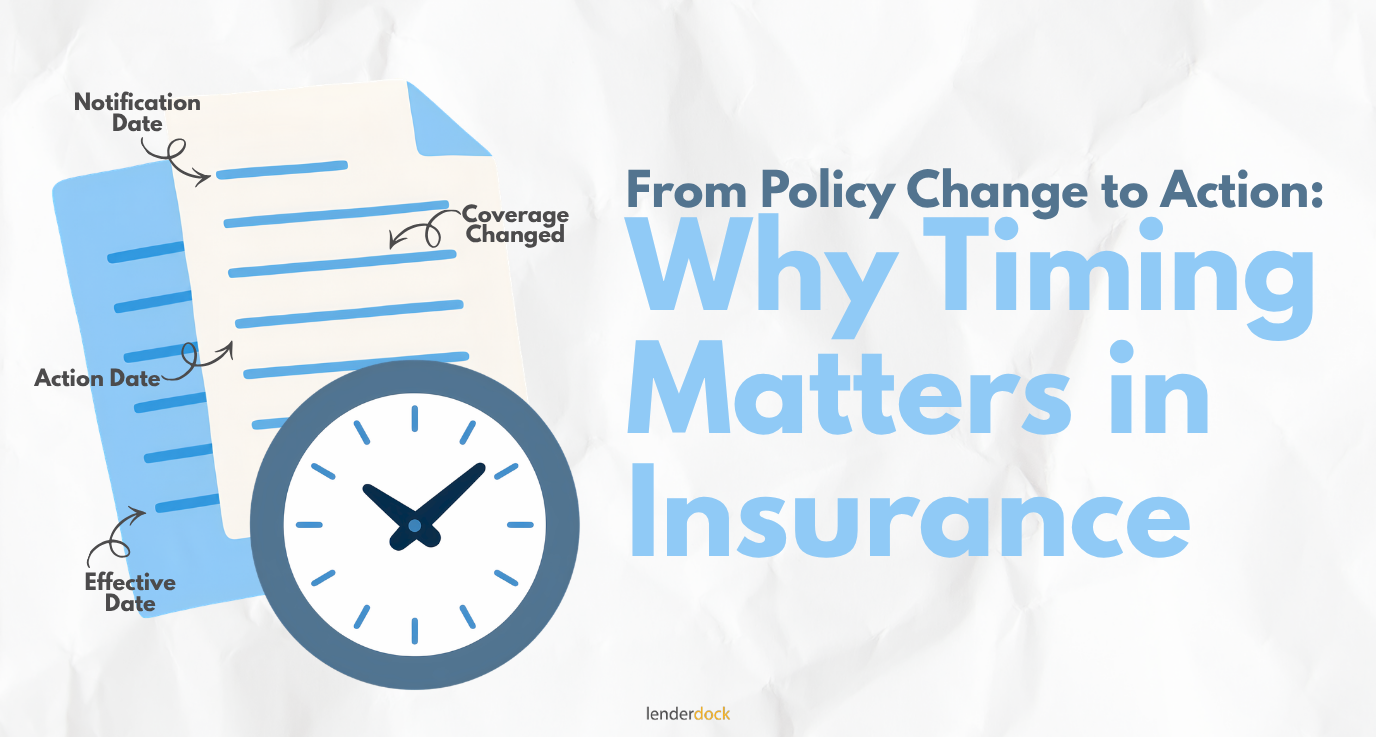
We’ve heard people in mortgage servicing use verification and tracking as if they’re interchangeable, and honestly, for a lot of daily work, treating them that way doesn’t break anything.
A two-day lag between a policy change and everyone finding out about it used to be annoying, not dangerous. Someone made a call, waited, got an answer, and moved on with their day.

We’ve heard people in mortgage servicing use verification and tracking as if they’re interchangeable, and honestly, for a lot of daily work, treating them that way doesn’t break anything.
Insurance verification is a routine part of the lending and insurance process. A lender needs to know whether a policy is active. A mortgage servicer may need to confirm coverage or mortgagee information. An insurance…
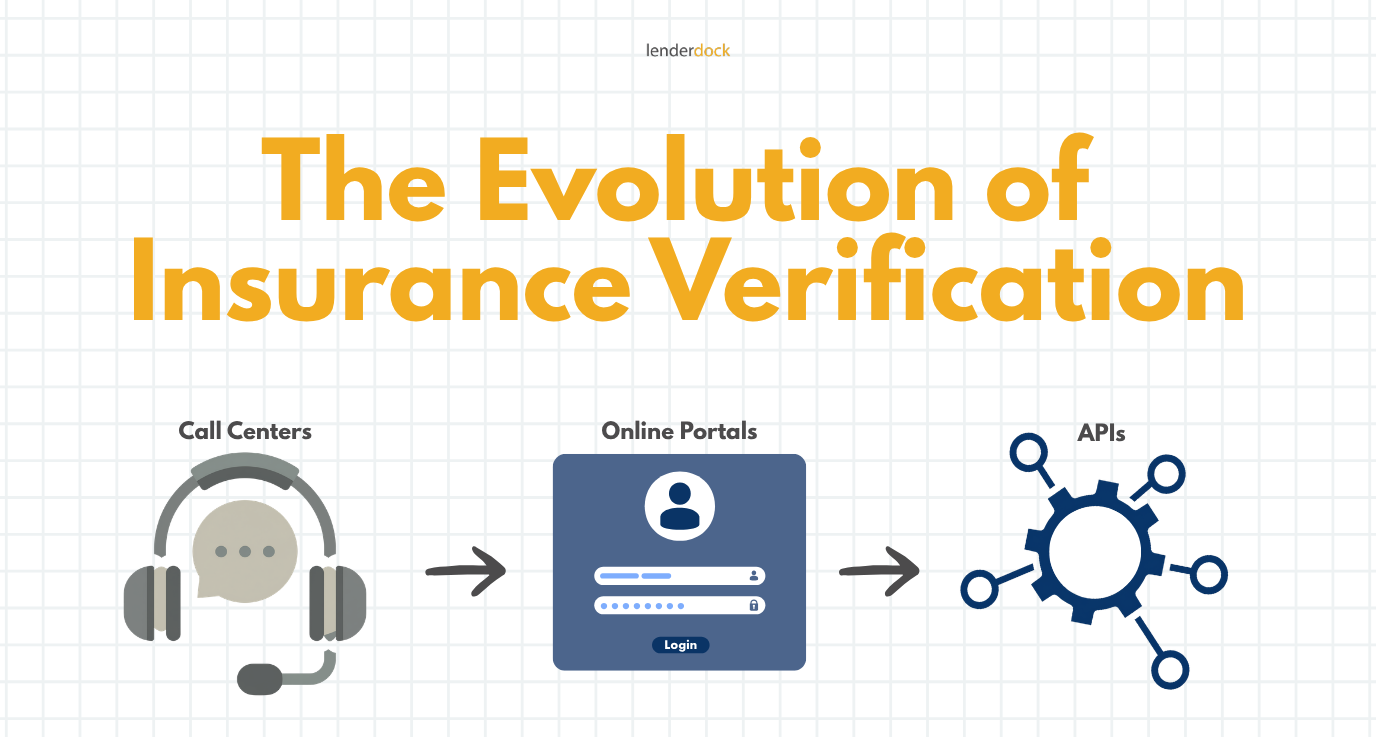
In the earliest version of insurance verification, the person answering the phone actually had to know things. They pulled a physical file, checked handwriting against a ledger, and made a judgment call about whether what…
Two insurers can each have perfectly accurate, well-maintained policy databases and still fail to exchange a single piece of usable data between them.
Every single day, insurance workers face a mountain of simple questions. Are they tired of answering the same questions about policy coverage all day long? Yes, they are. When banks or lenders need to check…
A title company closing a home sale needs to confirm the seller’s policy is active before the deal can move. An auto lender needs the same thing before releasing funds on a car loan. A…
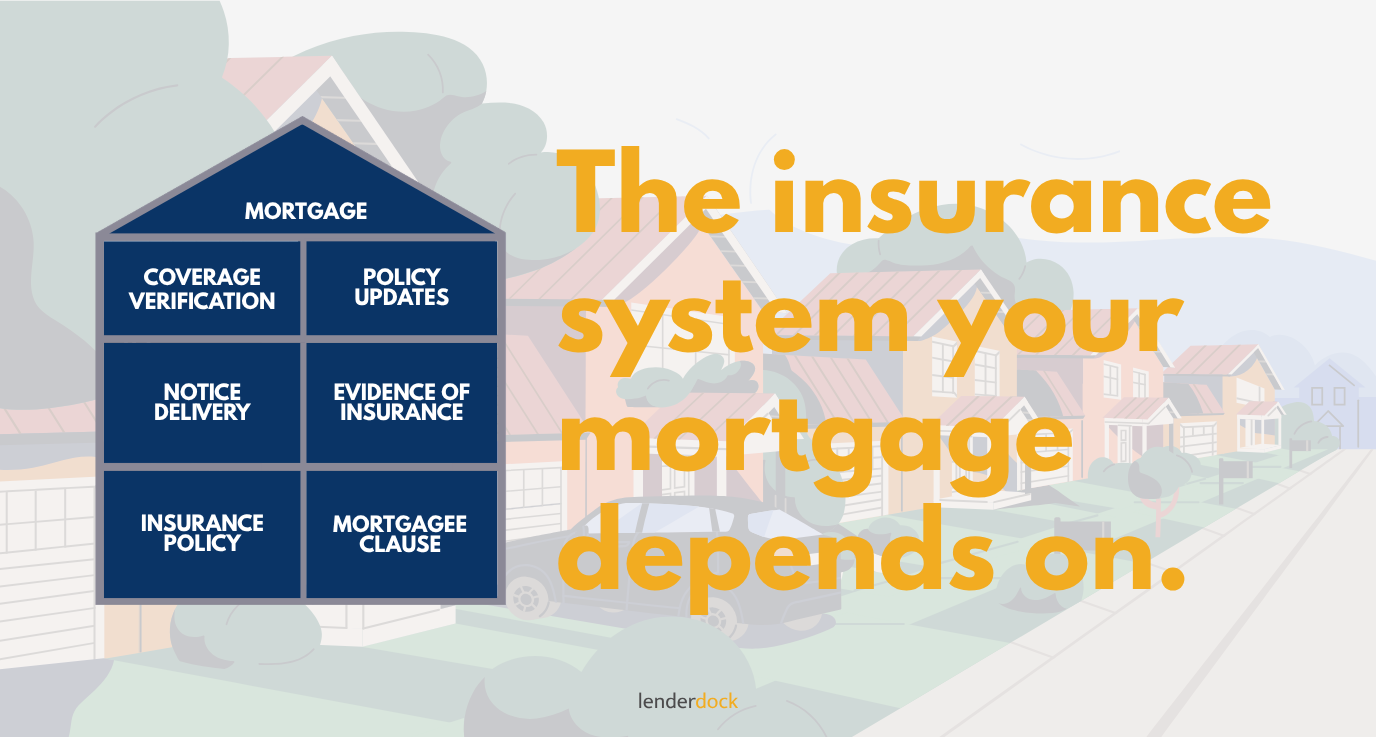
Most people who take out a mortgage never think about insurance as part of the loan itself. It feels adjacent, a separate purchase, something the lender requires but does not really participate in beyond checking…
Mortgagee corrections are a routine part of insurance servicing, but the process behind them is often anything but simple. A lender may find that the mortgagee’s name or address on a policy is out of…


We consectetur adipiscing elit tempor incididunt ut labore. Wondering ipsum dolor sit amet? We consectetur adipiscing ipsum nulla glavrida elit tempor incididunt.