From Policy Change to Action: Why Timing Matters in Insurance
We’ve heard people in mortgage servicing use verification and tracking as if they’re interchangeable, and honestly, for a lot of daily work, treating them that way doesn’t break anything.


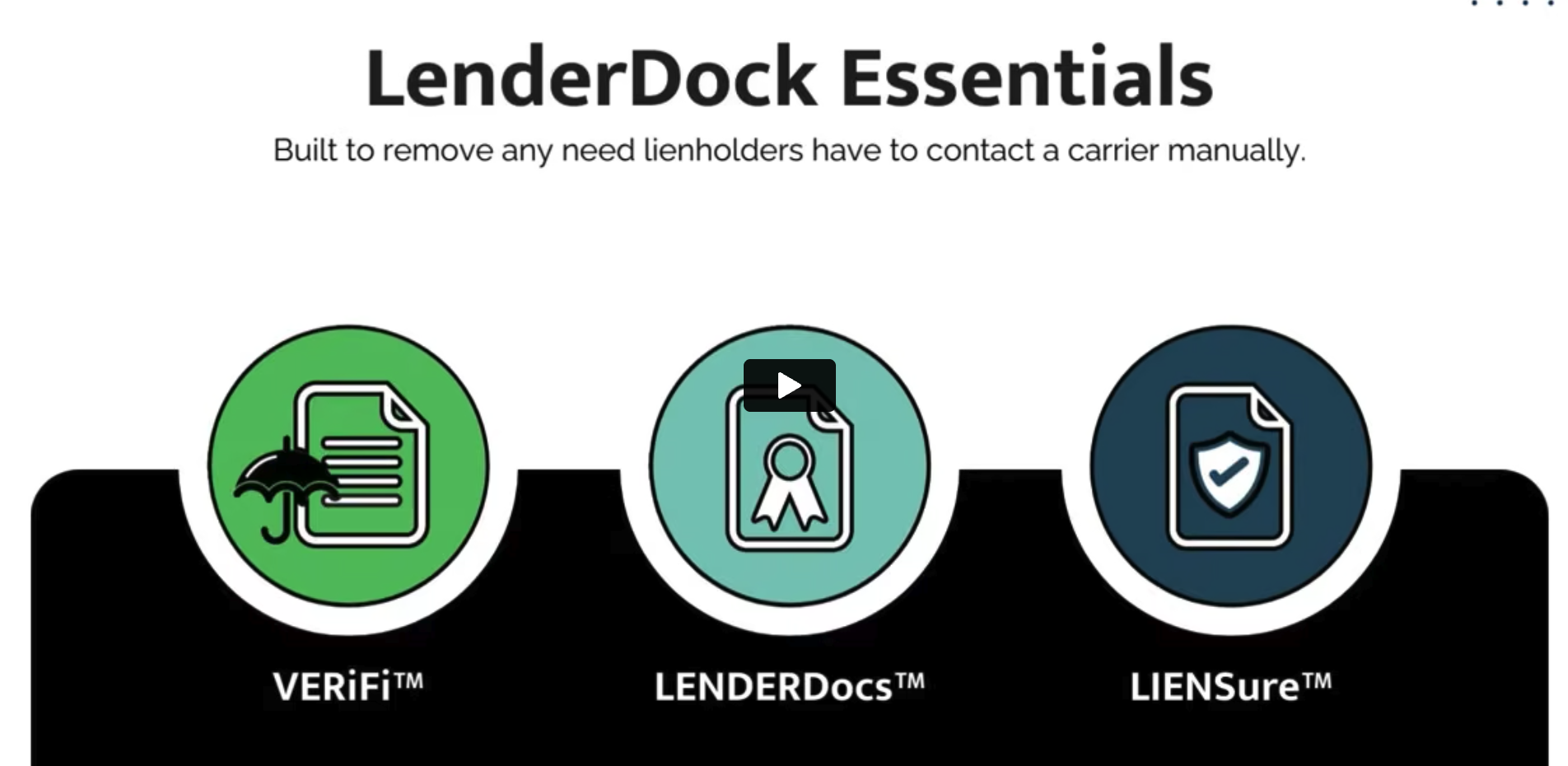
LenderDock provides real-time, insurance policy details through its magical web portal or its APIs.

LIENSure sends corrections digitally, straight from the financial source of truth and in bulk for easy processing.

ESCROWPay verifies what’s actually due before the money moves, then sends the payment and reconciliation data digitally.

NOTiFi delivers required policy, coverage, and billing notices in the formats lienholders actually use
At least check out the genesis of LenderDock Video. It’ll all make sense, the eco-system, that is.
Learn more about our great leadership team and our amazing, people-first, company culture.
There’s a lot going on at LenderDock and in our industries. We threw it all here to make it easier to keep up.
We go to a lot of events and we love to eat. See our calendar of where we’ll be.
New webinars will be coming quite frequently. Educational, success, and sales.
For most of the history of auto insurance, the price you paid had very little to do with how you actually drove.
Instead, it had to do with who you were. Your age, your zip code, your vehicle type, your claims history. These variables predicted risk well enough at a population level, which is how insurers think about pricing. Still, they said almost nothing about the individual behind the wheel on any given Tuesday morning.
A careful driver in a high-risk postcode paid more than they probably should have. A reckless driver with a clean record paid less than the exposure probably warranted. The pricing model was accurate in aggregate and imprecise for almost everyone it touched.
Telematics has since changed the unit of measurement. Instead of pricing the person as a statistical category, usage-based insurance prices the behavior, which is then recorded directly from the vehicle.
The data collected through telematics programs varies by insurer and product, but the core variables are fairly consistent.
Speed, and more specifically, how often a driver exceeds posted limits and by how much. Acceleration and braking patterns, which are reliable proxies for attentiveness and following distance. Time of day, since night driving and rush hour carry statistically higher risk than a midday trip on a clear road. Mileage, because a driver who covers 3,000 miles a year is simply exposed to fewer opportunities for a loss than one covering 15,000.
Some programs also monitor cornering behavior, phone use while driving, and, in newer implementations, road type and traffic conditions. The data is collected either through a plug-in device (most commonly through On-Board Diagnostics), a smartphone app, or through the vehicle’s own connected systems, which most cars manufactured in the last several years are already equipped to support.
The output is a driving score, updated regularly, that reflects actual behavior rather than demographic inference. For a driver whose habits are genuinely low-risk, the score translates into a lower premium than traditional pricing would have produced. For the right driver, that can be a real proposition.
The reasonable concern about telematics is not paranoid. Handing a continuous stream of location and behavior data to an insurance company is a meaningful act, and the implications extend beyond the premium calculation the insurer is using it for today.
The data exists. Once it exists, its use is governed by whatever the policy terms and the applicable data protection framework allow. Unfortunately, those boundaries have not always been as clear as they should be.
There have been cases where telematics data collected by insurers has been sought in legal proceedings, used in claims disputes in ways policyholders did not anticipate, or shared with third parties under terms that were disclosed but not prominently communicated at the point of sale.
However, the immediate concern for most drivers is far simpler. A telematics program that scores you lower for driving late at night is not distinguishing between driving home from a night shift and driving home after a poor decision. The algorithm does not know the difference (yet), and the premium reflects the pattern rather than the context.
A driver who scores well most of the time but has a period of higher mileage or changed routine during a job transition may see their score move in ways that feel disconnected from their actual risk level.
Telematics has done something structurally interesting to auto insurance pricing that goes beyond individual premiums. It has begun to separate the market by risk quality in a way that traditional rating factors could not cleanly achieve.
Safe drivers who opt into telematics programs tend to get cheaper cover. Drivers who opt out, or who opt in and score poorly, end up in a more adversely selected pool, putting upward pressure on standard pricing for everyone who remains in it.
We are not quite there yet. Even so, more vehicles are arriving with connectivity built in, which means more driving data is being generated whether insurers ask for it or not. That, and the question of how it gets used, will become harder to avoid.
The car already knows how you drive. The more interesting question is who else does, and what they are doing with it.
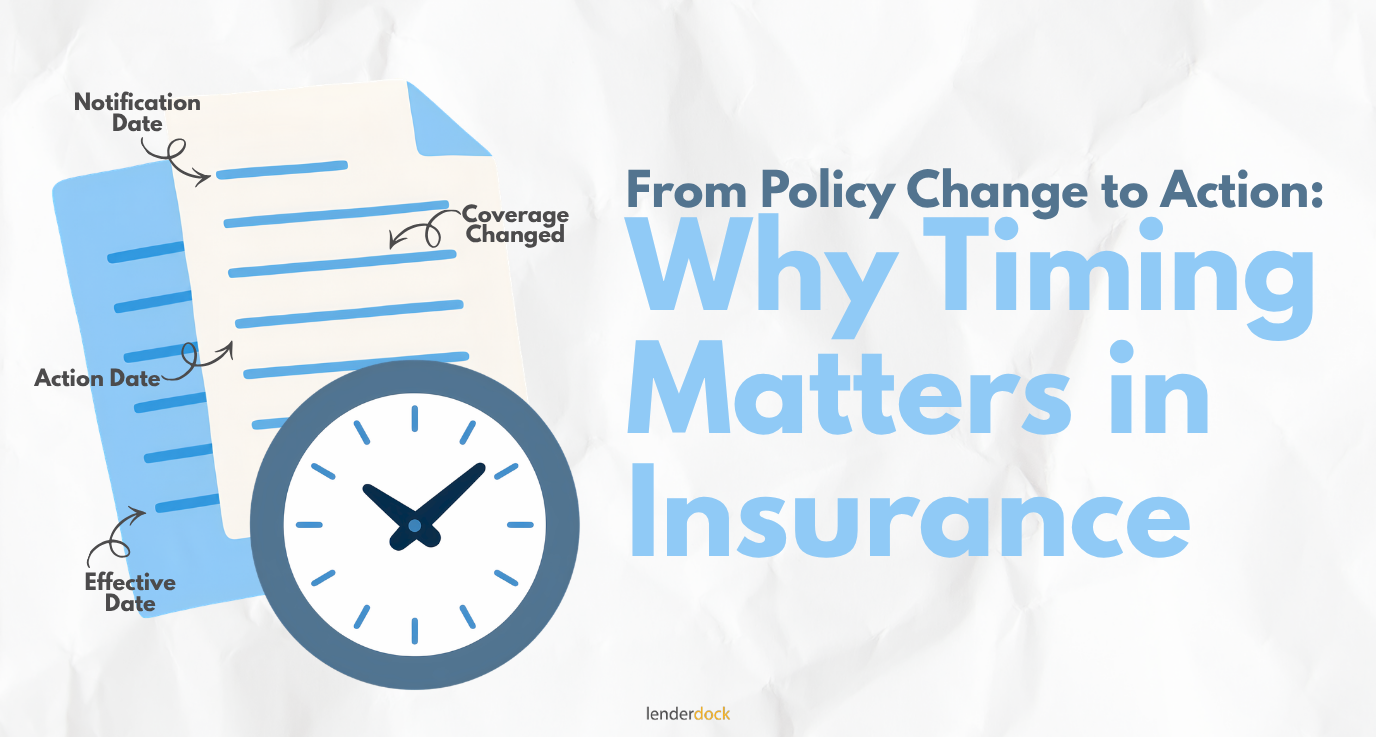
We’ve heard people in mortgage servicing use verification and tracking as if they’re interchangeable, and honestly, for a lot of daily work, treating them that way doesn’t break anything.
A two-day lag between a policy change and everyone finding out about it used to be annoying, not dangerous. Someone made a call, waited, got an answer, and moved on with their day.
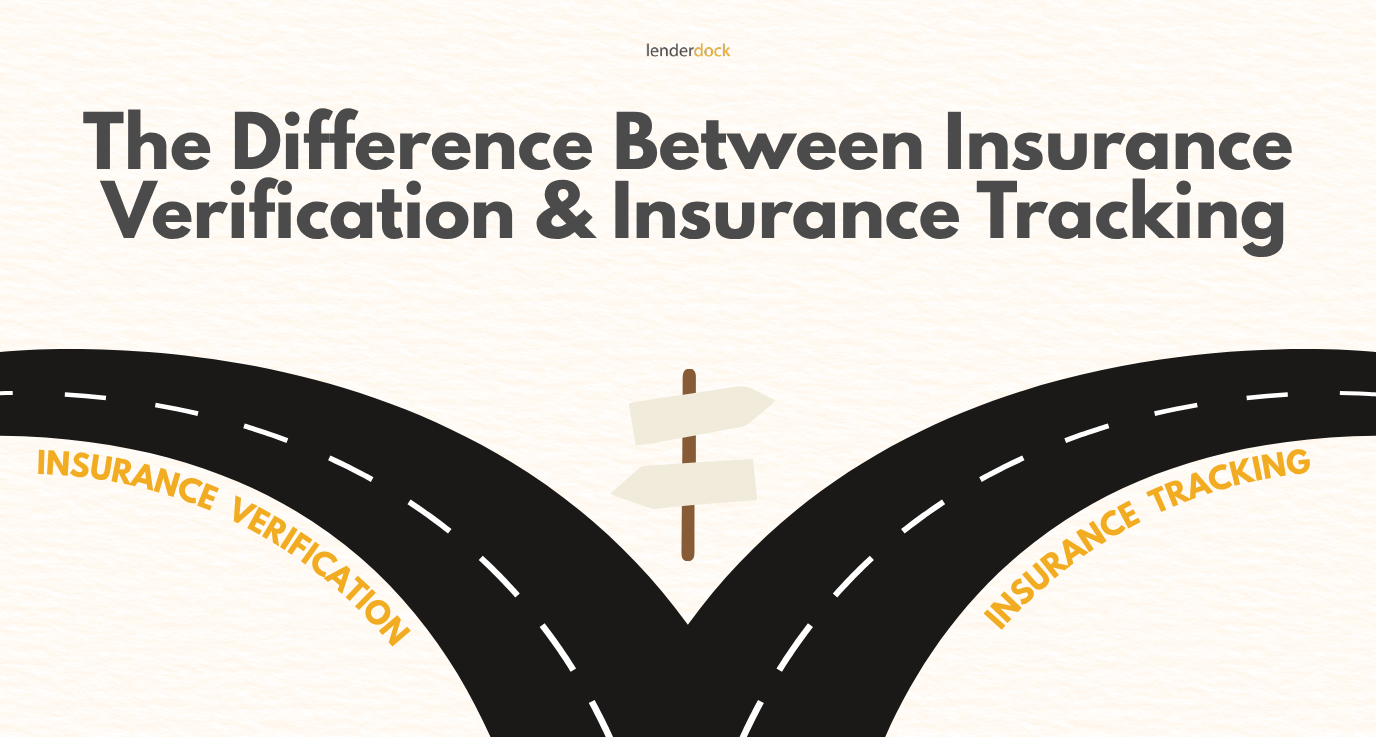
We’ve heard people in mortgage servicing use verification and tracking as if they’re interchangeable, and honestly, for a lot of daily work, treating them that way doesn’t break anything.
Insurance verification is a routine part of the lending and insurance process. A lender needs to know whether a policy is active. A mortgage servicer may need to confirm coverage or mortgagee information. An insurance…
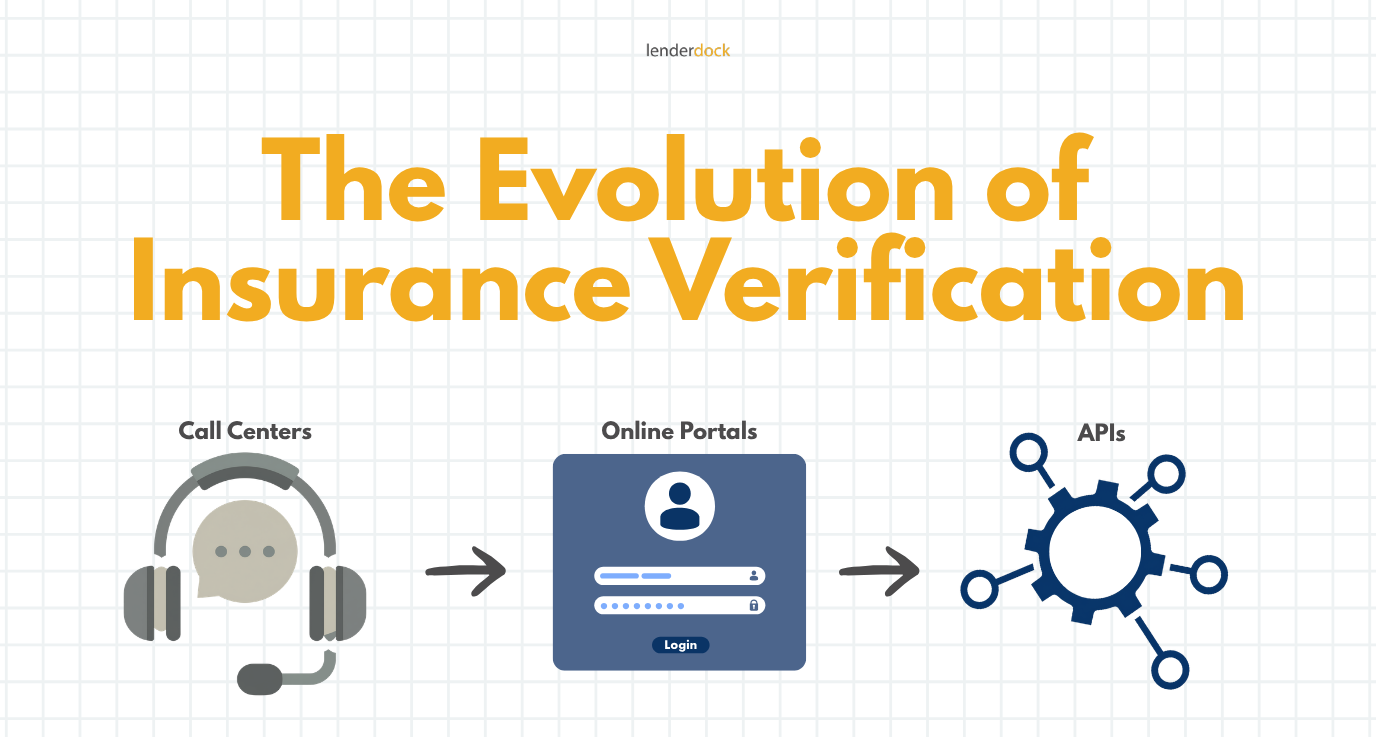
In the earliest version of insurance verification, the person answering the phone actually had to know things. They pulled a physical file, checked handwriting against a ledger, and made a judgment call about whether what…
Two insurers can each have perfectly accurate, well-maintained policy databases and still fail to exchange a single piece of usable data between them.
Every single day, insurance workers face a mountain of simple questions. Are they tired of answering the same questions about policy coverage all day long? Yes, they are. When banks or lenders need to check…
A title company closing a home sale needs to confirm the seller’s policy is active before the deal can move. An auto lender needs the same thing before releasing funds on a car loan. A…
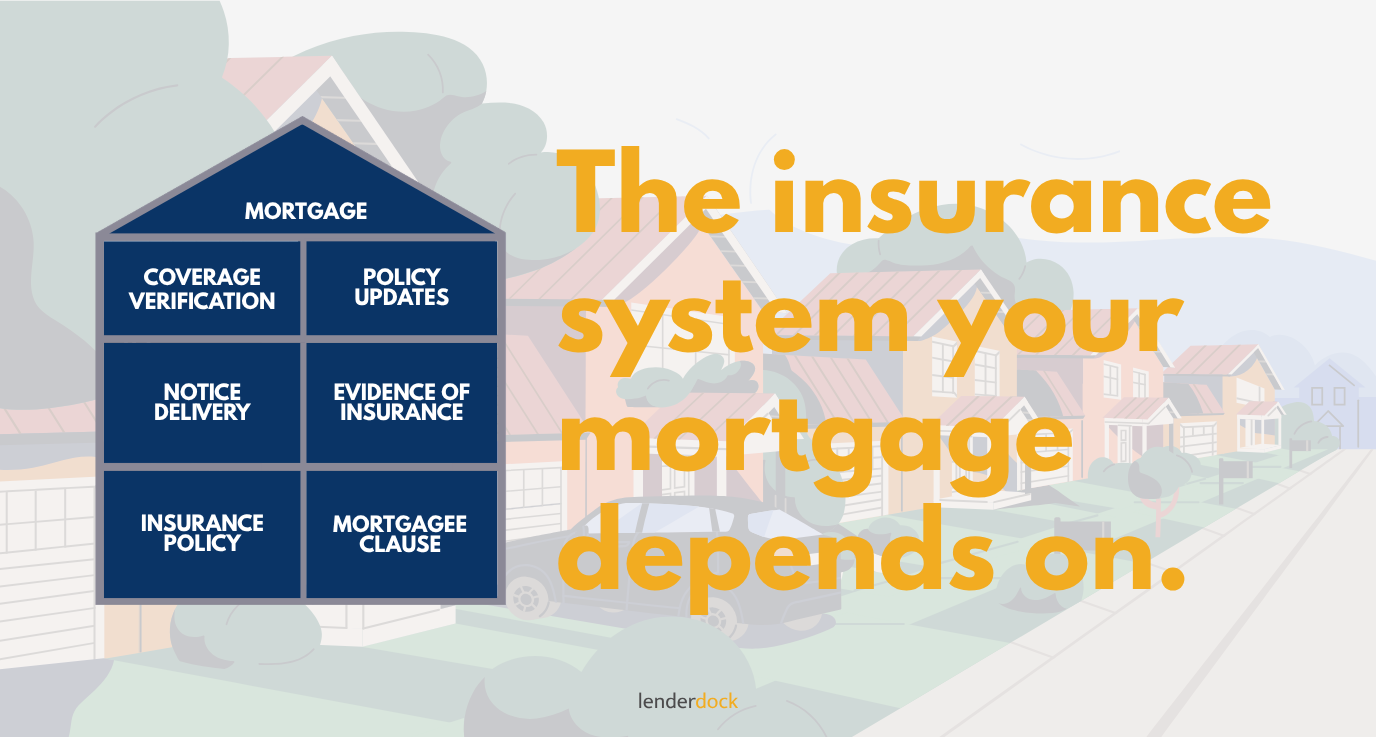
Most people who take out a mortgage never think about insurance as part of the loan itself. It feels adjacent, a separate purchase, something the lender requires but does not really participate in beyond checking…
Mortgagee corrections are a routine part of insurance servicing, but the process behind them is often anything but simple. A lender may find that the mortgagee’s name or address on a policy is out of…


We consectetur adipiscing elit tempor incididunt ut labore. Wondering ipsum dolor sit amet? We consectetur adipiscing ipsum nulla glavrida elit tempor incididunt.