From Policy Change to Action: Why Timing Matters in Insurance
We’ve heard people in mortgage servicing use verification and tracking as if they’re interchangeable, and honestly, for a lot of daily work, treating them that way doesn’t break anything.


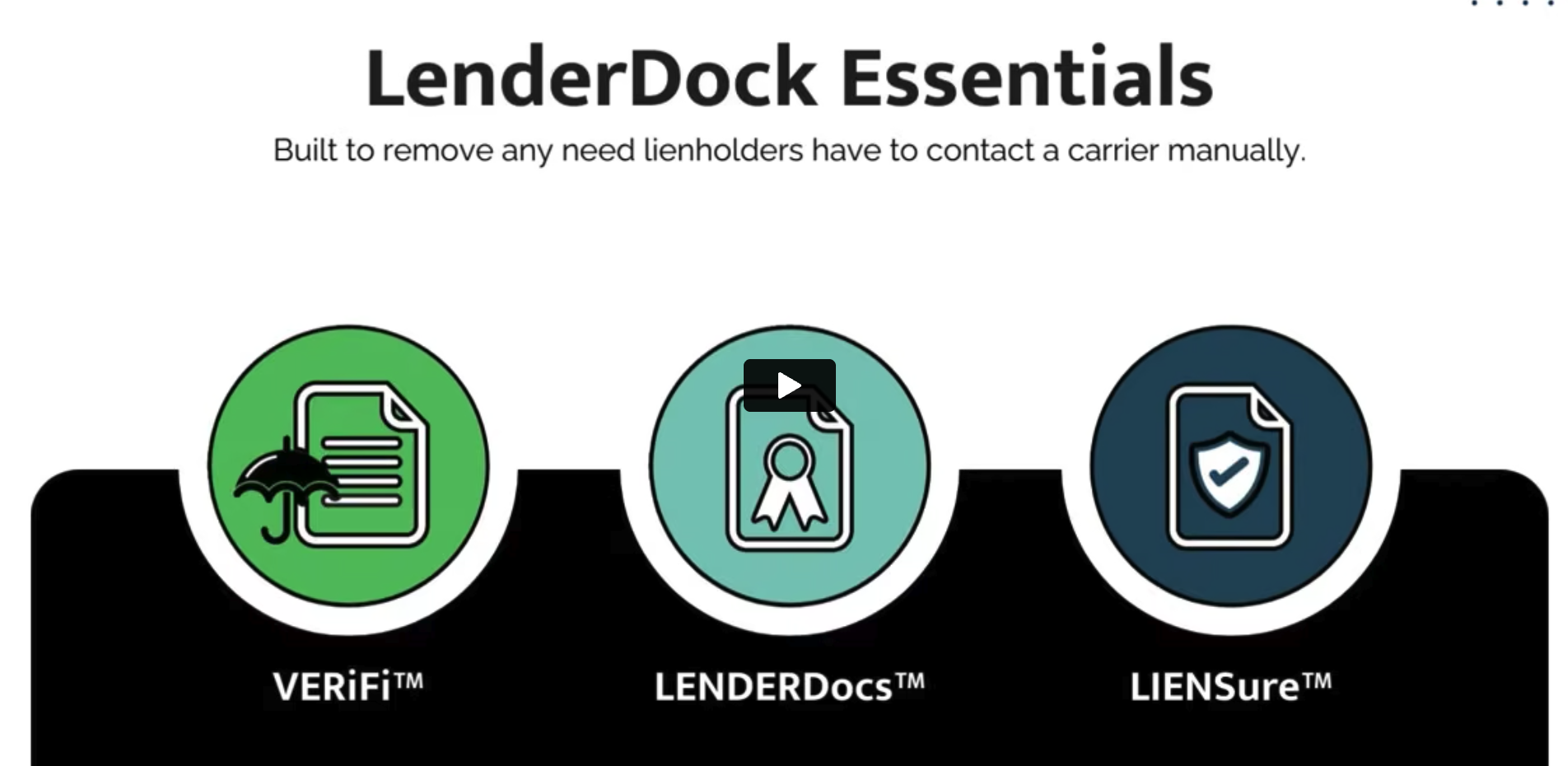
LenderDock provides real-time, insurance policy details through its magical web portal or its APIs.

LIENSure sends corrections digitally, straight from the financial source of truth and in bulk for easy processing.

ESCROWPay verifies what’s actually due before the money moves, then sends the payment and reconciliation data digitally.

NOTiFi delivers required policy, coverage, and billing notices in the formats lienholders actually use
At least check out the genesis of LenderDock Video. It’ll all make sense, the eco-system, that is.
Learn more about our great leadership team and our amazing, people-first, company culture.
There’s a lot going on at LenderDock and in our industries. We threw it all here to make it easier to keep up.
We go to a lot of events and we love to eat. See our calendar of where we’ll be.
New webinars will be coming quite frequently. Educational, success, and sales.
There’s a moment in almost every client relationship where the pricing model quietly reveals whose side you’re on. Basis points are one of those moments — and they reveal a lot.
On paper, a basis-point fee looks almost cute. Twenty-five bps. Fifty bps. Numbers so small they sound like a rounding error, not a bill. That’s sort of the point. Nobody panics at “0.25%.” But do the math on a real transaction and the costume comes off fast.
Take a mortgage escrow disbursement — the money a loan servicer pays out of a homeowner’s escrow account to cover their property insurance premium. The servicer processes that payment to the insurance carrier, and the carrier gets hit with a basis-point fee for the privilege of receiving it.
Homeowner A has a modest policy. Premium: $2,000 a year. Charge the carrier 25 basis points to process that disbursement and the fee is $5. Nobody’s losing sleep over that.
Homeowner B has a large home with a $200,000 annual premium — maybe it’s a high-value property, maybe it’s a commercial mortgage bundled into the same escrow pipeline. Same servicer. Same disbursement process. Same file gets touched, same rails move the money, same amount of actual work on anyone’s part. Charge that same 25 bps and the carrier is now paying $500 for the exact same task.
One hundred times the fee for a transaction that, structurally, is identical. Nobody worked 100x harder to process Homeowner B’s payment. The file didn’t get more complicated because the premium had more zeros. The only thing that changed is the size of the number flowing through the pipe — a number the payment processor had zero hand in creating and did nothing extra to earn. That’s not a service fee anymore. That’s a toll booth that happens to charge more if your car looks nicer, and the carrier’s the one stuck paying it, transaction after transaction, policy after policy.
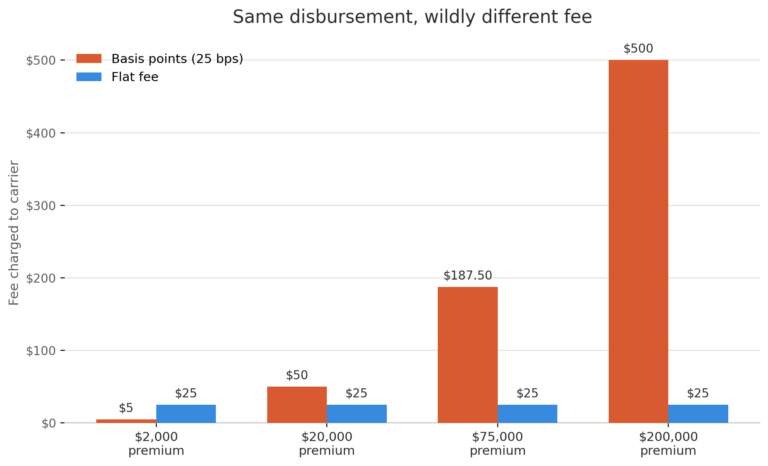
The standard defense of basis-point pricing is that it “scales with value delivered.” Bigger transaction, bigger stakes, bigger fee. It’s a tidy little narrative. It’s also mostly a story people tell themselves to justify charging more for the same work.
Moving a large payment doesn’t inherently require more effort than moving a small one. Processing Homeowner B’s $200,000 premium doesn’t demand more oversight, more compliance work, or more risk management than processing Homeowner A’s $2,000 premium — it’s the same disbursement, run through the same servicer, hitting the same carrier system on the other end. If bigger policies genuinely required more work, that’s a real conversation, and it deserves real, itemized pricing, not a blanket percentage slapped on top like a service charge nobody agreed to. What basis points actually scale with isn’t effort. It’s opportunity — the opportunity to quietly help yourself to more of the carrier’s money simply because the carrier happened to be on the receiving end of a bigger premium that day.
Ask any finance team what they want from a vendor, and “flexibility” is rarely the answer. Predictability is. A flat fee is a line item. You know it, you plan around it, you move on with your life.
Now put yourself in the carrier’s shoes. An insurance carrier isn’t processing one escrow disbursement — it’s processing thousands of them a month, across every servicer it works with, covering everything from starter-home policies to sprawling commercial accounts. Under a flat-fee model, that’s easy to forecast: X disbursements times a known dollar amount, done. Under basis points, the carrier’s processing costs swing with something it doesn’t control and can’t predict — the mix of policy sizes flowing through escrow in any given month. A batch of high-value renewals lands and suddenly the “processing fee” line item spikes, with nothing about the actual work having changed. That’s not a minor annoyance; it’s real, exportable uncertainty that the carrier absorbs so the payment processor doesn’t have to. Heads the processor wins, tails the carrier eats the surprise.
Here’s the thing about a flat fee: you can’t hide behind it. You have to actually know what the service costs to deliver, add a fair margin, and put a real number on the table. There’s nowhere to tuck away extra margin inside someone else’s transaction size.
A flat per-disbursement fee forces the payment processor to answer a straightforward question: what does it actually cost to move one escrow payment from a servicer to a carrier? Answer that honestly, price it fairly, and charge the same amount whether the underlying premium is $2,000 or $200,000. Basis points let the processor skip that conversation entirely. The fee inflates itself automatically every time a bigger policy happens to pass through the pipeline — with zero extra effort required on the processor’s end and zero extra scrutiny from anyone. It’s pricing on autopilot, and the autopilot is always flying in the processor’s favor, one premium payment at a time.
Before signing off on basis-point pricing, ask the obvious question: does this fee bear any real relationship to the work being done, or is it just a cut of whatever number happens to be moving? For an insurance carrier evaluating a payment processor, that means asking directly: are we paying for disbursement processing, or are we paying rent on the size of our own policyholders’ premiums? If a provider can’t answer that without pointing back at the carrier’s own transaction volume, the pricing model isn’t measuring value. It’s measuring how much the carrier can be made to pay without anyone stopping to ask why.
Flat, transparent fees aren’t just easier to budget. They’re the difference between a partner and a toll collector — and any carrier writing a check on basis points every month should be asking which one it’s actually dealing with.
We’ve heard people in mortgage servicing use verification and tracking as if they’re interchangeable, and honestly, for a lot of daily work, treating them that way doesn’t break anything.
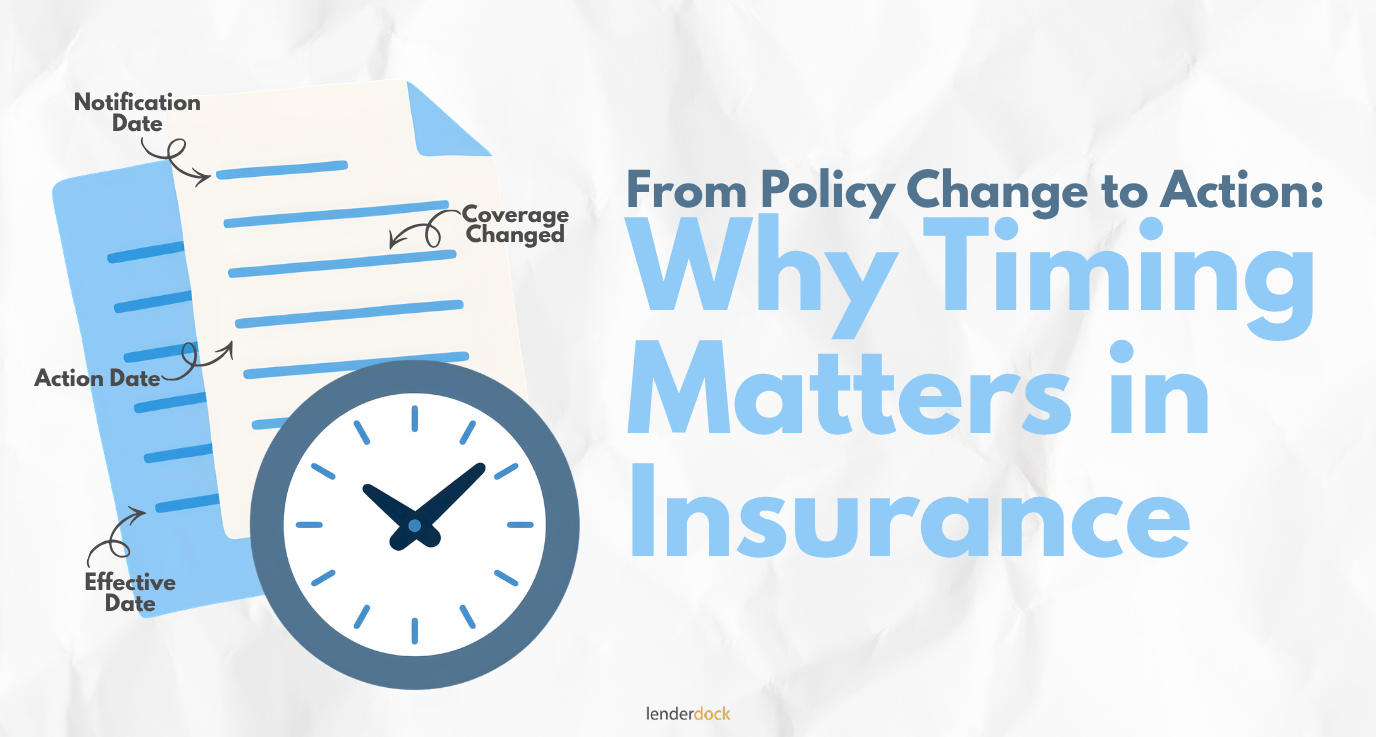
A two-day lag between a policy change and everyone finding out about it used to be annoying, not dangerous. Someone made a call, waited, got an answer, and moved on with their day.

We’ve heard people in mortgage servicing use verification and tracking as if they’re interchangeable, and honestly, for a lot of daily work, treating them that way doesn’t break anything.
Insurance verification is a routine part of the lending and insurance process. A lender needs to know whether a policy is active. A mortgage servicer may need to confirm coverage or mortgagee information. An insurance…
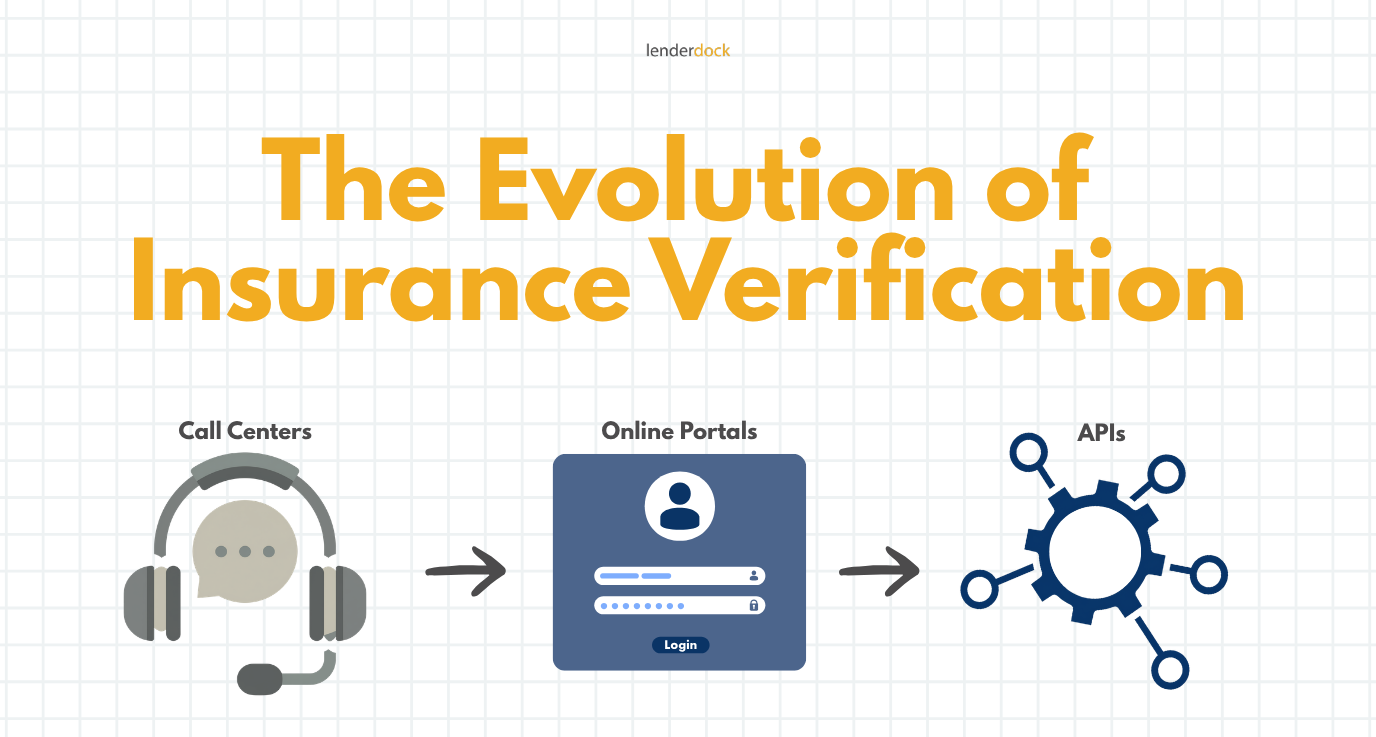
In the earliest version of insurance verification, the person answering the phone actually had to know things. They pulled a physical file, checked handwriting against a ledger, and made a judgment call about whether what…
Two insurers can each have perfectly accurate, well-maintained policy databases and still fail to exchange a single piece of usable data between them.
Every single day, insurance workers face a mountain of simple questions. Are they tired of answering the same questions about policy coverage all day long? Yes, they are. When banks or lenders need to check…
A title company closing a home sale needs to confirm the seller’s policy is active before the deal can move. An auto lender needs the same thing before releasing funds on a car loan. A…
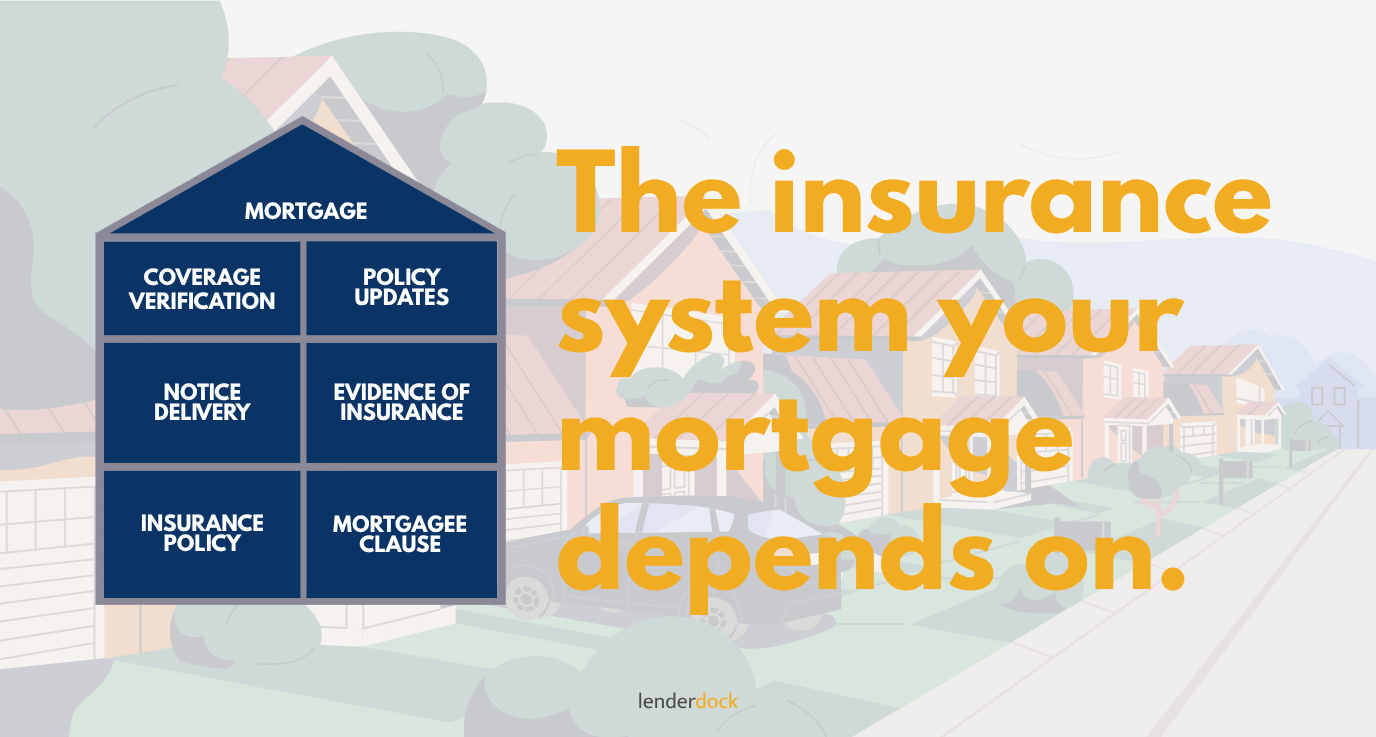
Most people who take out a mortgage never think about insurance as part of the loan itself. It feels adjacent, a separate purchase, something the lender requires but does not really participate in beyond checking…
Mortgagee corrections are a routine part of insurance servicing, but the process behind them is often anything but simple. A lender may find that the mortgagee’s name or address on a policy is out of…


We consectetur adipiscing elit tempor incididunt ut labore. Wondering ipsum dolor sit amet? We consectetur adipiscing ipsum nulla glavrida elit tempor incididunt.