Most conversations about sending insurance notices start by looking at the insurance carrier’s side. Companies usually ask questions like, “How much does it cost us to print and mail these papers?” or “How can we cut down the fees we pay to our vendors?” These are perfectly fair questions to ask. However, there is a completely different side to every single notice you send. This other side is the one that actually decides whether your notice does its job or not: the lender’s side. Let’s take a step inside the lender’s daily operation to look closely at what really happens after your team hits the send button.
Lenders Have Moved on From the Mail Room
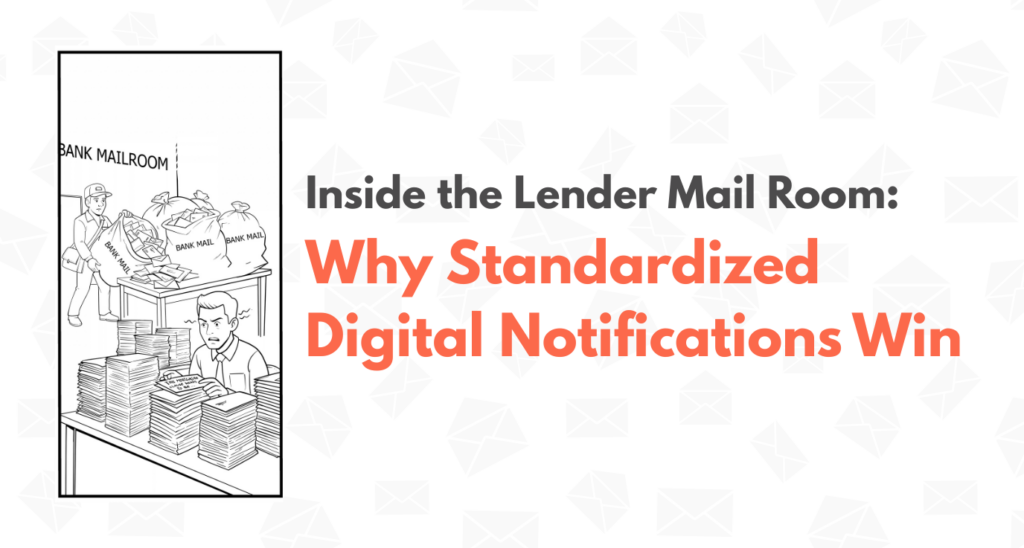
The truth is that lenders have completely moved on from the traditional mail room. Today, financial institutions want to process their insurance notices through automated workflows. They do not want to deal with manual mail handling anymore. Their main goal is very straightforward and clear: they want to take in new information, match it to the correct customer’s loan, and take action on it. Most importantly, they want to do all of this with as little human touch as possible.
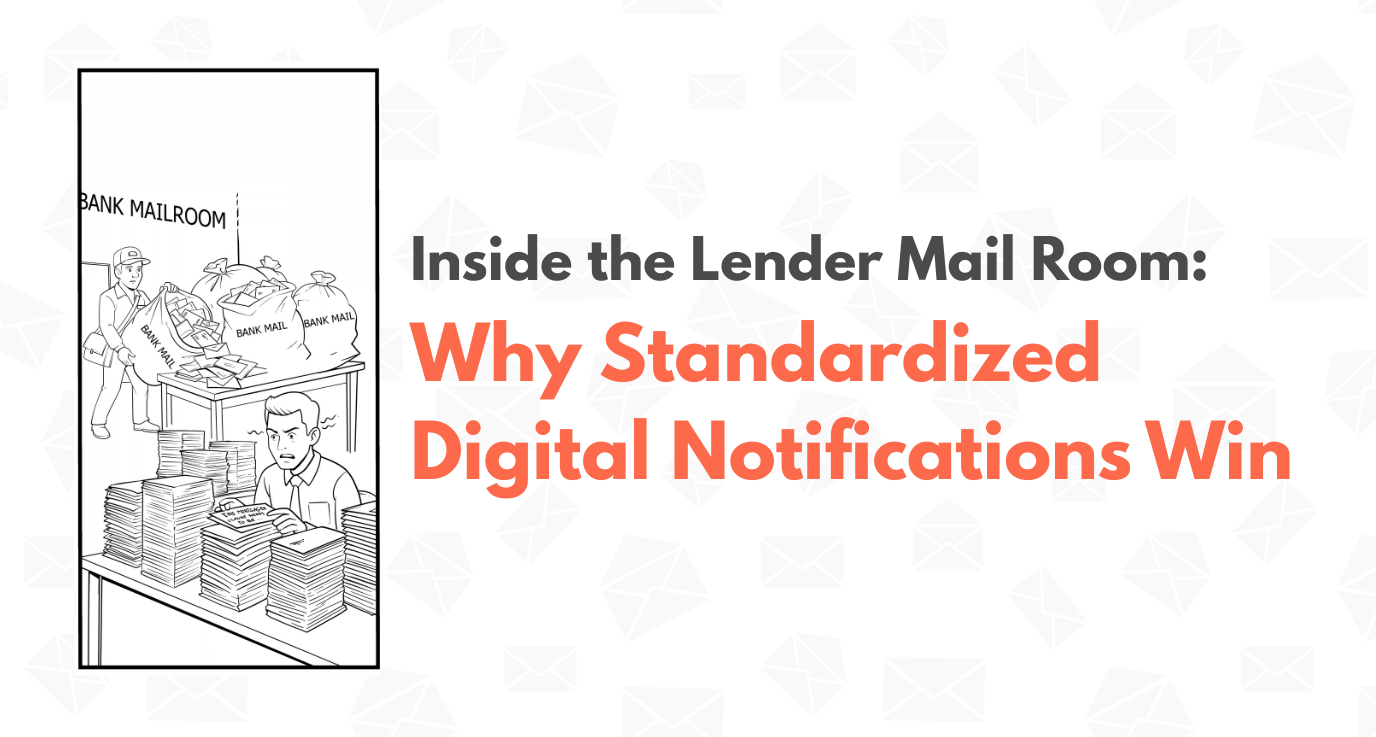
A paper notice works completely against that simple goal. Think about what happens when paper arrives. Someone in the office has to physically receive it, open the envelope, sort it into the right pile, read and interpret the details, and finally type that information into their computer system. Each one of these steps adds more time to the clock. More importantly, each step creates another chance for a human error to happen. Even if you send a perfectly accurate notice, it immediately becomes a manual chore the moment it lands in a paper envelope.
Why This Matters to You, the Carrier
It is very tempting to look at this and say that what happens inside the lender’s office is someone else’s problem. But it really isn’t. A notice that is slow or hard for them to process creates friction that flows right back to your company. Here is how it hurts you:
- Delayed action: Time spent sitting in the mail and waiting in a lender’s intake line extends the timeline before anything gets processed. This delay includes the timeline for your payments.
- Follow-up work: When a lender receives outdated information, they get confused. If they cannot easily interpret what they have received, they will reach out. The result is extra phone calls, more emails, and multiple requests for clarification that your servicing team now has to handle.
- Relationship strain: Lenders are your business partners. Making their intake process much harder, even if you do it unintentionally, is not the impression you want to leave with them.
Ultimately, paper notices are incredibly expensive for you to send, and they are also expensive for the lenders to process. Both sides end up paying money for a workflow that neither side actually wants.
What “Standardized” Actually Changes
The word “standardized” carries the heavy weight in this conversation. Just switching to digital delivery on its own is not the big win you might think it is. For example, a digital PDF emailed to someone’s inbox still needs a real human being to open it and read it. The real, major advantage only happens when notices arrive in a consistent, structured format. This format needs to fit directly into the computer workflows that lenders already use today.
When the digital format is predictable, the lender’s computer systems know exactly what to expect. The important information can flow straight in. It does not have to be retyped by a worker, interpreted by a human, or routed by hand. That means they get much faster processing on their end. It also means fewer errors and less frustrating back-and-forth communication for everyone involved.
This exact idea is the principle behind NOTiFi™. This system delivers notices digitally to a nationwide network of financial institutions. It uses those standardized formats that are carefully designed to slot right into existing lender workflows. As a result, the lender gets a cleaner, much more automated experience, and you get much faster delivery and far fewer downstream headaches.
But What About Lenders Who Aren’t Digital Yet?
What about lenders who are not set up for digital notices yet?. This is a very fair concern, and it is the main reason many insurance carriers hesitate to move away from traditional mail entirely. Not every single institution has the technology to receive digital notices.
NOTiFi™ handles this problem by design. When digital delivery is not an option, the notice is automatically printed and mailed. It goes through the exact same workflow and costs the exact same flat-rate pricing. You do not have to manage two different processes, and you do not have to hire two different vendors. You also do not get a bad surprise on your monthly invoice. Digital delivery is always the default whenever it is possible, and regular print is the safety net when it isn’t.
You Can’t Improve What You Can’t See
Delivery is only half of the story. Teams that care about legal compliance also need to know exactly what was sent, when it was sent, and how it was sent. With an old mail-based process, that visibility is usually fragmented at best.
Having a centralized view of every single notice, from submission through delivery, changes everything. Delivery analytics show you the full notice history, the delivery methods used, and the processing activity. This creates a perfectly clear audit trail for the notices that are legally required to be sent in the first place.
The Bottom Line
When you design your notice process around the lender’s reality instead of just your own convenience, the benefits start to compound. Lenders finally receive information in a format their computers can process automatically. Carriers spend far less money on printing, postage stamps, and outside vendor fees. Payment timelines get shorter, and your servicing teams spend much less time chasing down clarifications.
The lender’s old mail room is rapidly evolving into an automated intake pipeline. The insurance carriers who meet lenders there will quickly find that standardized digital delivery is a much better system for everyone involved.