From Policy Change to Action: Why Timing Matters in Insurance
We’ve heard people in mortgage servicing use verification and tracking as if they’re interchangeable, and honestly, for a lot of daily work, treating them that way doesn’t break anything.


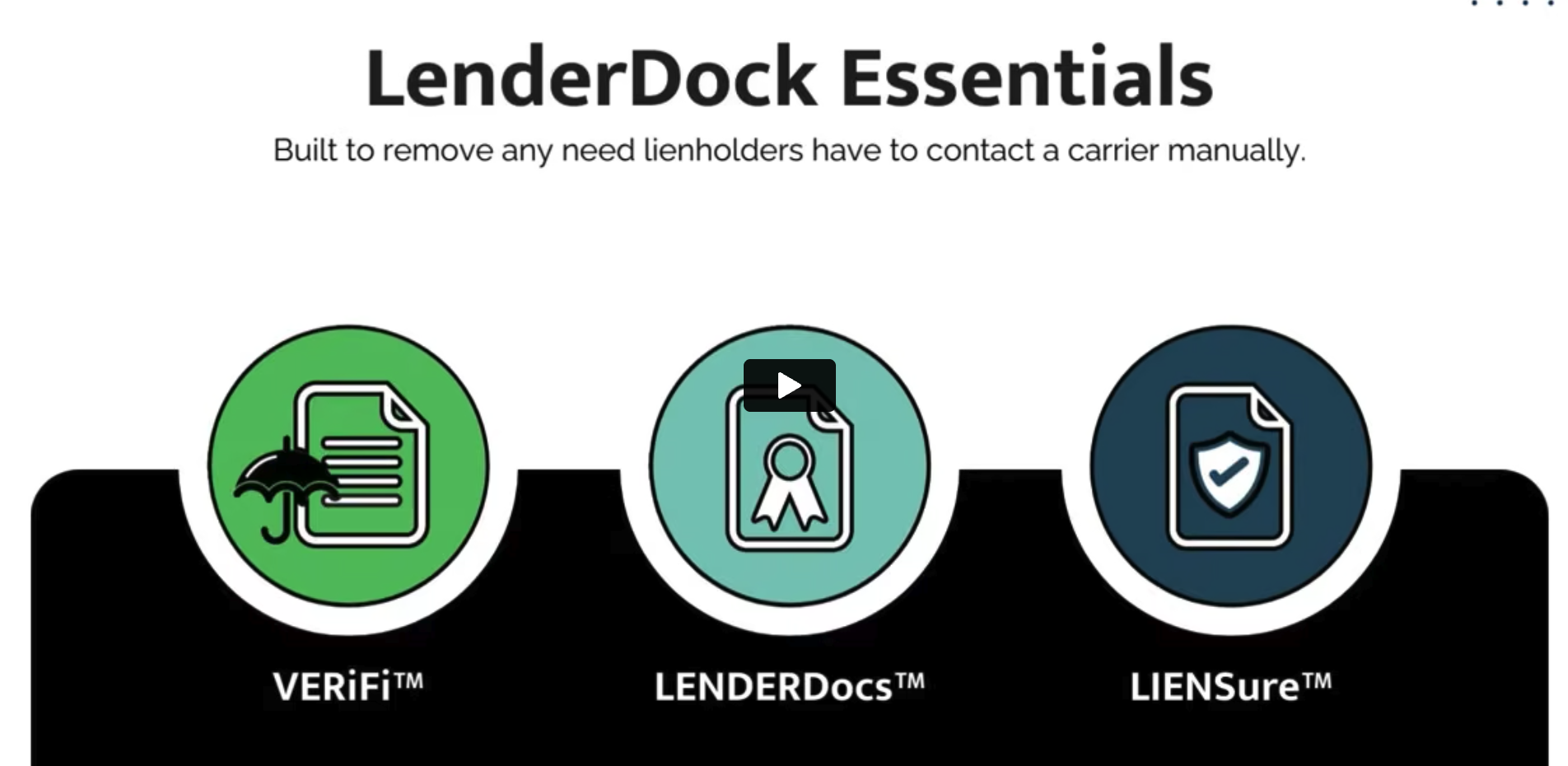
LenderDock provides real-time, insurance policy details through its magical web portal or its APIs.

LIENSure sends corrections digitally, straight from the financial source of truth and in bulk for easy processing.

ESCROWPay verifies what’s actually due before the money moves, then sends the payment and reconciliation data digitally.

NOTiFi delivers required policy, coverage, and billing notices in the formats lienholders actually use
At least check out the genesis of LenderDock Video. It’ll all make sense, the eco-system, that is.
Learn more about our great leadership team and our amazing, people-first, company culture.
There’s a lot going on at LenderDock and in our industries. We threw it all here to make it easier to keep up.
We go to a lot of events and we love to eat. See our calendar of where we’ll be.
New webinars will be coming quite frequently. Educational, success, and sales.
Earlier this year, Los Angeles experienced a series of devastating wildfires, most notably the Palisades and Eaton fires, which together scorched approximately 38,000 acres.
The Palisades fire, which ignited on January 7 in the Pacific Palisades area, rapidly expanded to over 23,700 acres by January 15. Meanwhile, the Eaton fire broke out in the Altadena region, consuming around 14,117 acres. Tragically, these fires resulted in at least 25 fatalities and the destruction of thousands of homes.
The primary causes of these wildfires were extreme and rare windstorms, with Santa Ana wind gusts reaching up to 100 mph, combined with exceptionally dry conditions following eight months without measurable rainfall. These factors created the perfect conditions for rapid fire spread, leading to catastrophic loss of life and property.
In this article, we’ll explore how to file an insurance claim if your property was affected, the potential challenges you may encounter, strategies to navigate them, and a broader perspective on how insurance functions in the wake of catastrophic events like these.
In the aftermath of the fires, affected residents are navigating the complex process of filing property insurance claims. Understanding the necessary steps can help ensure a smoother and more efficient recovery.
The first step for policyholders is to contact their insurance providers to report damages promptly. Timely communication initiates the claims process and allows insurers to provide guidance on the required documentation.
Next, it is essential to thoroughly document all damaged or lost items. Taking clear photographs and maintaining detailed records, including descriptions, purchase dates, and approximate values, strengthens the claim’s validity.
To prevent further damage, homeowners may need to make temporary repairs, such as covering exposed areas. Keeping receipts for these repairs is crucial, as they are typically reimbursable under most policies.
Once the claim is filed, insurance companies will dispatch adjusters to assess the extent of the damage. Being present during inspections ensures that all losses are accurately accounted for and any concerns can be addressed directly.
Finally, insured homeowners should review their policy to understand coverage limits, deductibles, and specific clauses related to wildfire damage. Having a clear grasp of these details helps set realistic expectations for claim outcomes and ensures there are no surprises during the settlement process.
Despite these steps, homeowners may encounter several challenges while filing claims.
Given the scale of the disaster, insurers are handling thousands of claims, leading to longer processing times. This can slow down payments and repairs. Insurance providers may offer settlements lower than expected, citing depreciation or policy limits.
Some homeowners may discover that their policies do not fully cover the cost of rebuilding, especially if property values have increased since their last assessment, which, sadly, in a state like California, is a harsh reality.
Without thorough documentation, some claims may be delayed or denied if insurers require more proof of ownership or value. A surge in demand for repairs can lead to a shortage of construction workers and materials, delaying rebuilding efforts.
The impact of catastrophic losses extends beyond homeowners, placing immense strain on insurers as well.
Massive disasters like wildfires create financial instability by forcing insurers to pay out billions of dollars in claims within short periods. This significantly reduces the capital available to maintain their risk pool, making it difficult to balance the financial stability of the company while fulfilling obligations to policyholders.
When losses surpass anticipated levels, some insurers may increase premiums, reduce coverage in high-risk areas, or even withdraw from certain markets altogether. This has already been seen in California, where some insurers have scaled back offerings due to the rising frequency and severity of wildfires.
This is further compounded by the unpredictability of climate-related disasters, making it difficult for insurance companies to accurately model risk and allocate resources efficiently, yet.
To navigate these challenges effectively, homeowners should take proactive steps.
Maintaining open communication with insurers and regularly following up on claim updates ensures that you remain informed. Aside from that, seeking professional assistance from public adjusters or even insurance attorneys can help resolve disputes over settlement amounts.
Exploring government and nonprofit aid can help bridge financial gaps that insurance payouts may not fully cover. In response to the recent fires, the federal government has announced financial assistance of $770 per affected resident, providing some immediate relief to those impacted.
Additionally, maintaining detailed records of all communications, repair estimates, and receipts strengthens claims and ensures the necessary documentation is readily available for insurers.
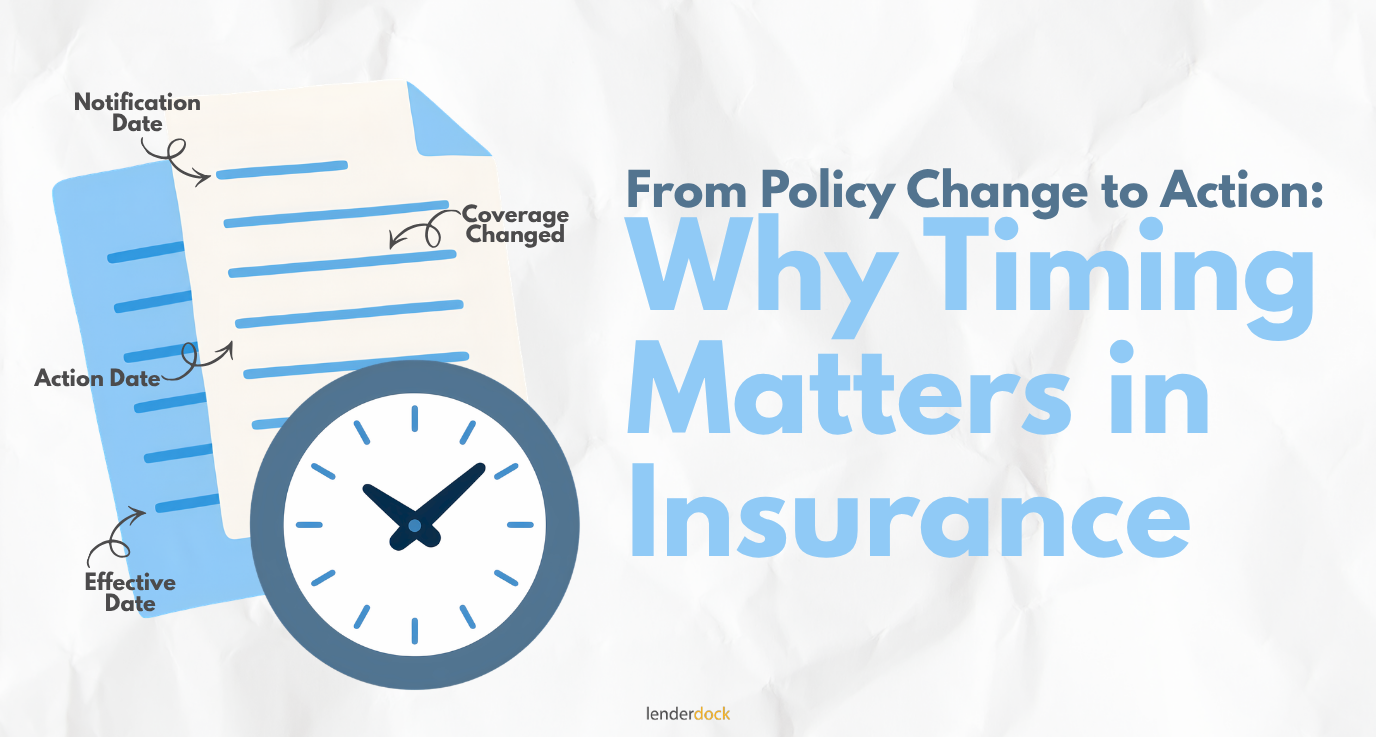
We’ve heard people in mortgage servicing use verification and tracking as if they’re interchangeable, and honestly, for a lot of daily work, treating them that way doesn’t break anything.
A two-day lag between a policy change and everyone finding out about it used to be annoying, not dangerous. Someone made a call, waited, got an answer, and moved on with their day.

We’ve heard people in mortgage servicing use verification and tracking as if they’re interchangeable, and honestly, for a lot of daily work, treating them that way doesn’t break anything.

Insurance verification is a routine part of the lending and insurance process. A lender needs to know whether a policy is active. A mortgage servicer may need to confirm coverage or mortgagee information. An insurance…

In the earliest version of insurance verification, the person answering the phone actually had to know things. They pulled a physical file, checked handwriting against a ledger, and made a judgment call about whether what…

Two insurers can each have perfectly accurate, well-maintained policy databases and still fail to exchange a single piece of usable data between them.
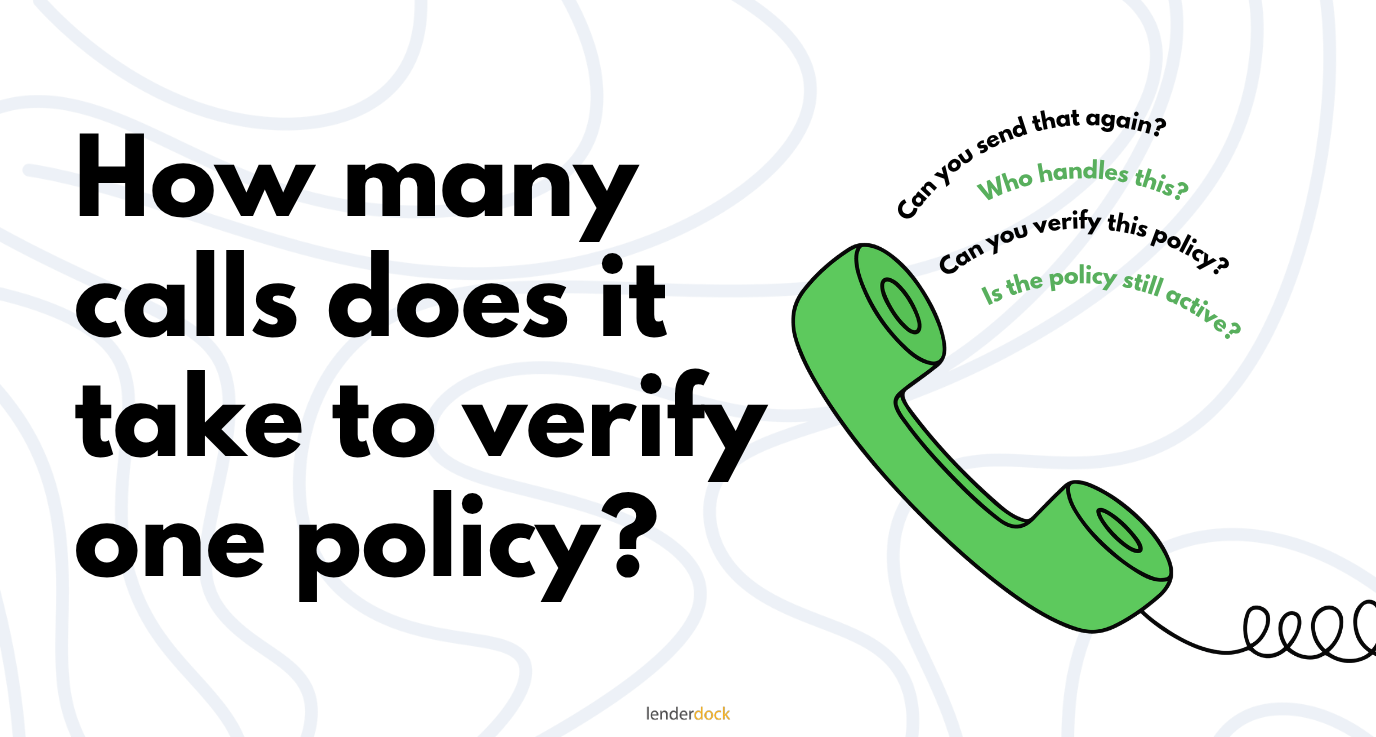
Every single day, insurance workers face a mountain of simple questions. Are they tired of answering the same questions about policy coverage all day long? Yes, they are. When banks or lenders need to check…
A title company closing a home sale needs to confirm the seller’s policy is active before the deal can move. An auto lender needs the same thing before releasing funds on a car loan. A…
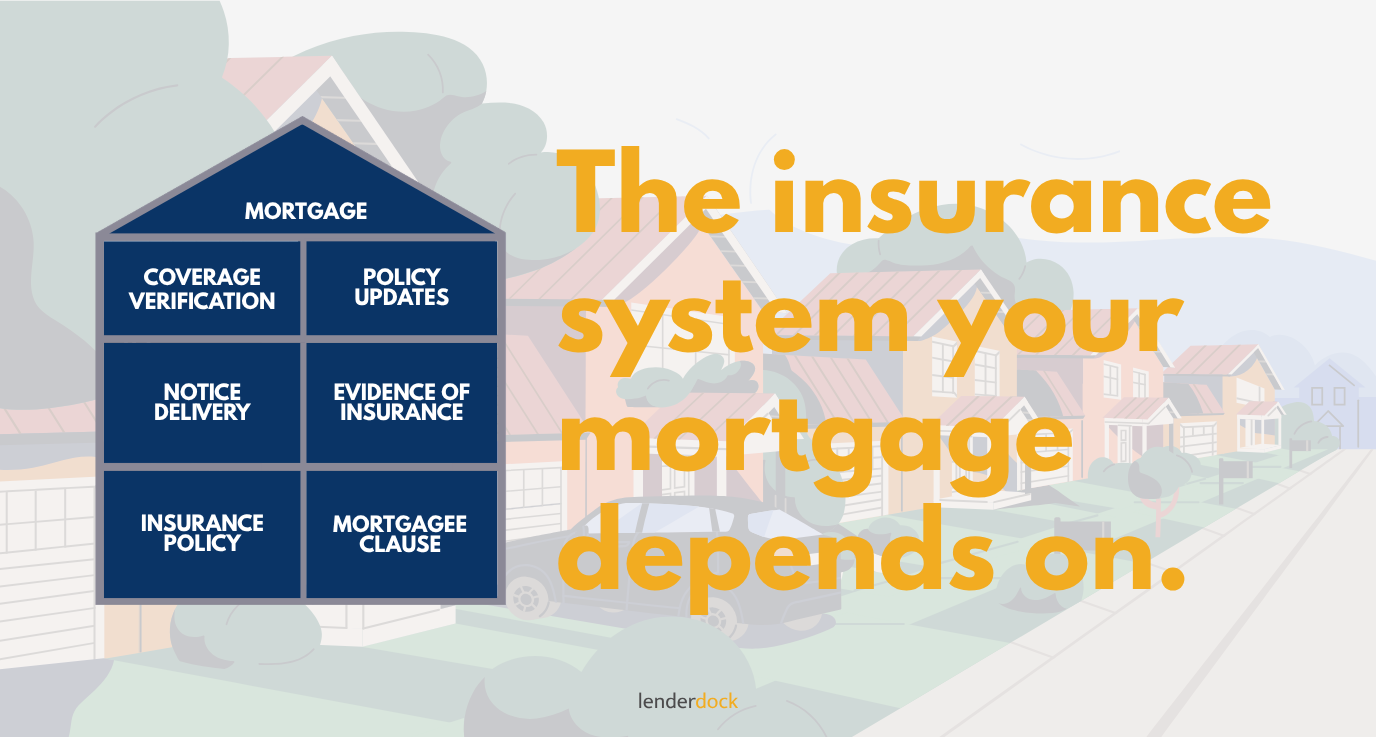
Most people who take out a mortgage never think about insurance as part of the loan itself. It feels adjacent, a separate purchase, something the lender requires but does not really participate in beyond checking…
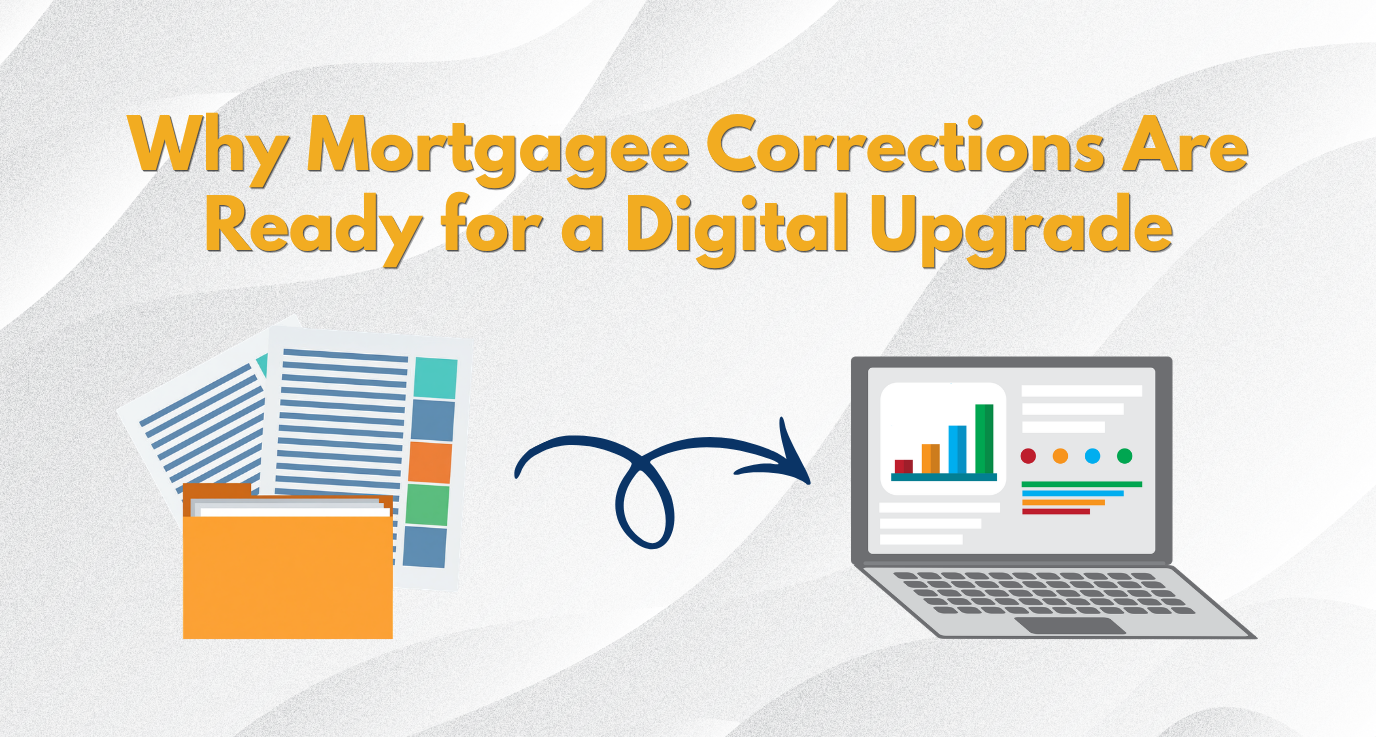
Mortgagee corrections are a routine part of insurance servicing, but the process behind them is often anything but simple. A lender may find that the mortgagee’s name or address on a policy is out of…


We consectetur adipiscing elit tempor incididunt ut labore. Wondering ipsum dolor sit amet? We consectetur adipiscing ipsum nulla glavrida elit tempor incididunt.