From Policy Change to Action: Why Timing Matters in Insurance
We’ve heard people in mortgage servicing use verification and tracking as if they’re interchangeable, and honestly, for a lot of daily work, treating them that way doesn’t break anything.


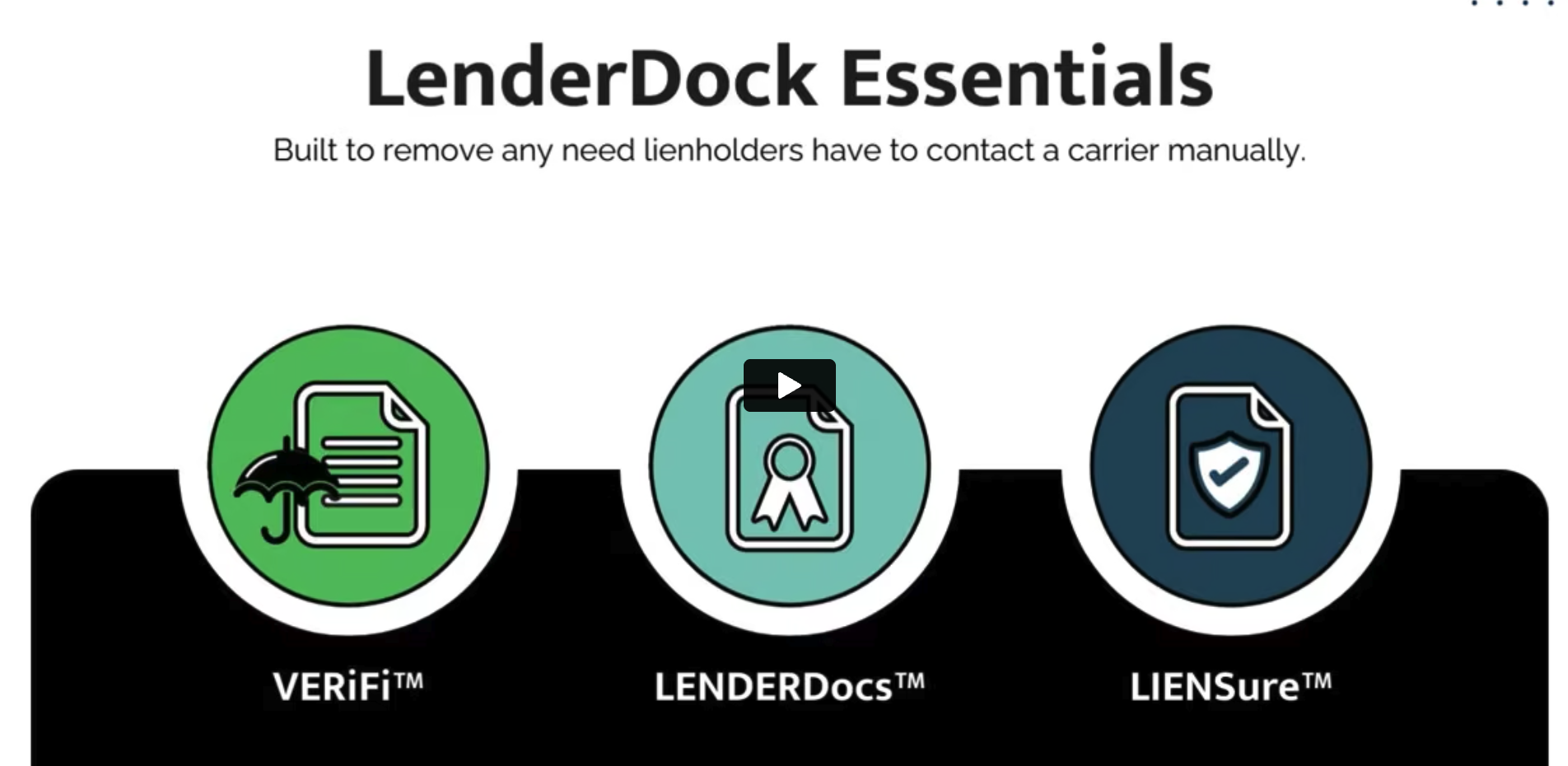
LenderDock provides real-time, insurance policy details through its magical web portal or its APIs.

LIENSure sends corrections digitally, straight from the financial source of truth and in bulk for easy processing.

ESCROWPay verifies what’s actually due before the money moves, then sends the payment and reconciliation data digitally.

NOTiFi delivers required policy, coverage, and billing notices in the formats lienholders actually use
At least check out the genesis of LenderDock Video. It’ll all make sense, the eco-system, that is.
Learn more about our great leadership team and our amazing, people-first, company culture.
There’s a lot going on at LenderDock and in our industries. We threw it all here to make it easier to keep up.
We go to a lot of events and we love to eat. See our calendar of where we’ll be.
New webinars will be coming quite frequently. Educational, success, and sales.
As of today, over 44% of data from financial services organizations is stored in the cloud.
In one of our articles, we explored what cloud computing entails and its impact on the insurance industry. We also examined how certain insurance players like Lemonade and Allstate have leveraged cloud technology to enhance their operations.
However, the number of these early adopters remains limited due to various hurdles.
Cloud computing involves migrating all operations to the cloud, enabling communication, access, and resource sharing from anywhere at any time. For the insurance industry, it allows insurers, brokers, and agents to store, process, and access their data and applications on remote servers via the Internet. This is made possible by means of an internet connection and a subscription to hosting platforms like Amazon Web Services (AWS) and Microsoft Azure.
Despite its benefits like cost efficiency, scalability and business continuity, several challenges hinder the widespread adoption of cloud technology in the insurance sector.
Let’s delve into these challenges and suggest potential solutions:
Ensuring compliance with federal regulations like the Gramm–Leach–Bliley Act (GLBA) and the Health Insurance Portability and Accountability Act (HIPAA), as well as state laws like the California Consumer Privacy Act (CCPA), requires considerable effort and delicacy.
Failure to comply can subject insurers and cloud hosting providers to significant fines and penalties.
What makes matters worse is the fact that different jurisdictions have varying legal requirements, making it difficult to maintain compliance when operating in multiple regions, as is often the case with cloud computing.
Solution: Insurance companies should work closely with legal experts to understand the regulatory landscape and ensure that cloud providers comply with relevant laws. In addition, enforcing robust data governance frameworks like Zero Trust Architecture and regularly auditing compliance practices can help mitigate legal risks.
Many companies in the insurance industry still rely on outdated legacy systems. These systems often lack the compatibility needed to integrate with current cloud solutions easily.
Migrating these legacy systems to the cloud requires careful planning, significant resources, and technical expertise making the process complex and time-consuming, as it involves replacing old software and ensuring data integrity and security throughout the transition.
Solution: Using standardized protocols and middleware solutions can make it easier to connect old systems with new cloud technologies. This can be complemented by working with experienced cloud migration partners to help fix compatibility problems and make the transition smoother. Google has Google Cloud, which has one of the widest global reaches with numerous data centers and servers all over the world.
Add to that, a phased migration approach can help manage the transition from legacy systems to the cloud. Starting with non-critical applications and gradually moving to more complex systems allows for testing and adjustments along the way.
There is often a shortage of skilled professionals who are adept at managing cloud infrastructure. This skills gap can lead to increased training costs and operational inefficiencies.
Solution: Investing in training and development programs for existing employees can bridge the skills gap. Partnering with cloud service providers for training resources and certification programs can also enhance the organization’s cloud expertise.
Cloud environments are prime targets for cyberattacks, which can lead to unauthorized access to sensitive data, resulting in financial losses, reputational damage, and regulatory penalties. Additionally, there is a significant risk of data loss due to technical failures and human error.
Solution: Implementing strong encryption protocols, multi-factor authentication, and regular security audits can enhance data protection. Insurance companies should also work closely with cloud providers to ensure they have stringent security measures in place.
While cloud computing offers significant advantages for the insurance industry, overcoming these challenges requires strategic planning and investment in terms of time, human and financial.
By addressing legal and compliance issues, ensuring interoperability, bridging the skill gap, enhancing data security, and carefully managing the migration of legacy systems, companies can fully harness the power of cloud technology to drive innovation and improve operational efficiency in the insurance space.

We’ve heard people in mortgage servicing use verification and tracking as if they’re interchangeable, and honestly, for a lot of daily work, treating them that way doesn’t break anything.
A two-day lag between a policy change and everyone finding out about it used to be annoying, not dangerous. Someone made a call, waited, got an answer, and moved on with their day.

We’ve heard people in mortgage servicing use verification and tracking as if they’re interchangeable, and honestly, for a lot of daily work, treating them that way doesn’t break anything.

Insurance verification is a routine part of the lending and insurance process. A lender needs to know whether a policy is active. A mortgage servicer may need to confirm coverage or mortgagee information. An insurance…
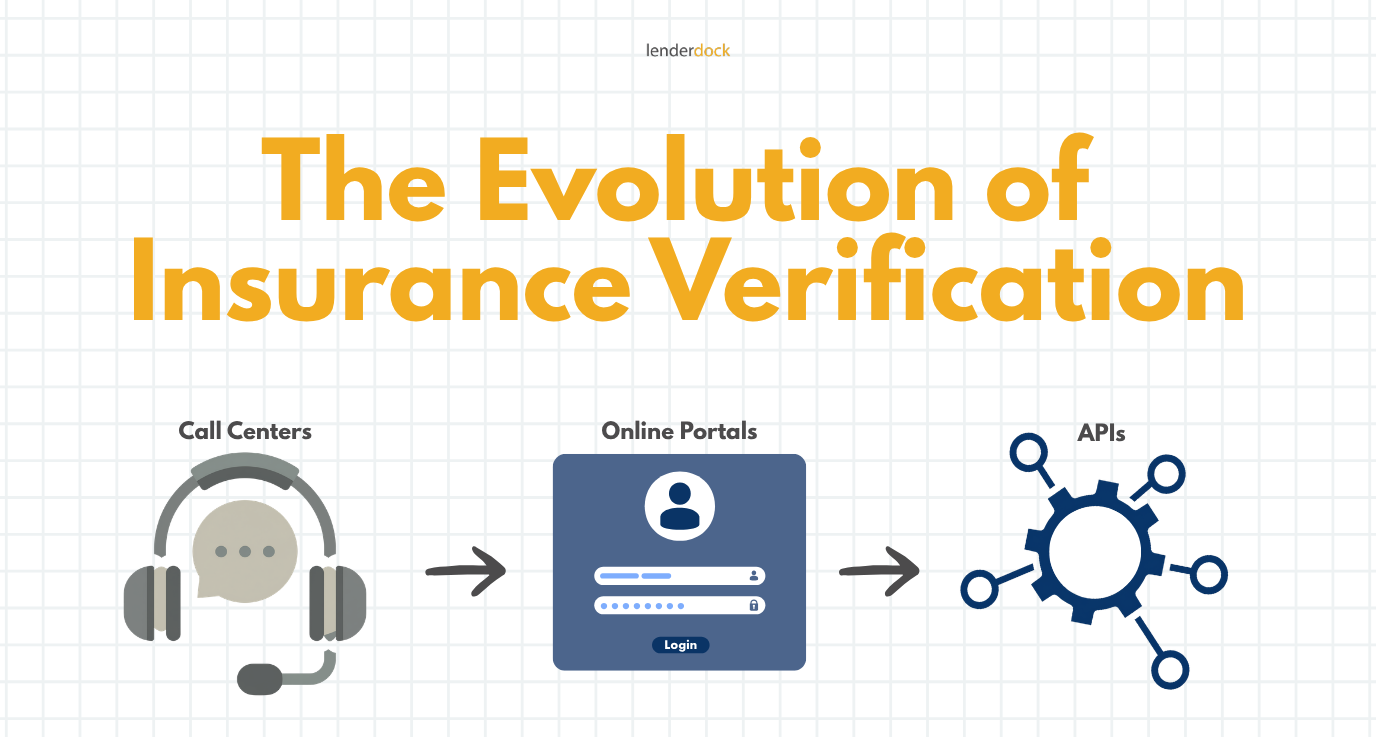
In the earliest version of insurance verification, the person answering the phone actually had to know things. They pulled a physical file, checked handwriting against a ledger, and made a judgment call about whether what…

Two insurers can each have perfectly accurate, well-maintained policy databases and still fail to exchange a single piece of usable data between them.

Every single day, insurance workers face a mountain of simple questions. Are they tired of answering the same questions about policy coverage all day long? Yes, they are. When banks or lenders need to check…
A title company closing a home sale needs to confirm the seller’s policy is active before the deal can move. An auto lender needs the same thing before releasing funds on a car loan. A…
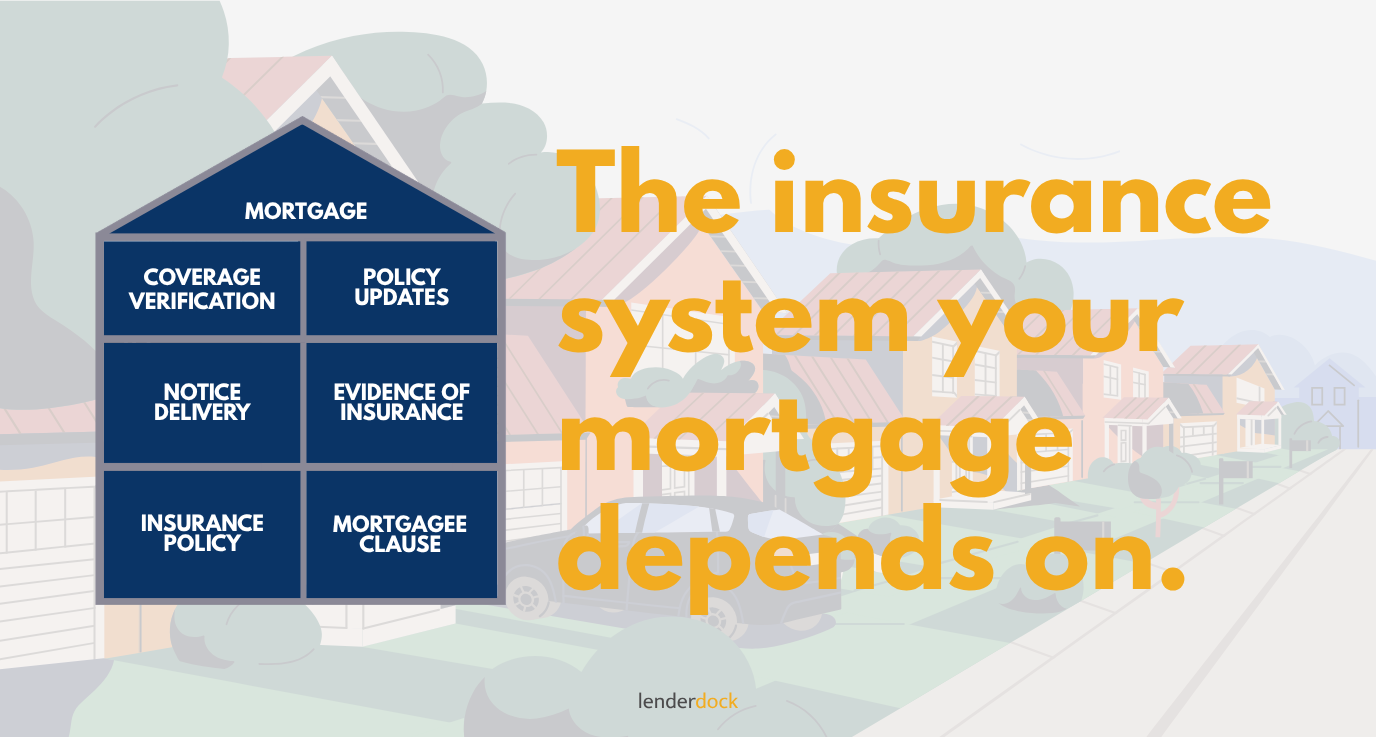
Most people who take out a mortgage never think about insurance as part of the loan itself. It feels adjacent, a separate purchase, something the lender requires but does not really participate in beyond checking…
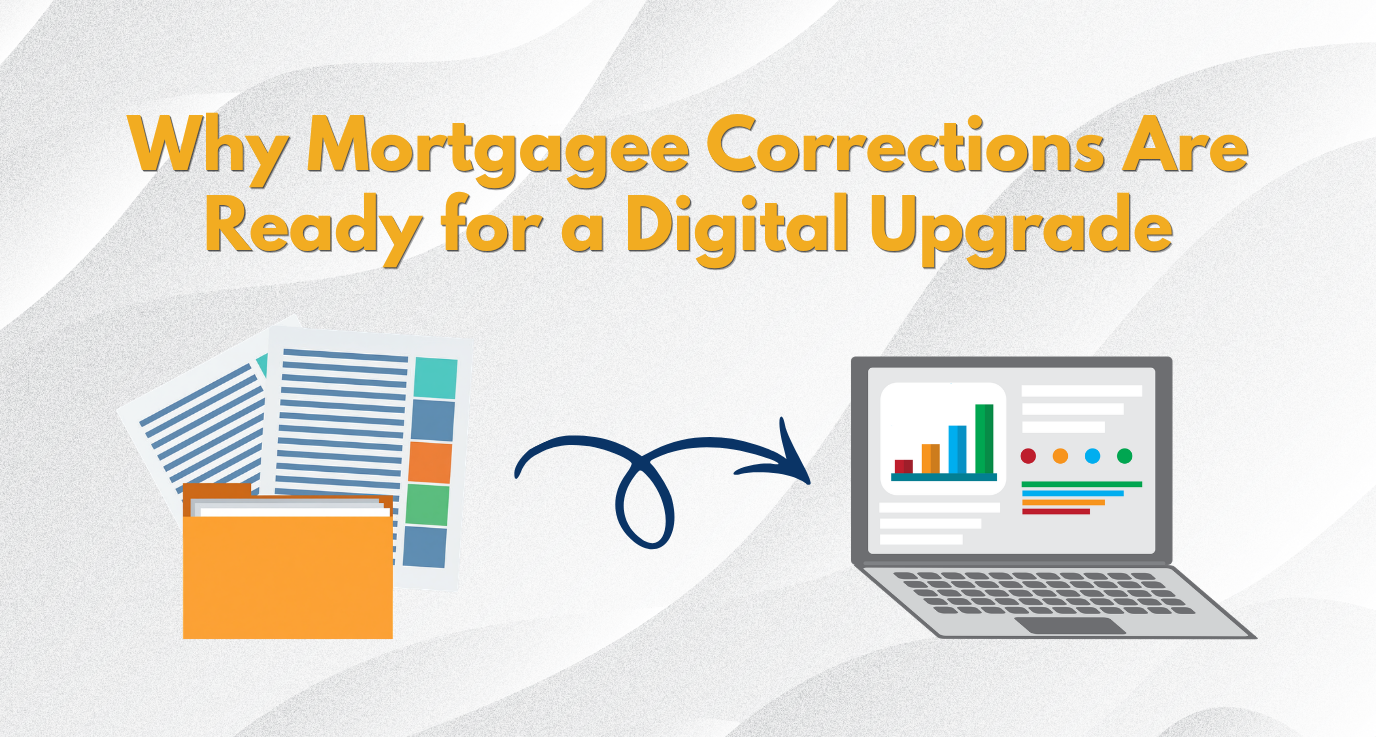
Mortgagee corrections are a routine part of insurance servicing, but the process behind them is often anything but simple. A lender may find that the mortgagee’s name or address on a policy is out of…


We consectetur adipiscing elit tempor incididunt ut labore. Wondering ipsum dolor sit amet? We consectetur adipiscing ipsum nulla glavrida elit tempor incididunt.