From Policy Change to Action: Why Timing Matters in Insurance
We’ve heard people in mortgage servicing use verification and tracking as if they’re interchangeable, and honestly, for a lot of daily work, treating them that way doesn’t break anything.


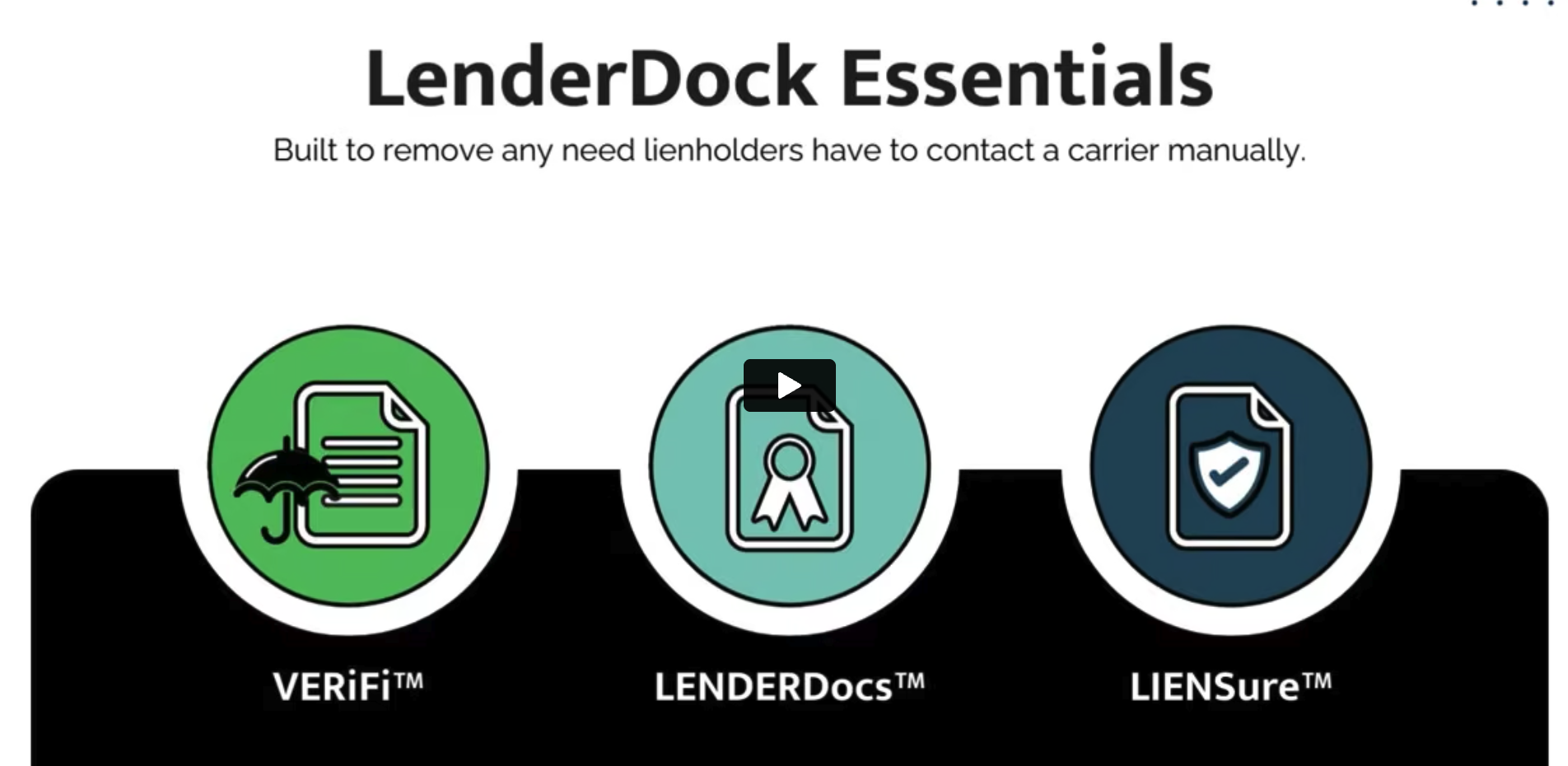
LenderDock provides real-time, insurance policy details through its magical web portal or its APIs.

LIENSure sends corrections digitally, straight from the financial source of truth and in bulk for easy processing.

ESCROWPay verifies what’s actually due before the money moves, then sends the payment and reconciliation data digitally.

NOTiFi delivers required policy, coverage, and billing notices in the formats lienholders actually use
At least check out the genesis of LenderDock Video. It’ll all make sense, the eco-system, that is.
Learn more about our great leadership team and our amazing, people-first, company culture.
There’s a lot going on at LenderDock and in our industries. We threw it all here to make it easier to keep up.
We go to a lot of events and we love to eat. See our calendar of where we’ll be.
New webinars will be coming quite frequently. Educational, success, and sales.
In recent years, the mainstream move to electric vehicles (EVs) has led to a rise in autonomous vehicles. EVs like Tesla have pushed the boundaries of driving with features that can be automated.
Aside from that, Tesla also launched its own insurance business in 2019 to address the growing rates of auto insurance. Though there are mixed results, this initiative has also prompted other insurance companies to revise existing rates by offering discounts on vehicles equipped with Advanced Driver Assistance Systems (ADAS).
In attempting to address this, two critical issues emerge:
At the heart of EVs are Advanced Driver Assistance Systems. Although ADAS have also been found in non-electric vehicles for decades, their impact on insurance has only been studied recently with the emergence of EVs.
ADAS are car safety features powered by smart technologies. In the past, they were mostly developed in-house by car manufacturers as most didn’t require proprietary tech.
Nowadays, start-ups mainly in the spare-parts space specialize in developing various Advanced Driver Assistance Systems. From Lane Departure Warning and Blind Spot Detection to Automatic Emergency Braking and Automatic Cruise Control, ADAS helps drivers avoid and reduce road accidents caused by human error.
Advanced Driver Assistance Systems can be divided into two categories: Active and Passive.
Passive ADAS: These systems are designed to alert the driver of a potential hazard or impending collision. Examples include Lane Departure Warning and Blind Spot Detection, which alert the driver in case of an unintentional lane departure or detect obstacles the driver might not readily see, respectively.
Active ADAS: These systems actively intervene to prevent an accident or reduce the risk of one. Examples of Active Automatic Driver Assistance Systems are Automatic Emergency Braking and Adaptive Cruise Control. These take control in critical situations to avoid or mitigate accidents.
Automatic Driver Assistance Systems are designed to enhance safe driving by reducing human errors. Studies have shown that vehicles equipped with ADAS experience fewer accidents compared to those without such systems. For instance:
Reduction in rear-end collisions: Automatic Emergency Braking can significantly reduce rear-end collisions by automatically applying the brakes if a potential collision is detected.
Lane departure prevention: This Automatic Driver Assistance System can alert drivers if they unintentionally drift out of their lane, reducing the risk of side-swipe road accidents.
As a result, the integration of ADAS in vehicles can lower the overall frequency of road accidents whose leading cause is human errors. This, in turn, can lead to fewer insurance claims and a reduction in the costs associated with accident-related damages.
The effect of Advanced Driver Assisted Systems on insurance premiums is multifaceted.
Insurance companies are now using data collected from Advanced Driver Assisted Systems to refine their risk assessment models. This data can provide insights into driving behavior and vehicle performance, allowing insurers to offer more personalized and accurate pricing.
Moreover, such analytics can form the basis for road incident assessments during the claims process.
In terms of premiums, some insurance companies offer discounts on rates for vehicles equipped with certain ADAS features. These discounts are based on the reduced risk of accidents and the enhanced safety provided by these systems.
While Automatic Driver Assistance Systems can reduce the frequency of accidents, the cost of repairing ADAS-equipped vehicles can be higher due to the complexity and expense of the technology. Sensors, cameras, and other components can be costly to repair or replace, potentially leading to higher claim costs.
Tesla’s entry into the insurance market is a notable example of how ADAS and vehicle data can be leveraged to influence insurance. By using real-time data from their vehicles, Tesla aims to offer more competitive rates based on actual driving behavior rather than traditional risk factors.
This approach has the potential to revolutionize the auto insurance industry by making premiums more reflective of individual driving habits, otherwise known as Usage-Based Insurance.
Other U.S. auto insurers, like GEICO and Liberty Mutual, are also incorporating ADAS into their pricing models:
GEICO: Provides various discounts for safety features, including ADAS. Policyholders with vehicles that have advanced safety features like Automatic Emergency Braking and Lane Departure Warning may qualify for reduced rates.
Liberty Mutual: Their RightTrack program offers discounts to drivers who use Automatic Driver Assistance Systems and demonstrate safe driving behaviors. The program tracks driving habits and provides personalized discounts based on the data collected.
The integration of Automatic Driver Assistance Systems in vehicles is reshaping the landscape of auto insurance. By reducing the likelihood of accidents, these systems can lead to lower insurance claims and potentially lower premiums for drivers.
However, the increased repair costs and the need for specialized knowledge to fix ADAS-equipped vehicles must also be considered.
As technology continues to evolve, so will the insurance industry’s approach to pricing and risk assessment.
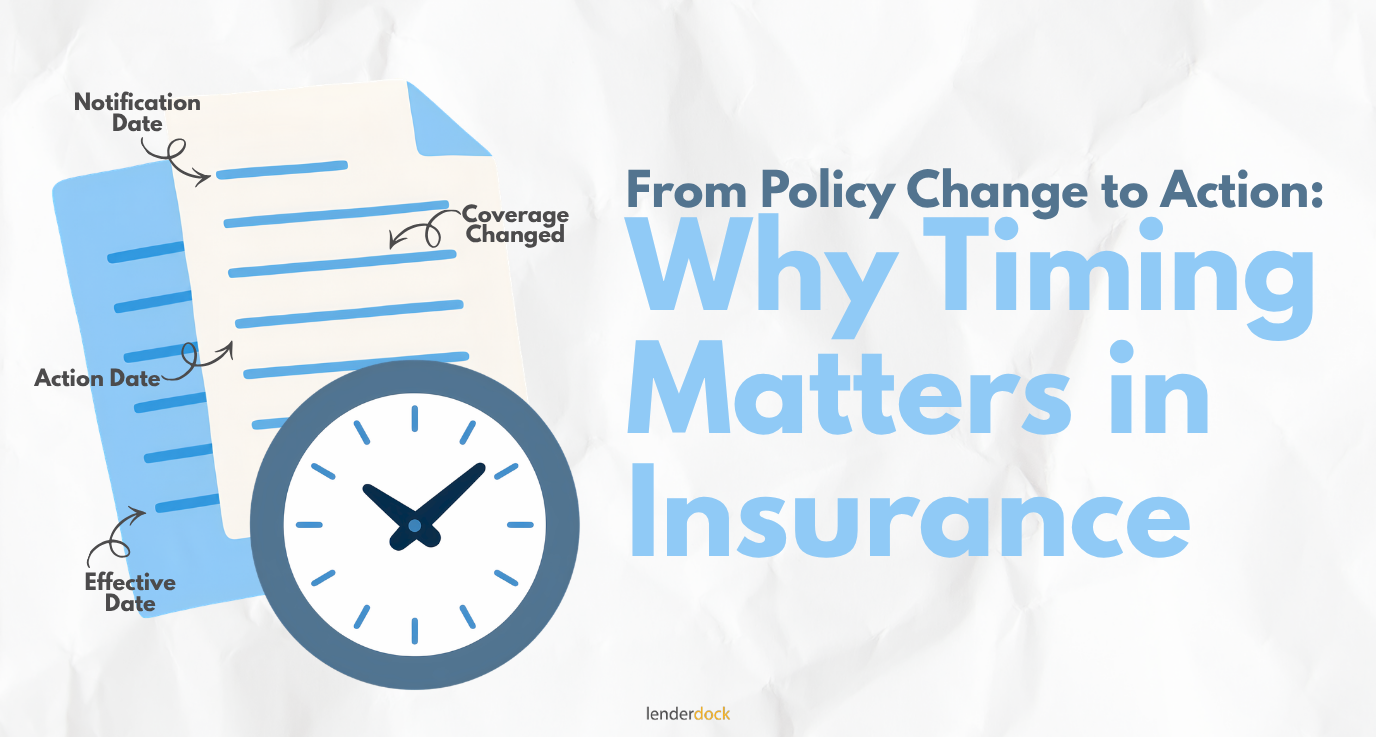
We’ve heard people in mortgage servicing use verification and tracking as if they’re interchangeable, and honestly, for a lot of daily work, treating them that way doesn’t break anything.
A two-day lag between a policy change and everyone finding out about it used to be annoying, not dangerous. Someone made a call, waited, got an answer, and moved on with their day.
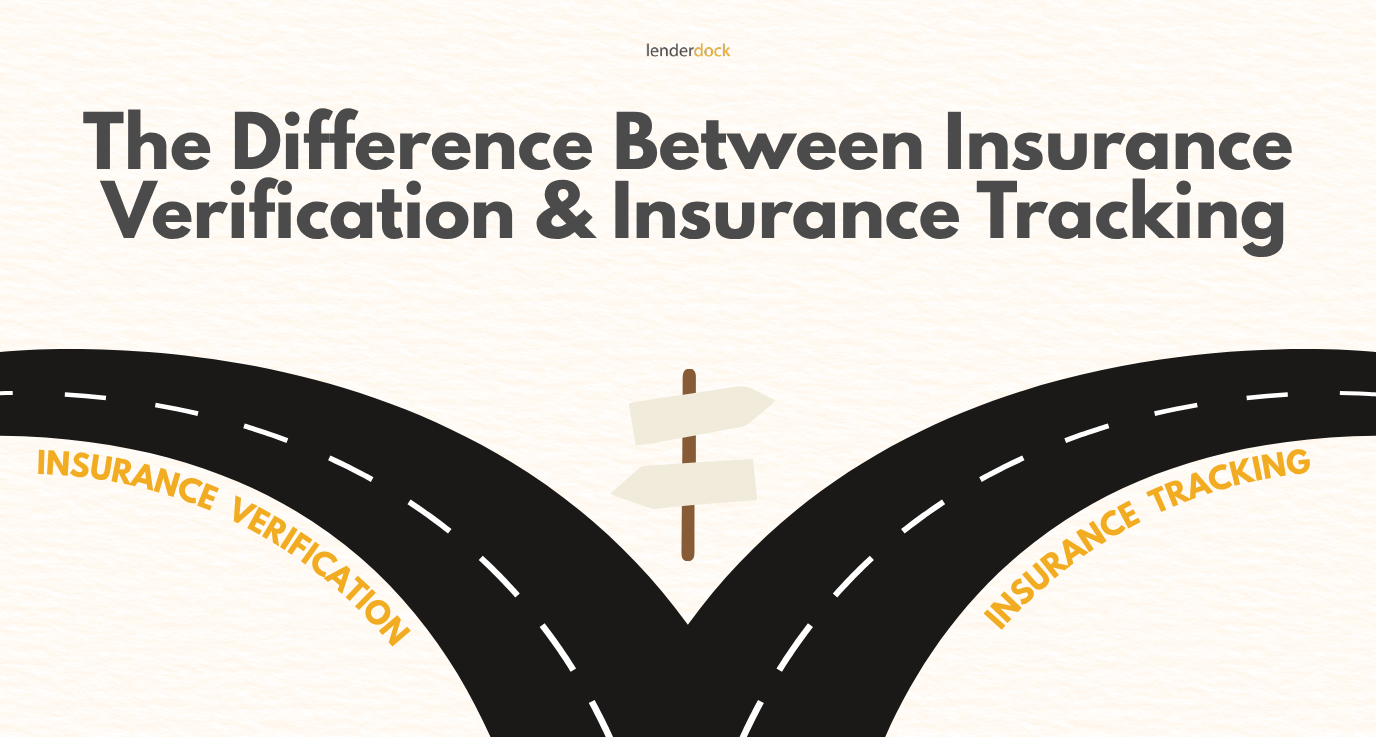
We’ve heard people in mortgage servicing use verification and tracking as if they’re interchangeable, and honestly, for a lot of daily work, treating them that way doesn’t break anything.
Insurance verification is a routine part of the lending and insurance process. A lender needs to know whether a policy is active. A mortgage servicer may need to confirm coverage or mortgagee information. An insurance…
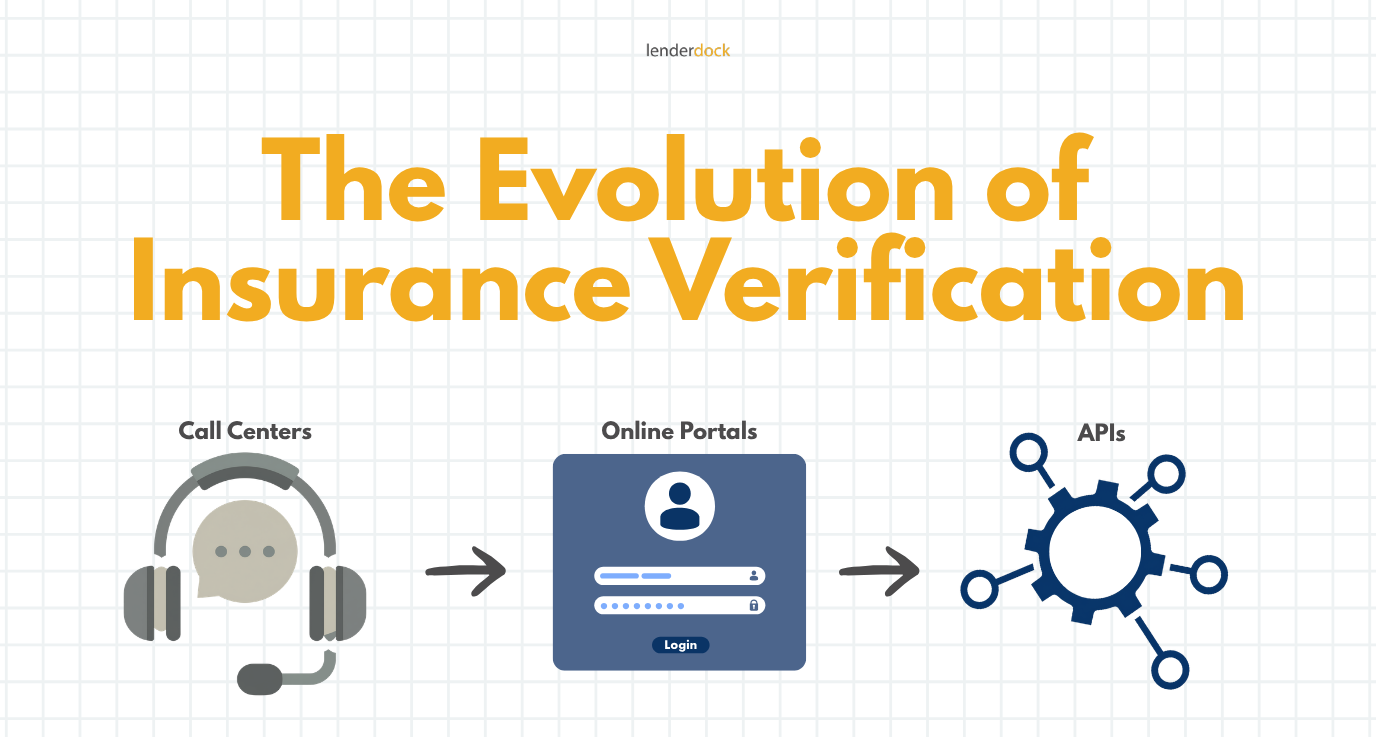
In the earliest version of insurance verification, the person answering the phone actually had to know things. They pulled a physical file, checked handwriting against a ledger, and made a judgment call about whether what…
Two insurers can each have perfectly accurate, well-maintained policy databases and still fail to exchange a single piece of usable data between them.
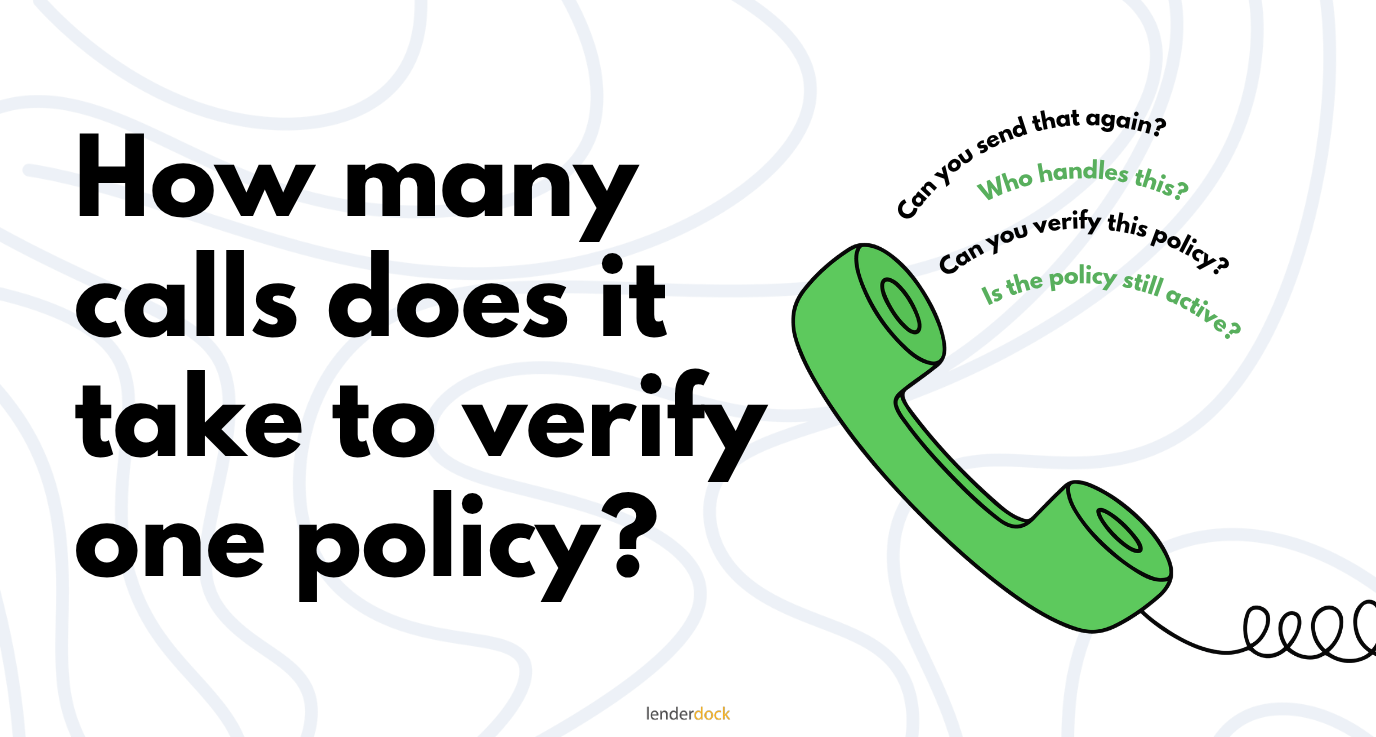
Every single day, insurance workers face a mountain of simple questions. Are they tired of answering the same questions about policy coverage all day long? Yes, they are. When banks or lenders need to check…
A title company closing a home sale needs to confirm the seller’s policy is active before the deal can move. An auto lender needs the same thing before releasing funds on a car loan. A…
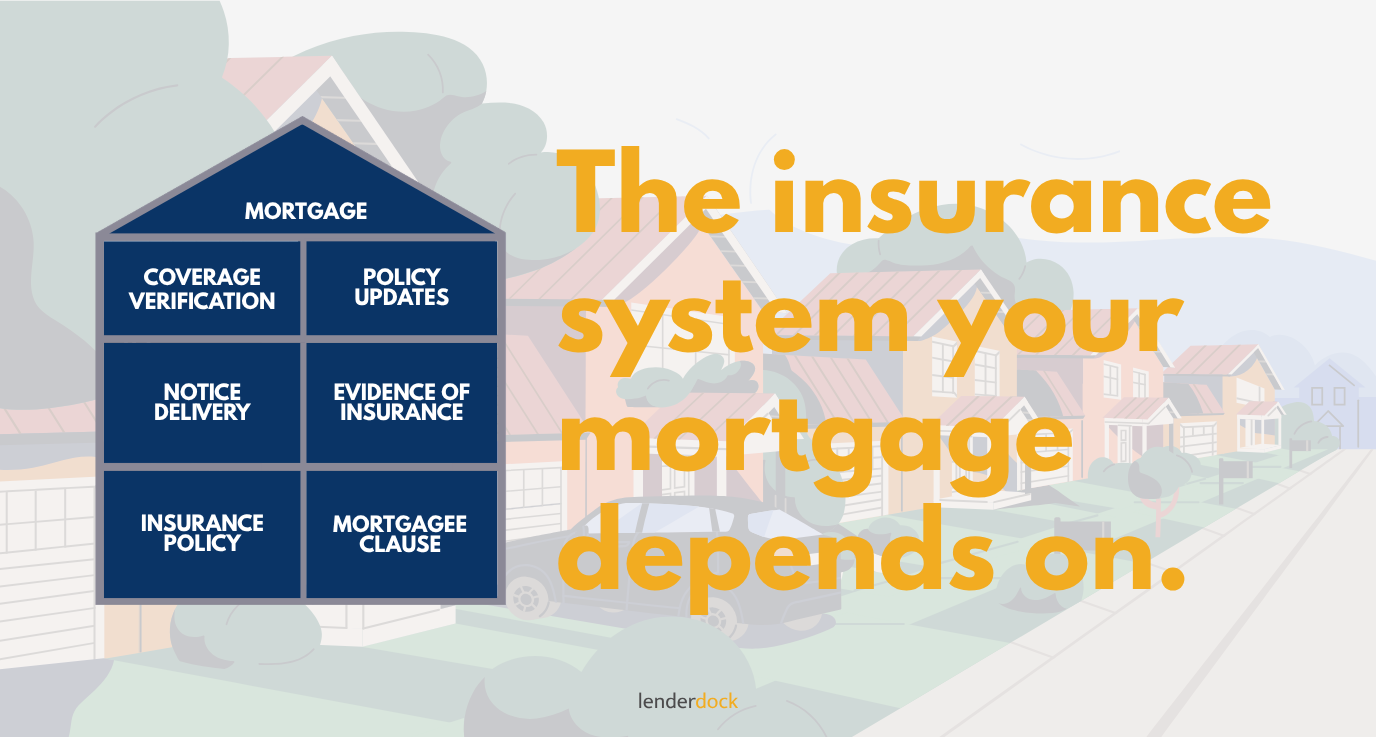
Most people who take out a mortgage never think about insurance as part of the loan itself. It feels adjacent, a separate purchase, something the lender requires but does not really participate in beyond checking…
Mortgagee corrections are a routine part of insurance servicing, but the process behind them is often anything but simple. A lender may find that the mortgagee’s name or address on a policy is out of…


We consectetur adipiscing elit tempor incididunt ut labore. Wondering ipsum dolor sit amet? We consectetur adipiscing ipsum nulla glavrida elit tempor incididunt.