From Policy Change to Action: Why Timing Matters in Insurance
We’ve heard people in mortgage servicing use verification and tracking as if they’re interchangeable, and honestly, for a lot of daily work, treating them that way doesn’t break anything.


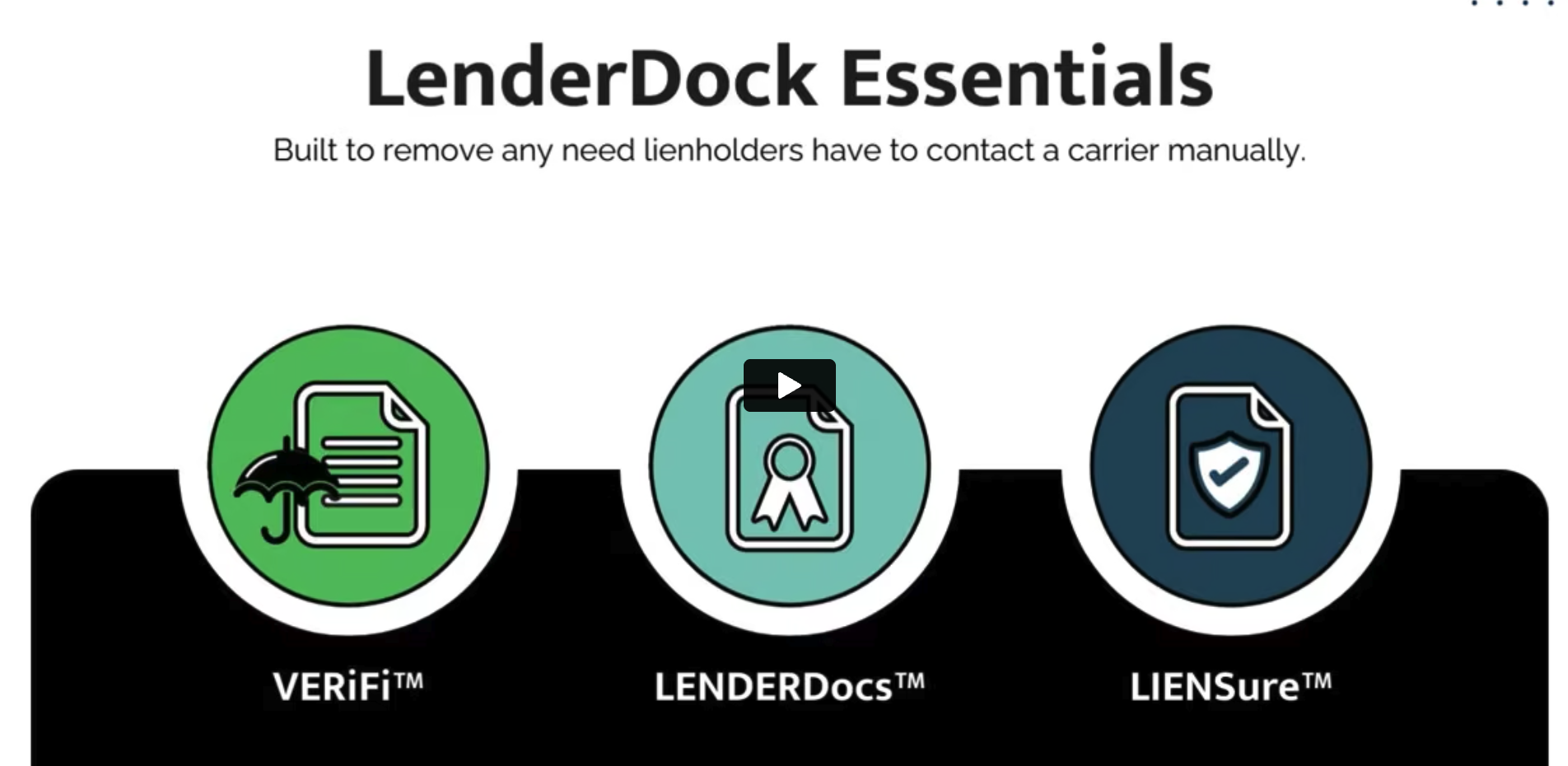
LenderDock provides real-time, insurance policy details through its magical web portal or its APIs.

LIENSure sends corrections digitally, straight from the financial source of truth and in bulk for easy processing.

ESCROWPay verifies what’s actually due before the money moves, then sends the payment and reconciliation data digitally.

NOTiFi delivers required policy, coverage, and billing notices in the formats lienholders actually use
At least check out the genesis of LenderDock Video. It’ll all make sense, the eco-system, that is.
Learn more about our great leadership team and our amazing, people-first, company culture.
There’s a lot going on at LenderDock and in our industries. We threw it all here to make it easier to keep up.
We go to a lot of events and we love to eat. See our calendar of where we’ll be.
New webinars will be coming quite frequently. Educational, success, and sales.
The home insurance sector is frequently perceived as a “follower” of innovation in comparison to other insurance verticals, such as auto. Specifically, touchless claims—a procedure in which the adjuster and customer do not interact face-to-face—have skyrocketed in the number of vehicle claims but are still mostly considered as aspirational goals for house insurance in general.
Since the COVID-19 epidemic four years ago, there has been a significant and rapid increase in homeowner claim technology, virtual inspection choices, and the desk adjuster model. This has resulted in an urgent demand for innovation. Property claims were being handled and resolved without an adjuster or other contractor present for inspection or evaluation on-site often in the history of our sector.
While the pandemic was mostly responsible for the positive digital revolution, not all the results were ideal. Adjusters were occasionally left to oversee a disorganized system of vendors, procedures, and tools despite the industry’s adoption of new tools and technology.
Recently, more difficulties have surfaced on top of previous difficulties. It’s commonly known that the pandemic caused inflation, and the sector was negatively impacted by labor shortages and supply chain problems.
Data indicates that the homeowners’ insurance industry has seen rising claim severity for seven years running, even in the absence of the pandemic. According to CoreLogic statistics, recent hail damage shattered previous records at every National Weather Service office. Lastly, JD Power reports that in just two years, repair cycle durations have increased by 33%, or around six days.
In the face of these challenges, adjusters are expected to perform greater duties and process claims at a historical rate.
Collaboration is essential in identifying the optimal blend of claim touchpoints to enhance efficiency and accuracy, benefiting homeowners, adjusters, and insurers alike. The realm of homeowners’ insurance stands at a pivotal juncture, with the industry prioritizing swift and fair settlements.
Because each home is unique, many claims pertaining to residential property will never be “touchless.” Evaluating the damage and repairability of a home can be a complicated process. However, there are several chances to “touch less,” which leads to a seamless homeowner experience, an optimized adjuster workflow, and an effective carrier claims management program.
Insurance companies that successfully handle low touch claims usually have the following characteristics, albeit the exact number of touchpoints will depend on the specifics and requirements of each claim.
Homes aren’t standardized, as was previously mentioned, but that doesn’t mean decision-making can’t be. Large volumes of data are managed or at the disposal of homeowners’ insurance firms, ranging from policyholder and claim history to material availability and cost.
The advancement and settlement of claims can be standardized with the use of such data. For example, centralized or third-party analysis can reliably respond to questions about repairability, pricing, material availability, and timing following the first collection of measurements and photos of damage. All of that can happen without the requirement for a follow-up visit or other additional touchpoints. More significantly, though, is that it enables carriers to handle claims more uniformly, regardless of their location or level of severity.
It goes without saying, but it must be acknowledged that modern technology can also work in our favor. It could be revolutionary to combine massive data sets with digital technologies that expedite our ability to make informed judgments.
There is much talk about artificial intelligence (AI) and machine learning, and these technologies are becoming more and more important in automating claims. There are also interesting new ways that the industry is utilizing “big data.” Although most property disputes will probably never be managed entirely by this technology, it will speed up procedures without compromising accuracy.
Though technology is undoubtedly important, as everyone reading this tale knows, it can also be harmful. A disorganized and confused process will result from adjusters and homeowners investing in an excessive number of different tools and resources. If intelligence justifies the trouble and any negative effects on adjuster workflows, then investing in strong data and decision-making assistance is worthwhile.
Our sector must embrace consolidation and integration as it works to create a culture and practices that support “touchless” claims. Rather than adding steps to an already complicated process, we should seek ways to integrate data and intelligence into current workflows.
Without the cooperation of every employee, no organization will be able to implement the change. Although difficult, change management is essential, particularly when one approach has long been “the way”. However, you can use your statistics as a very effective instrument to gain support.
Utilize the data to demonstrate how a better strategy will make day-to-day operations easier and more productive. For example, illustrate how the number of adjuster touchpoints and average claim cycle times are related.
Although the settlement amounts for cars and homes will never be the same, there are some similarities that can assist homeowners’ insurance enter a new, more precise, and more efficient era of claims processing. Although it’s unlikely that a totally touchless ecosystem will ever be achieved, developing a less touch process can be a catalyst for industry stabilization and the creation of a bright future.
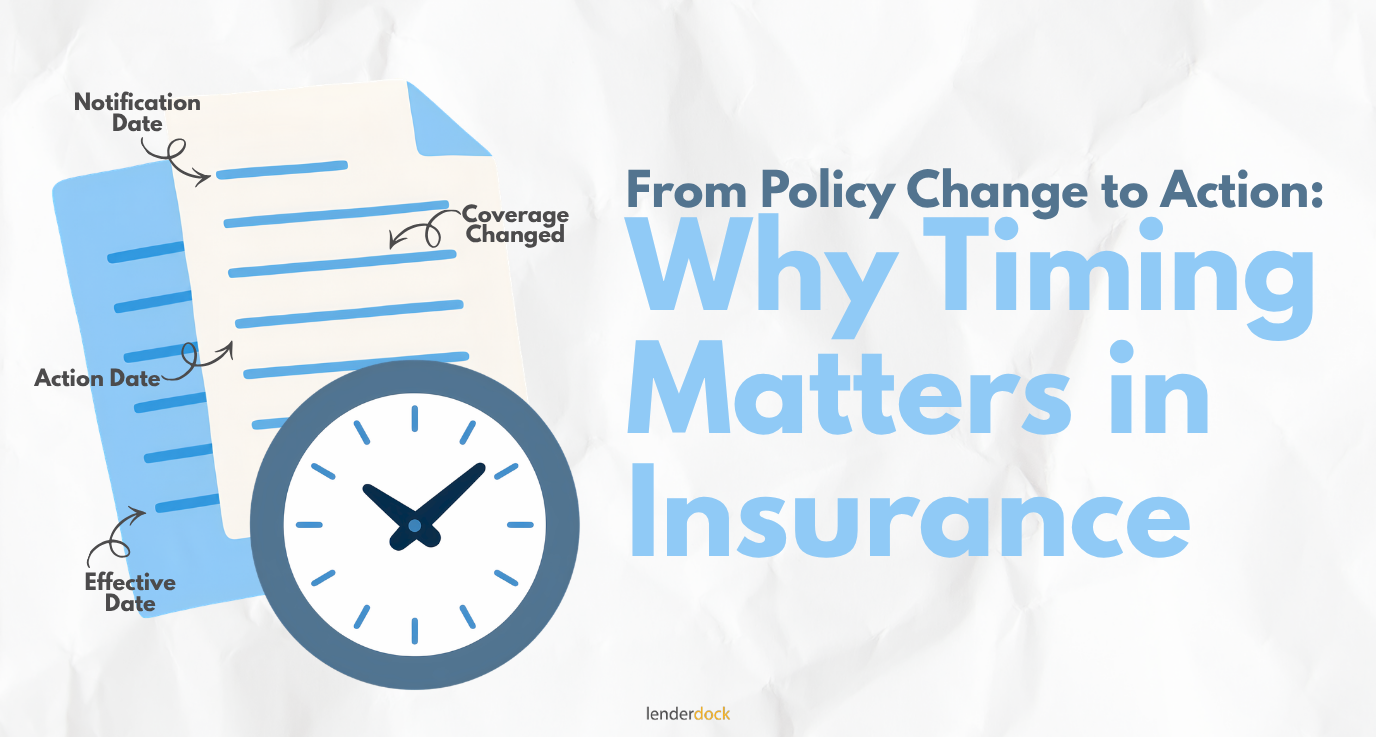
We’ve heard people in mortgage servicing use verification and tracking as if they’re interchangeable, and honestly, for a lot of daily work, treating them that way doesn’t break anything.
A two-day lag between a policy change and everyone finding out about it used to be annoying, not dangerous. Someone made a call, waited, got an answer, and moved on with their day.
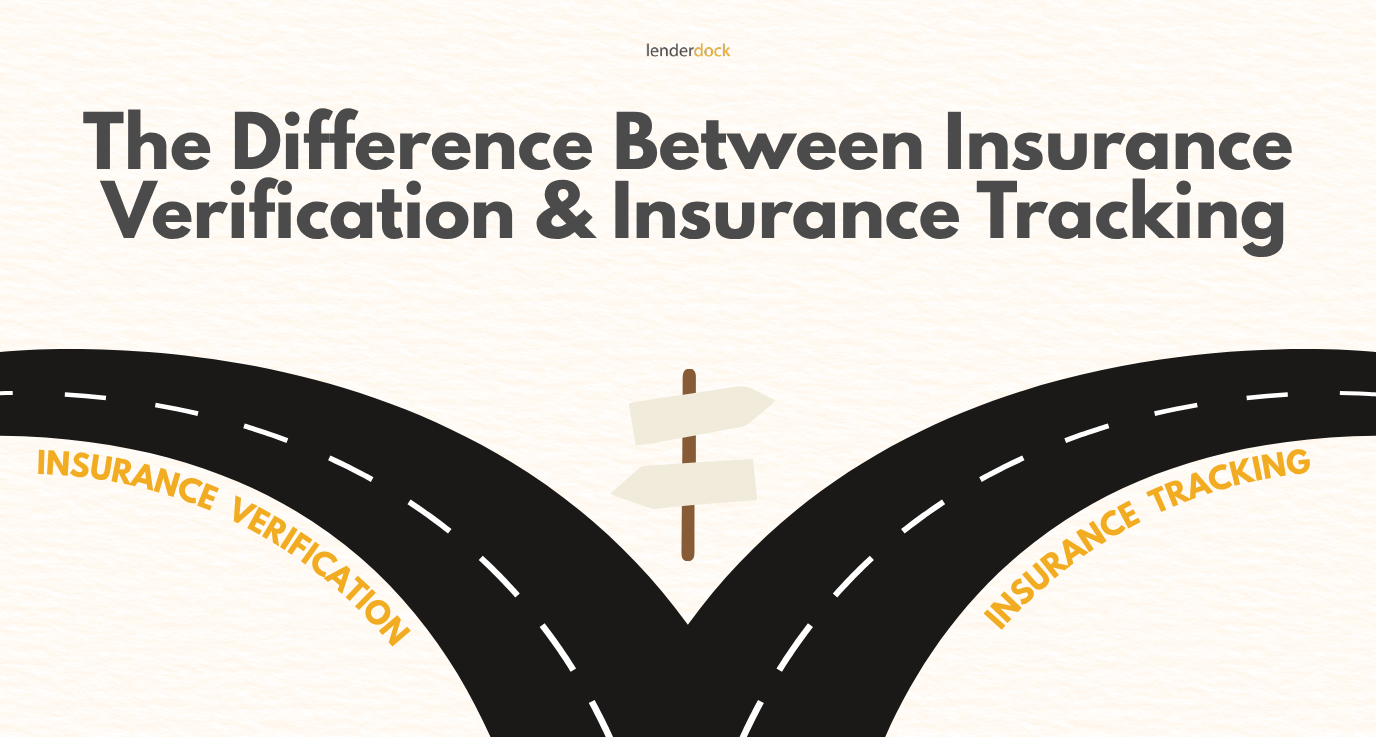
We’ve heard people in mortgage servicing use verification and tracking as if they’re interchangeable, and honestly, for a lot of daily work, treating them that way doesn’t break anything.
Insurance verification is a routine part of the lending and insurance process. A lender needs to know whether a policy is active. A mortgage servicer may need to confirm coverage or mortgagee information. An insurance…
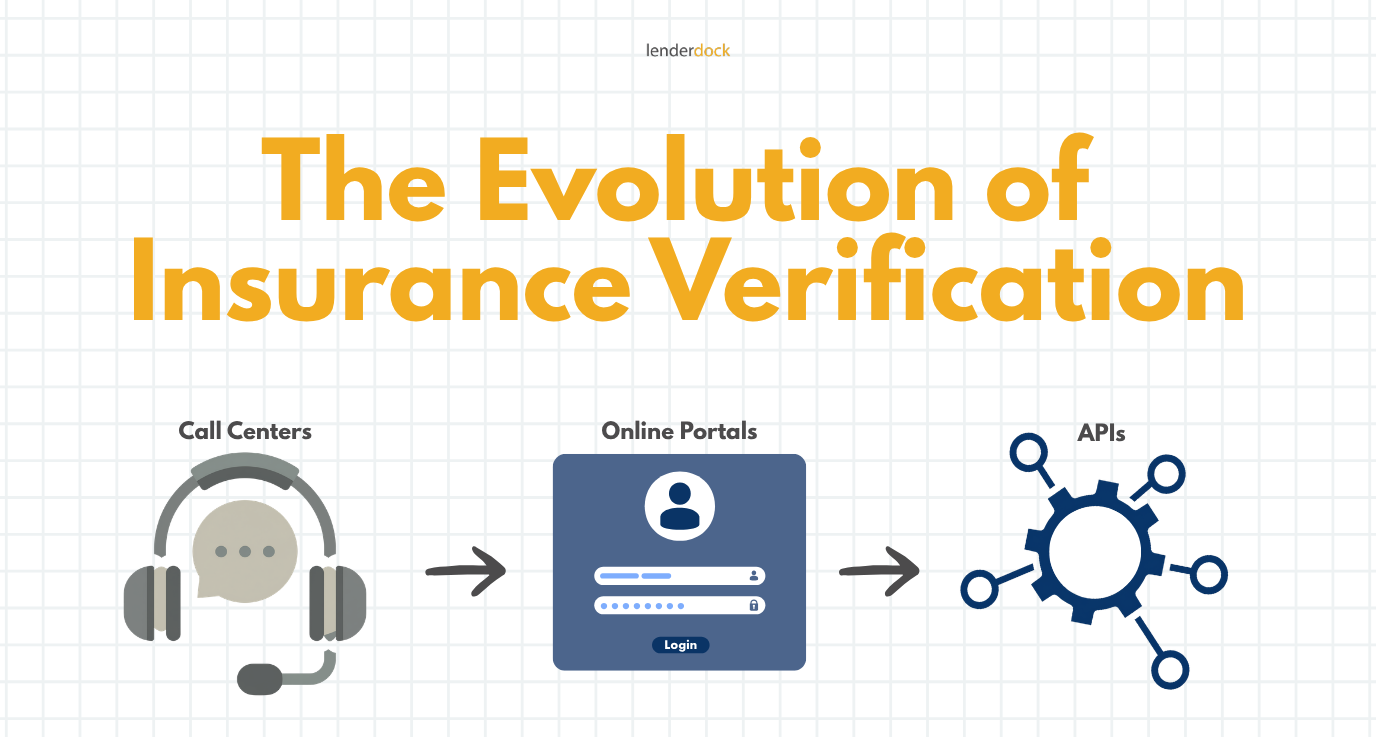
In the earliest version of insurance verification, the person answering the phone actually had to know things. They pulled a physical file, checked handwriting against a ledger, and made a judgment call about whether what…
Two insurers can each have perfectly accurate, well-maintained policy databases and still fail to exchange a single piece of usable data between them.
Every single day, insurance workers face a mountain of simple questions. Are they tired of answering the same questions about policy coverage all day long? Yes, they are. When banks or lenders need to check…
A title company closing a home sale needs to confirm the seller’s policy is active before the deal can move. An auto lender needs the same thing before releasing funds on a car loan. A…
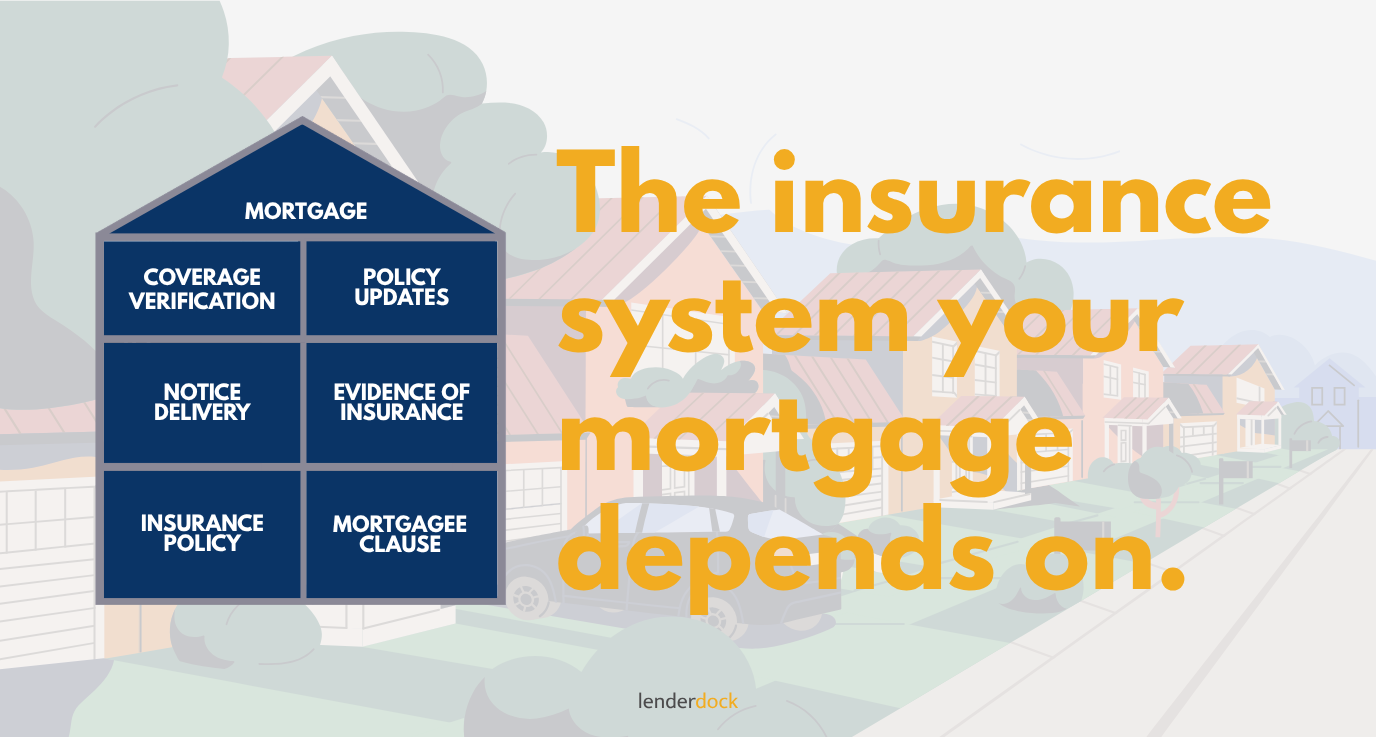
Most people who take out a mortgage never think about insurance as part of the loan itself. It feels adjacent, a separate purchase, something the lender requires but does not really participate in beyond checking…
Mortgagee corrections are a routine part of insurance servicing, but the process behind them is often anything but simple. A lender may find that the mortgagee’s name or address on a policy is out of…


We consectetur adipiscing elit tempor incididunt ut labore. Wondering ipsum dolor sit amet? We consectetur adipiscing ipsum nulla glavrida elit tempor incididunt.