From Policy Change to Action: Why Timing Matters in Insurance
We’ve heard people in mortgage servicing use verification and tracking as if they’re interchangeable, and honestly, for a lot of daily work, treating them that way doesn’t break anything.


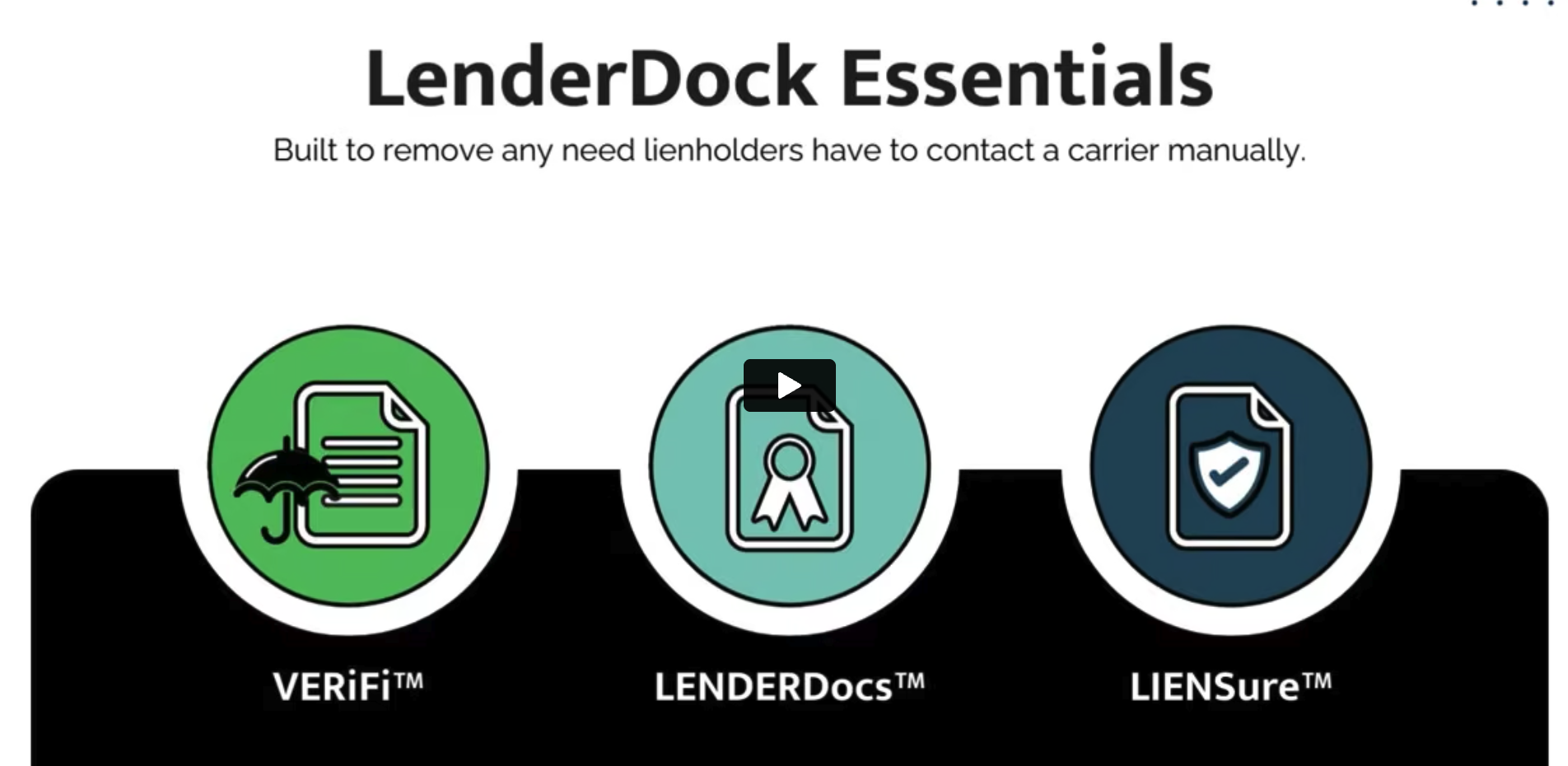
LenderDock provides real-time, insurance policy details through its magical web portal or its APIs.

LIENSure sends corrections digitally, straight from the financial source of truth and in bulk for easy processing.

ESCROWPay verifies what’s actually due before the money moves, then sends the payment and reconciliation data digitally.

NOTiFi delivers required policy, coverage, and billing notices in the formats lienholders actually use
At least check out the genesis of LenderDock Video. It’ll all make sense, the eco-system, that is.
Learn more about our great leadership team and our amazing, people-first, company culture.
There’s a lot going on at LenderDock and in our industries. We threw it all here to make it easier to keep up.
We go to a lot of events and we love to eat. See our calendar of where we’ll be.
New webinars will be coming quite frequently. Educational, success, and sales.
Today, technology has become a cornerstone for driving efficiency, fostering innovation, and enhancing profitability.
From the early adoption of digital platforms for policy management to the integration of data analytics for risk assessment, insurers have continuously embraced technological advancements to stay competitive in a rapidly changing market.
Artificial Intelligence (AI) is at the forefront of this technological revolution, offering opportunities for insurers to improve decision-making, enhancing customer experiences, and reap many benefits. However, alongside the promises of AI lie significant challenges that insurers must overcome to unlock its full potential.
This article attempts to uncover why AI adoption has been low, provide remedies for those challenges, while also examining successful problem-solvers.
Inaccurate or insufficient data can lead to biased predictions and erroneous decisions, posing risks to insurers and customers alike.
For instance, AI systems, particularly Generative AI, may produce inaccuracies known as “hallucinations,” where false information is generated. These inaccuracies undermine the reliability of AI models.
Problem-solver
DataRobot offers AI-driven solutions for data preparation, enabling insurance companies to clean, structure, and enrich their data efficiently. Their platform empowers insurers to leverage advanced analytics and machine learning to improve data quality and make more accurate predictions.
For data to yield reliable insights, as explained in the previous paragraphs, a substantial amount must be collected. However, this often blurs the lines regarding the kinds of data that can be collected.
Data privacy regulations such as GDPR and HIPAA typically restrict insurers and other entities from overstepping these boundaries, with strict enforcement backed by heavy legal penalties.
Moreover, robust, and advanced security measures must be implemented to thwart data breaches, albeit at an additional cost.
Problem-solver
Acquired by Informatica in mid-2023, Privitar offers privacy engineering solutions for organizations, including insurance companies. Their platform facilitates the anonymization and de-identification of sensitive data, ensuring compliance with data protection regulations while enabling meaningful analysis and insights.
Often, AI algorithms operate as “black boxes,” lacking transparency and making it challenging for insurance professionals to comprehend AI-driven decisions.
“Black boxes” in AI refer to artificial intelligence systems whose inputs and operations are not visible to the user, or another interested party. Essentially, a black box represents an opaque system. Black box AI models reach conclusions or decisions without offering explanations on how they were derived.
This lack of interpretability can foster skepticism and distrust among stakeholders, impeding the adoption of AI technologies.
Insurers must prioritize the development of AI models that offer clear explanations for their decisions, allowing stakeholders to trust and validate AI-driven outcomes.
Problem-solver
DigitalOwl’s AI solutions prioritize transparency and explainability, providing clear reasoning for every decision and enabling insurance professionals to comprehend the underlying factors driving AI-driven outcomes.
By incorporating features that allow stakeholders to trace the decision-making process of AI models, insurers can cultivate trust and confidence in AI-driven processes. For instance, all DigitalOwl’s data points are clickable, directing users directly to the source document from which the data point was extracted.
According to a recent YouGov poll, health insurance ranks sixth among the industries most Americans believe should be regulated. , health insurance ranks sixth among the industries most Americans believe should be regulated.
Navigating the heavily regulated insurance industry while implementing AI solutions necessitates adherence to guidelines on underwriting, claims handling, and customer communication.
Non-compliance with regulatory standards can lead to fines, legal liabilities, and, worst of all, damage to the company’s reputation.
Insurers must stay updated on regulatory requirements and ensure that their AI systems comply with industry regulations.
Problem-solver
Compliance.ai offers regulatory compliance solutions powered by AI and machine learning. Their platform helps insurance companies stay up to date with regulatory changes and requirements by monitoring and analyzing regulatory content from various sources.
This enables insurers to ensure compliance with industry regulations and reduce the risk of non-compliance penalties.
While challenges like data quality, privacy, and regulatory compliance persist in implementing AI in insurance, proactive solutions like those offered by DigitalOwl, DataRobot, and many others around the globe pave the way for enhanced efficiency, transparency, and trust in AI-driven processes.
By addressing these challenges head-on and leveraging advanced technologies, insurers can unlock the full potential of AI to drive innovation and profitability in the insurance industry.
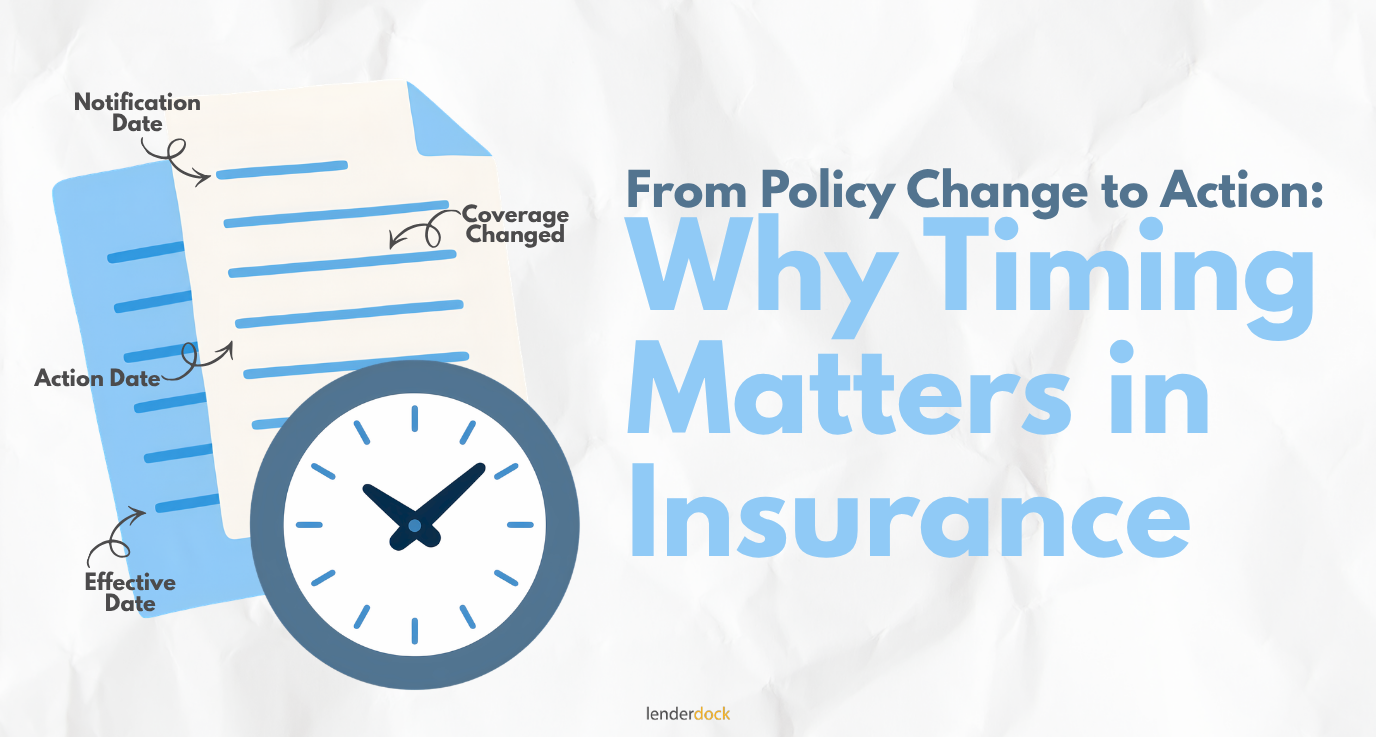
We’ve heard people in mortgage servicing use verification and tracking as if they’re interchangeable, and honestly, for a lot of daily work, treating them that way doesn’t break anything.
A two-day lag between a policy change and everyone finding out about it used to be annoying, not dangerous. Someone made a call, waited, got an answer, and moved on with their day.
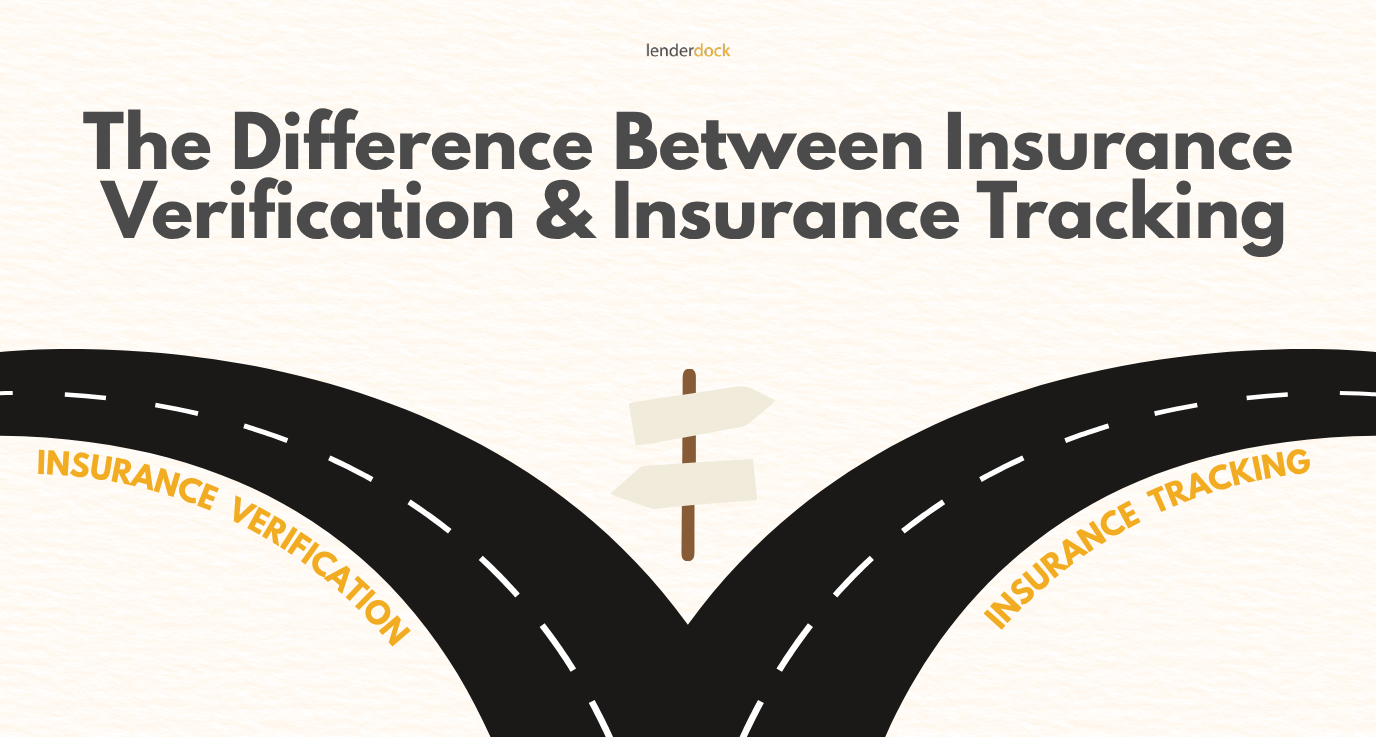
We’ve heard people in mortgage servicing use verification and tracking as if they’re interchangeable, and honestly, for a lot of daily work, treating them that way doesn’t break anything.
Insurance verification is a routine part of the lending and insurance process. A lender needs to know whether a policy is active. A mortgage servicer may need to confirm coverage or mortgagee information. An insurance…
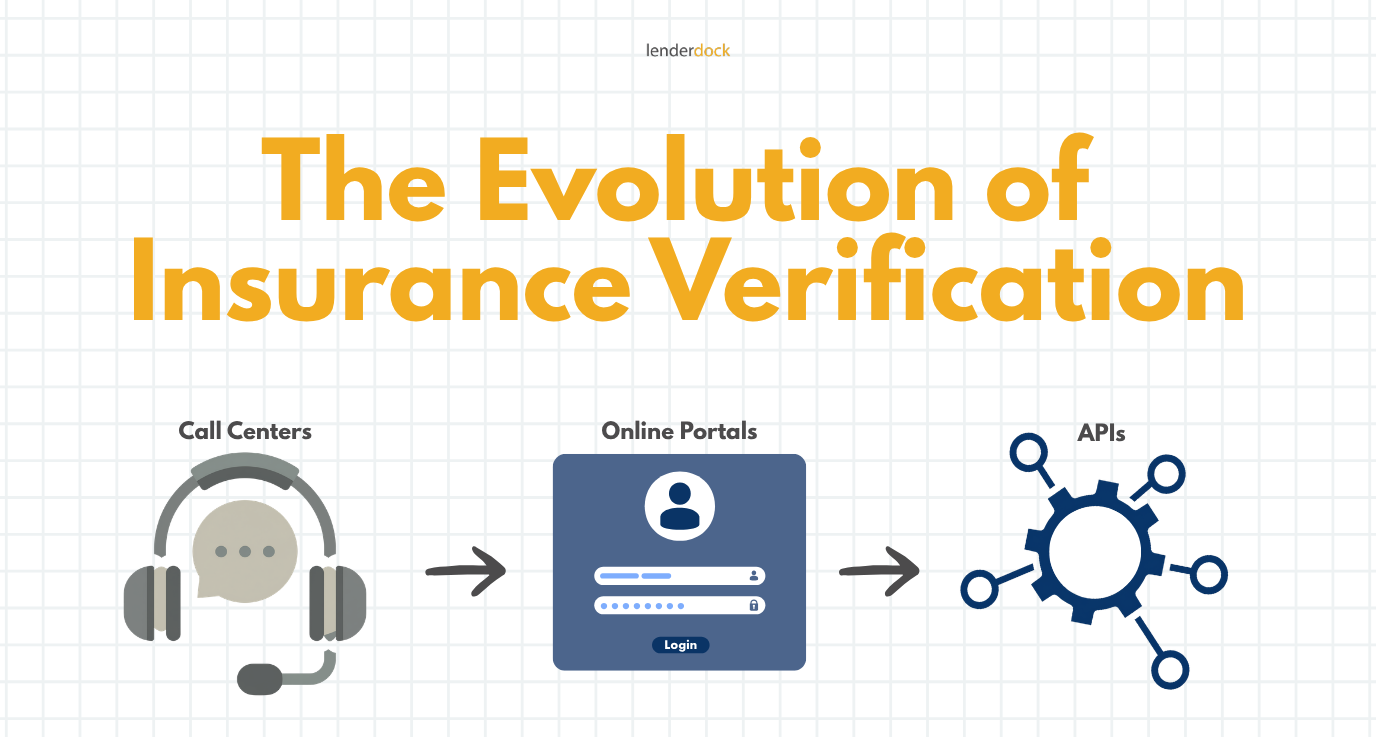
In the earliest version of insurance verification, the person answering the phone actually had to know things. They pulled a physical file, checked handwriting against a ledger, and made a judgment call about whether what…
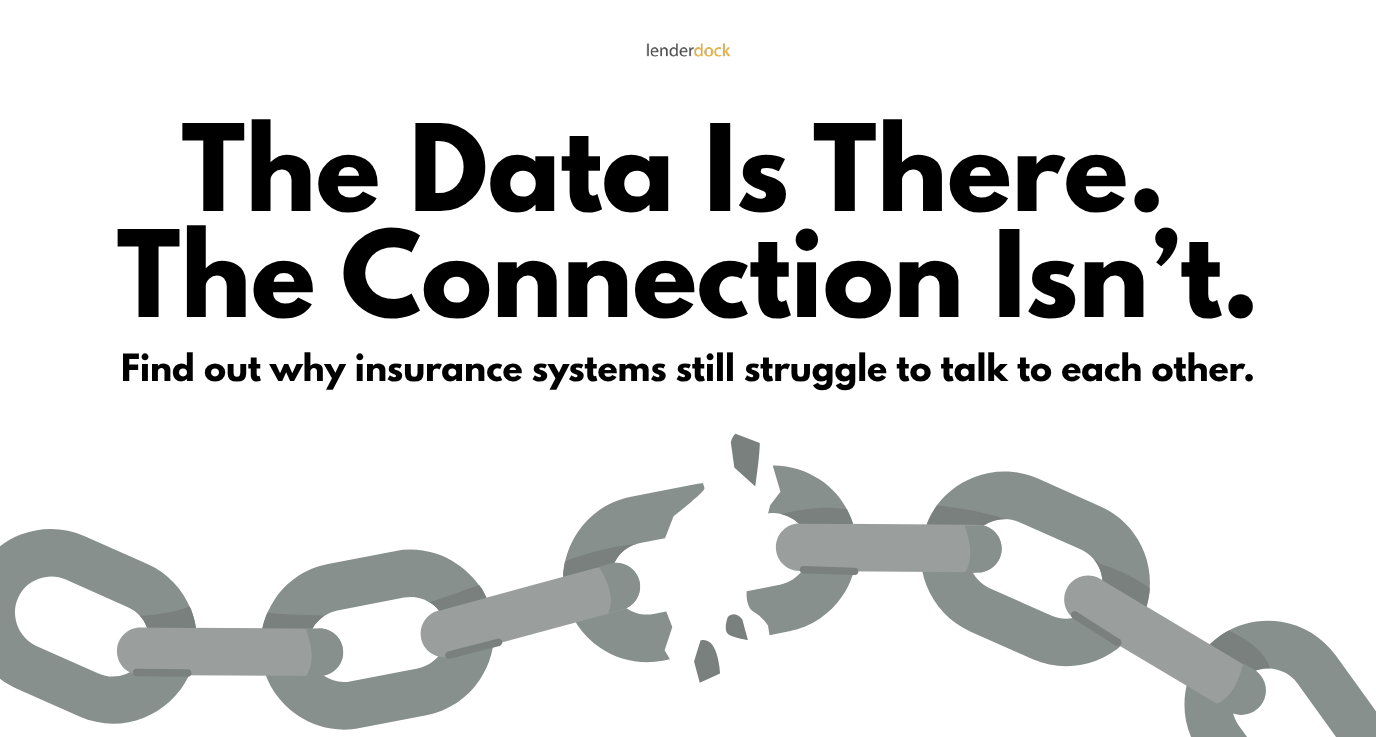
Two insurers can each have perfectly accurate, well-maintained policy databases and still fail to exchange a single piece of usable data between them.
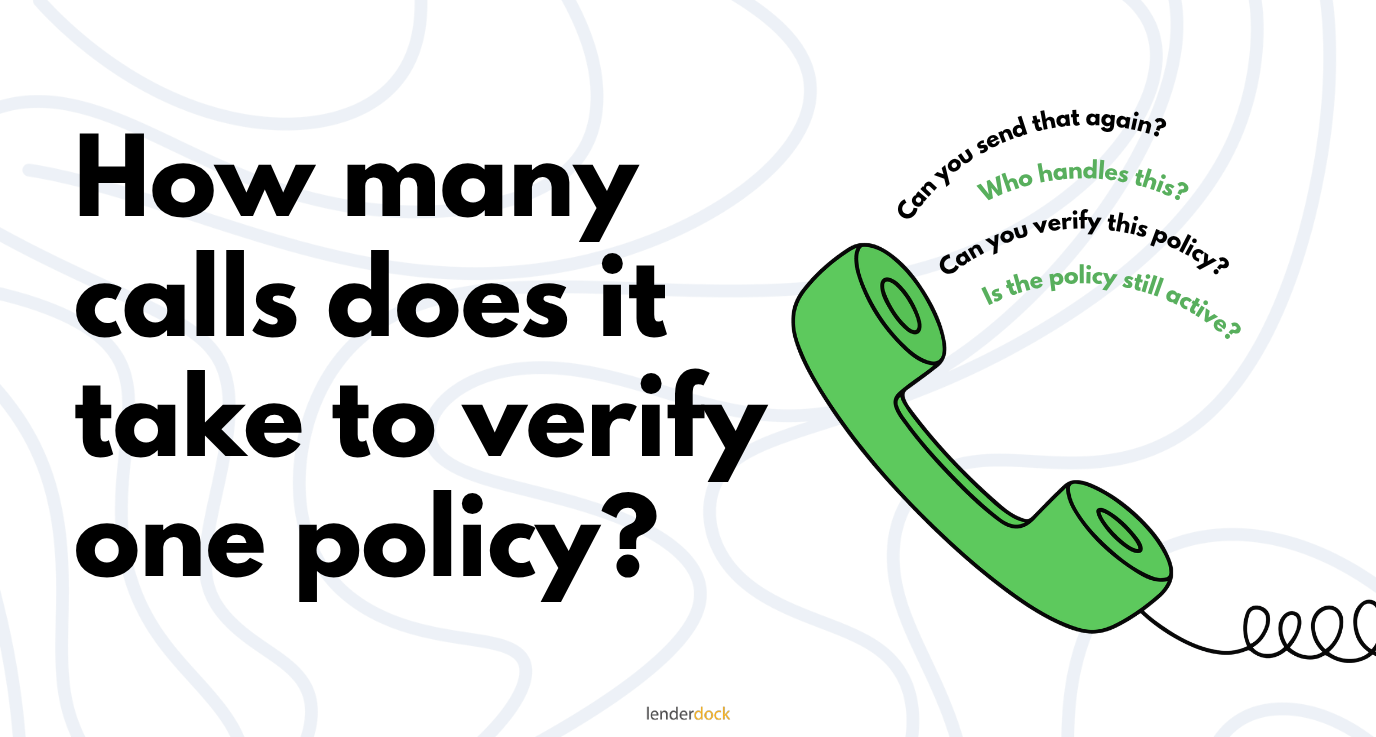
Every single day, insurance workers face a mountain of simple questions. Are they tired of answering the same questions about policy coverage all day long? Yes, they are. When banks or lenders need to check…
A title company closing a home sale needs to confirm the seller’s policy is active before the deal can move. An auto lender needs the same thing before releasing funds on a car loan. A…
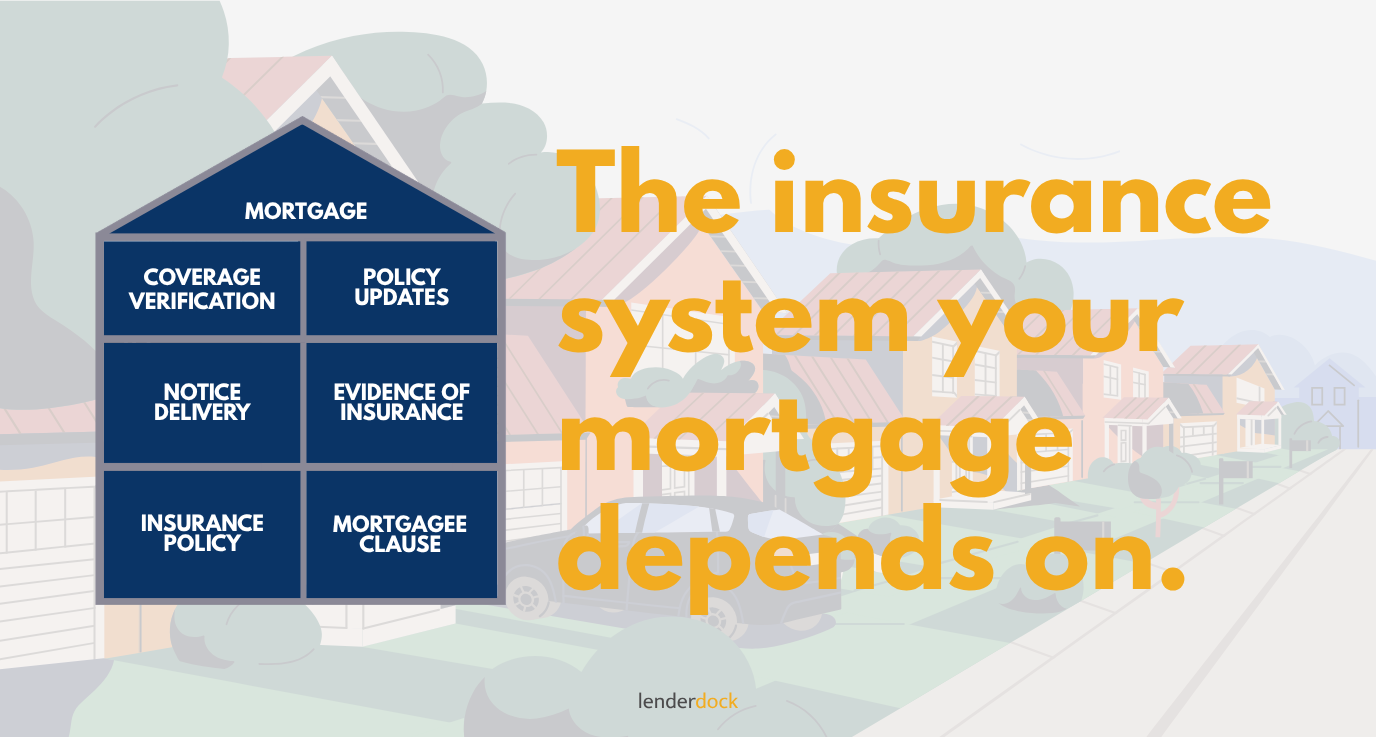
Most people who take out a mortgage never think about insurance as part of the loan itself. It feels adjacent, a separate purchase, something the lender requires but does not really participate in beyond checking…
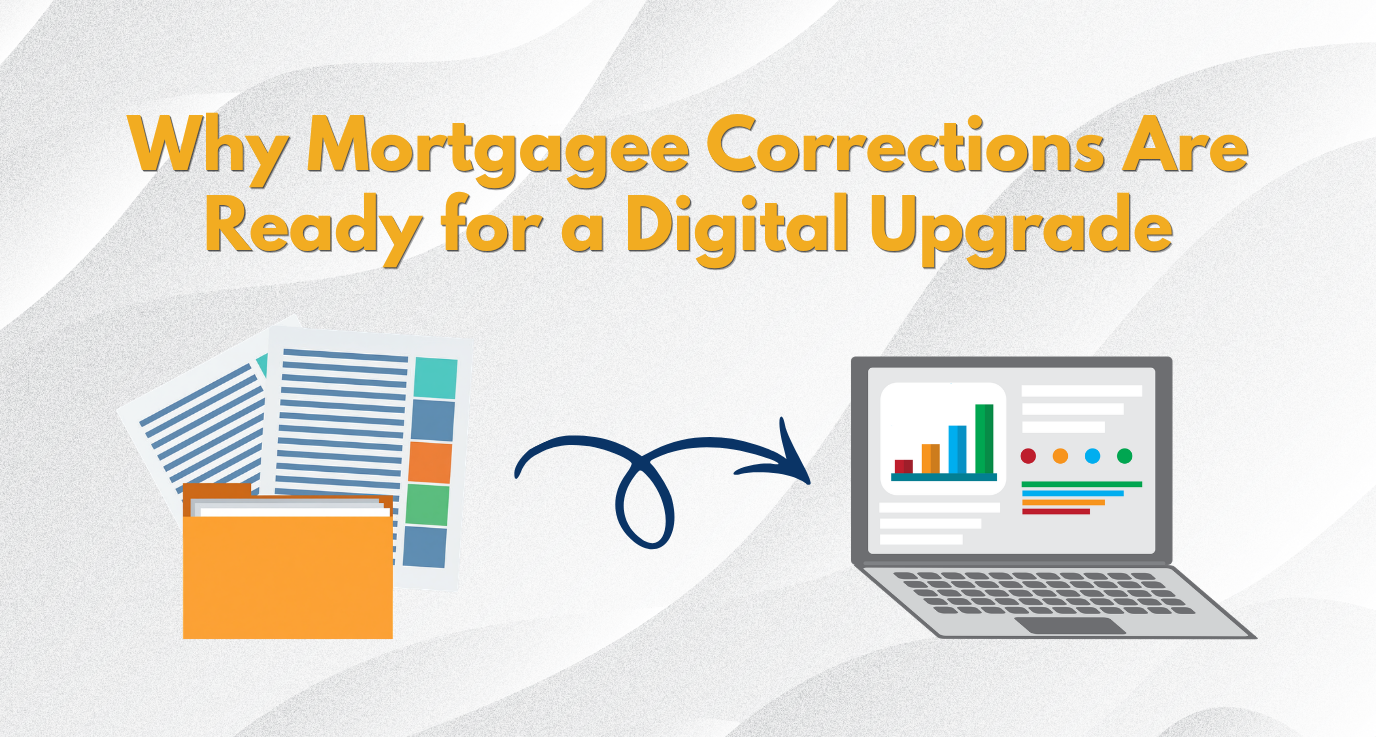
Mortgagee corrections are a routine part of insurance servicing, but the process behind them is often anything but simple. A lender may find that the mortgagee’s name or address on a policy is out of…


We consectetur adipiscing elit tempor incididunt ut labore. Wondering ipsum dolor sit amet? We consectetur adipiscing ipsum nulla glavrida elit tempor incididunt.