From Policy Change to Action: Why Timing Matters in Insurance
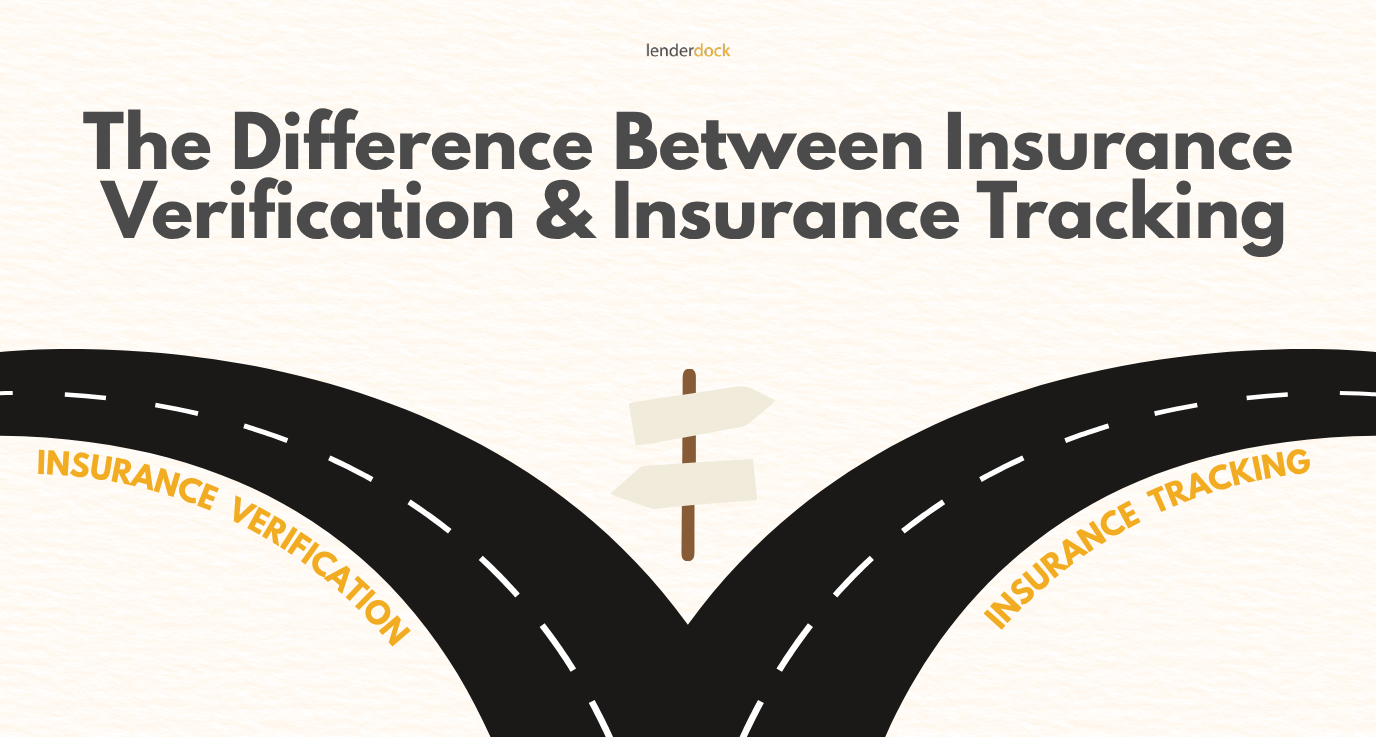
We’ve heard people in mortgage servicing use verification and tracking as if they’re interchangeable, and honestly, for a lot of daily work, treating them that way doesn’t break anything.


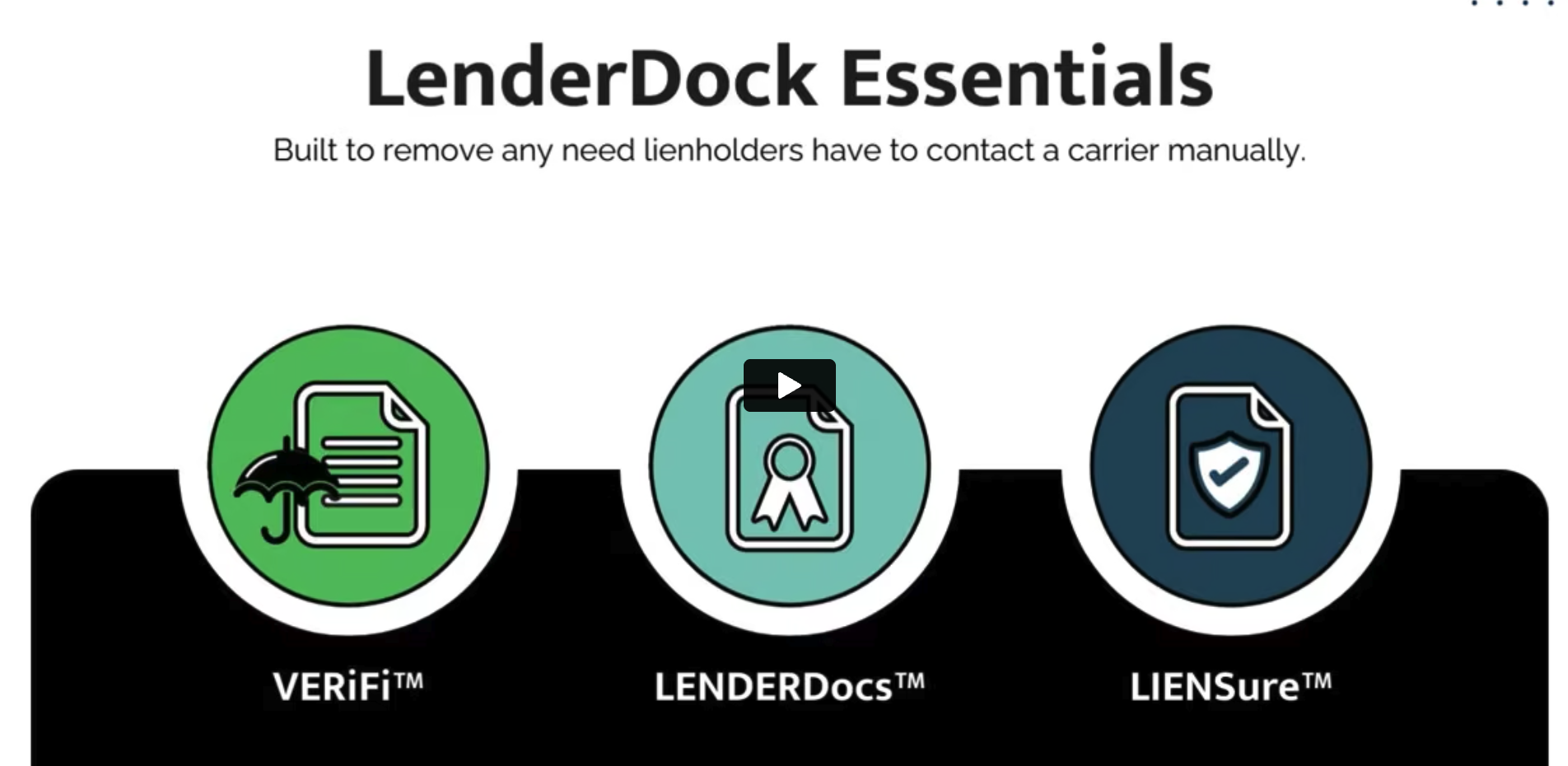
LenderDock provides real-time, insurance policy details through its magical web portal or its APIs.

LIENSure sends corrections digitally, straight from the financial source of truth and in bulk for easy processing.

ESCROWPay verifies what’s actually due before the money moves, then sends the payment and reconciliation data digitally.

NOTiFi delivers required policy, coverage, and billing notices in the formats lienholders actually use
At least check out the genesis of LenderDock Video. It’ll all make sense, the eco-system, that is.
Learn more about our great leadership team and our amazing, people-first, company culture.
There’s a lot going on at LenderDock and in our industries. We threw it all here to make it easier to keep up.
We go to a lot of events and we love to eat. See our calendar of where we’ll be.
New webinars will be coming quite frequently. Educational, success, and sales.
Insurance has always been a game of data, and rightfully so! It operates on the principle of pooling risks, whereby various homogeneous risks from different individuals and properties are combined to compensate those who encounter losses from actual perils.
However, since risk is not certain, data (big data) is collected and analyzed to assess the likelihood of such events occurring.
Having vast amounts of data can be both a blessing and a curse for the insurance industry. With data analytics ingrained in core functions like underwriting, claims, and finance, it poses a significant challenge to utilize the data effectively and ensure that it yields valuable insights for decision-making.
This is where advanced analytics comes in.
Advanced analytics refers to the application of sophisticated computational techniques and algorithms to analyze large and complex datasets to extract valuable insights, patterns, and trends.
With the aid of machine learning, predictive modeling, data mining, natural language processing, and even statistical analysis, advanced analytics goes even further to forecast outcomes and recommend actions.
Advanced analytics allows insurance companies to gain deeper insights into their customers by analyzing customer data, including past interactions, preferences, and behavior patterns.
This enables them to personalize their offerings, tailor communication strategies, and provide more relevant and timely services.
For instance, predictive analytics can anticipate customer needs and proactively offer recommendations or solutions, enhancing overall satisfaction and loyalty.
Many insurers estimate that 10 to 20 percent of claims are fraudulent, yet they can detect less than 20% of these.
By analyzing vast amounts of data from various sources, including claims history, transaction records, and external databases, advanced analytics can identify suspicious patterns and anomalies indicative of fraudulent behavior.
Machine learning algorithms can continuously learn and adapt to new fraud schemes, enabling insurers to stay one step ahead of fraudulent activities and minimize financial losses.
Advanced analytics streamlines internal processes within insurance companies by automating repetitive tasks and optimizing resource allocation. For instance, predictive analytics can forecast future demand for insurance products, enabling insurers to adjust their pricing strategies and underwriting guidelines accordingly.
Additionally, process mining techniques can analyze workflows and identify bottlenecks or inefficiencies, allowing insurers to reduce costs.
Last but not least, advanced analytics empowers insurance companies to make data-driven decisions across various business functions like marketing, product development, and operational planning. By analyzing customer behavior, market trends, and competitor insights, insurers can identify growth opportunities, optimize product offerings, and allocate resources effectively.
Real-time analytics dashboards and reporting tools provide actionable insights to decision-makers, enabling agile responses to changing market conditions and customer needs.
The software company, based in Alpharetta, Georgia, offers advanced predictive models and rules-based analytics that leverage vast data assets to help drive more objective underwriting and pricing decisions.
The firm works with several industries, most notably the insurance sector, and offers predictive underwriting, geospatial intelligence, and driver behavior scoring.
American Family Insurance uses Networked Insights which it acquired in 2017. Utilizing audience research, Networked Insights offers analytical insights that empower companies to make informed, data-driven marketing decisions, enhancing media efficiency in the process.
AIG’s Advanced Injury Analytics employs more than 100 time-sensitive formulas to consistently assess
claims as they develop, updating every 30 days to provide regular, timely insights into intricate cases.
It swiftly identifies severe injuries and directs the appropriate adjuster toward achieving the best possible outcome at each stage of the process.
As insurance operates on the bedrock of data, the application of advanced analytics becomes indispensable in navigating the complexities of risk assessment, fraud detection, and enhancing customer experience.
Through the integration of emerging technologies like machine learning, predictive modeling, and many others, advanced analytics stands as a transformative force within the insurance industry, offering insights behind mere numbers.
We’ve heard people in mortgage servicing use verification and tracking as if they’re interchangeable, and honestly, for a lot of daily work, treating them that way doesn’t break anything.
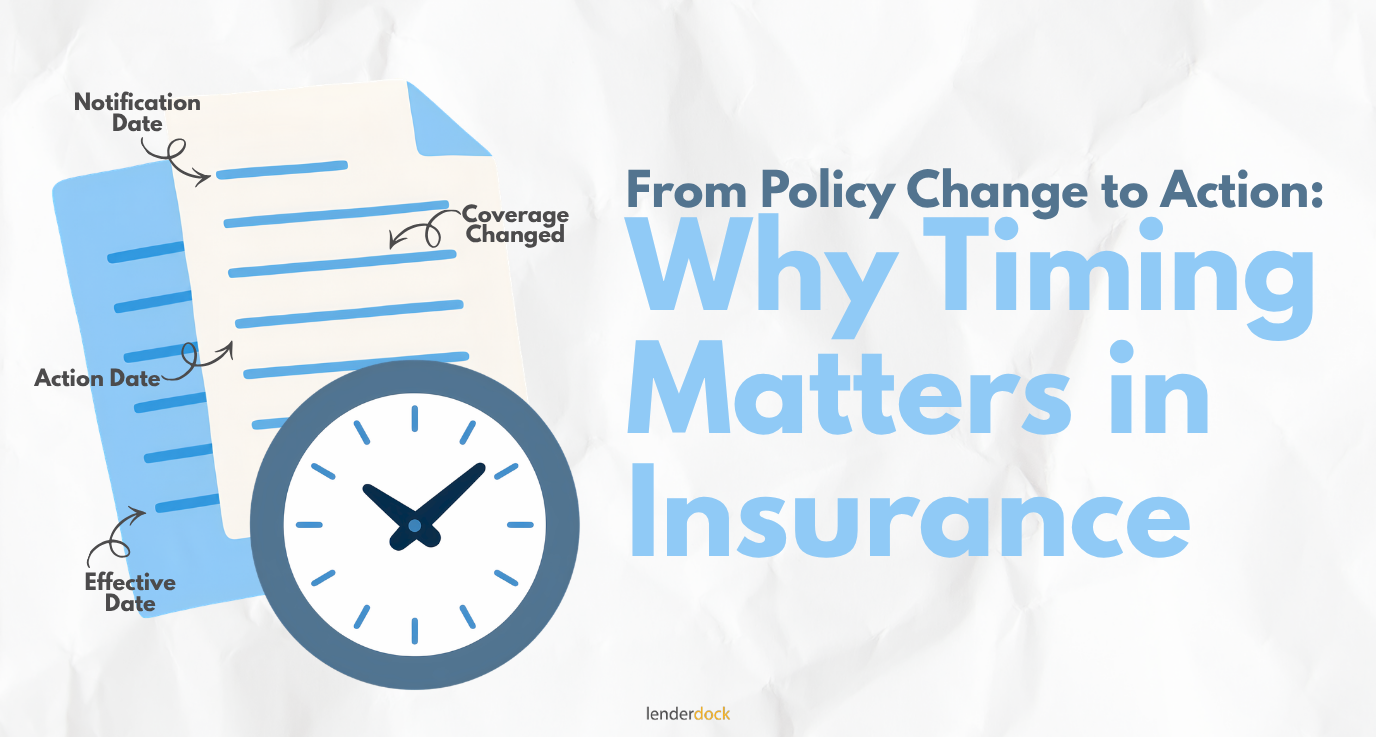
A two-day lag between a policy change and everyone finding out about it used to be annoying, not dangerous. Someone made a call, waited, got an answer, and moved on with their day.
We’ve heard people in mortgage servicing use verification and tracking as if they’re interchangeable, and honestly, for a lot of daily work, treating them that way doesn’t break anything.
Insurance verification is a routine part of the lending and insurance process. A lender needs to know whether a policy is active. A mortgage servicer may need to confirm coverage or mortgagee information. An insurance…
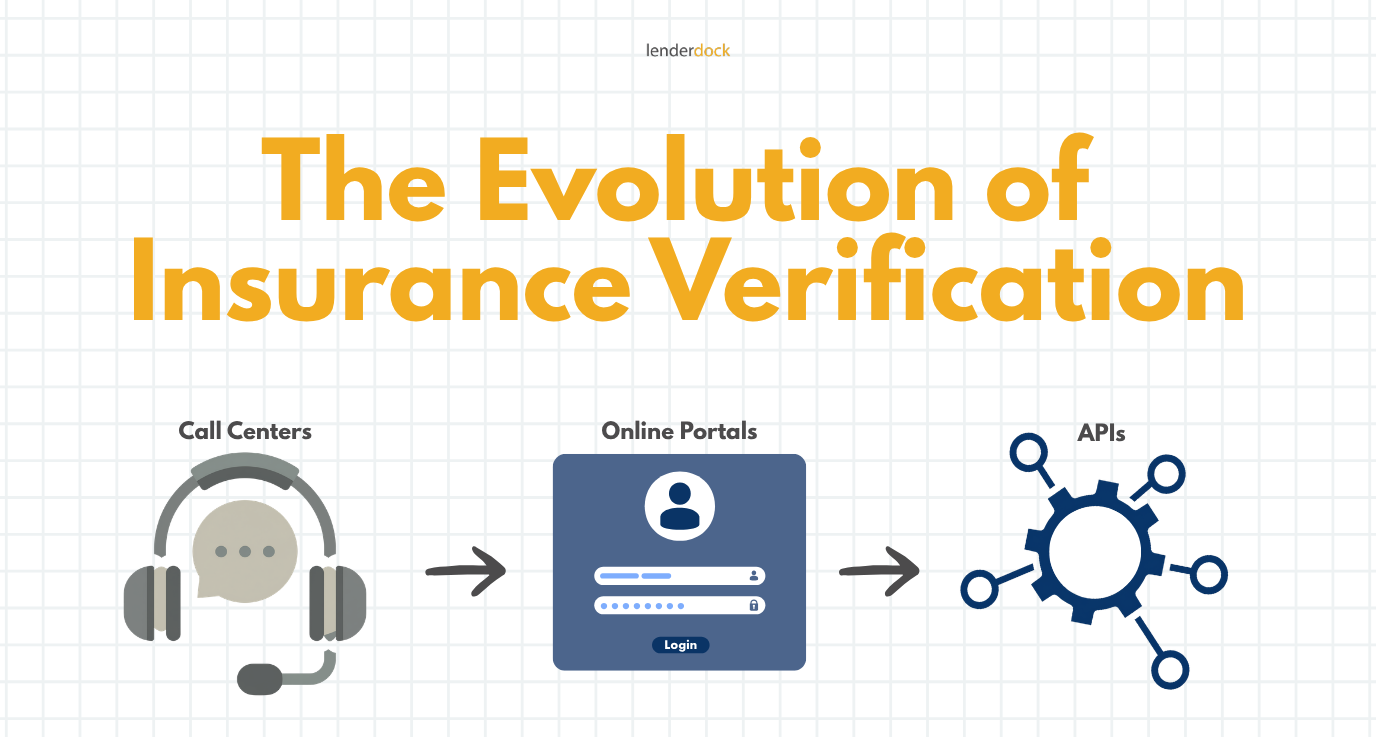
In the earliest version of insurance verification, the person answering the phone actually had to know things. They pulled a physical file, checked handwriting against a ledger, and made a judgment call about whether what…
Two insurers can each have perfectly accurate, well-maintained policy databases and still fail to exchange a single piece of usable data between them.
Every single day, insurance workers face a mountain of simple questions. Are they tired of answering the same questions about policy coverage all day long? Yes, they are. When banks or lenders need to check…
A title company closing a home sale needs to confirm the seller’s policy is active before the deal can move. An auto lender needs the same thing before releasing funds on a car loan. A…
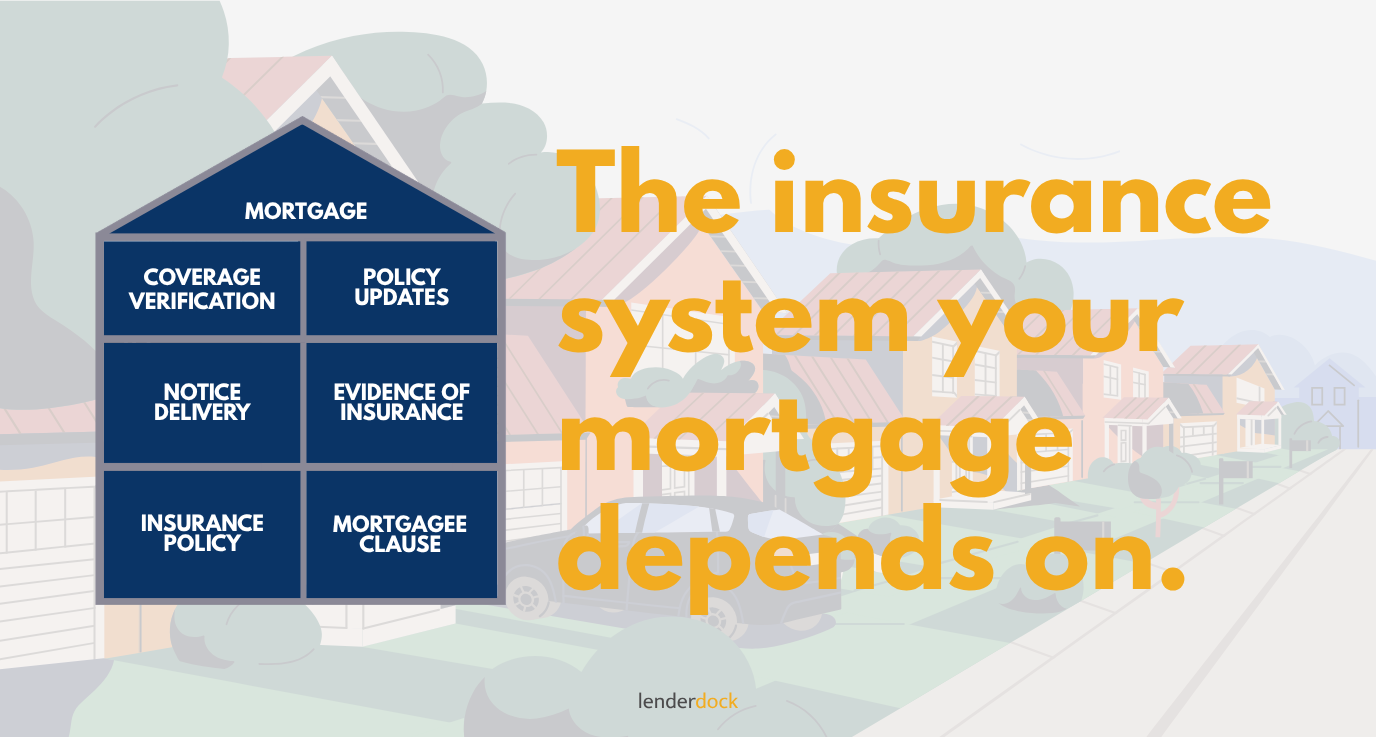
Most people who take out a mortgage never think about insurance as part of the loan itself. It feels adjacent, a separate purchase, something the lender requires but does not really participate in beyond checking…
Mortgagee corrections are a routine part of insurance servicing, but the process behind them is often anything but simple. A lender may find that the mortgagee’s name or address on a policy is out of…


We consectetur adipiscing elit tempor incididunt ut labore. Wondering ipsum dolor sit amet? We consectetur adipiscing ipsum nulla glavrida elit tempor incididunt.