From Policy Change to Action: Why Timing Matters in Insurance
We’ve heard people in mortgage servicing use verification and tracking as if they’re interchangeable, and honestly, for a lot of daily work, treating them that way doesn’t break anything.


LenderDock provides real-time, insurance policy details through its magical web portal or its APIs.

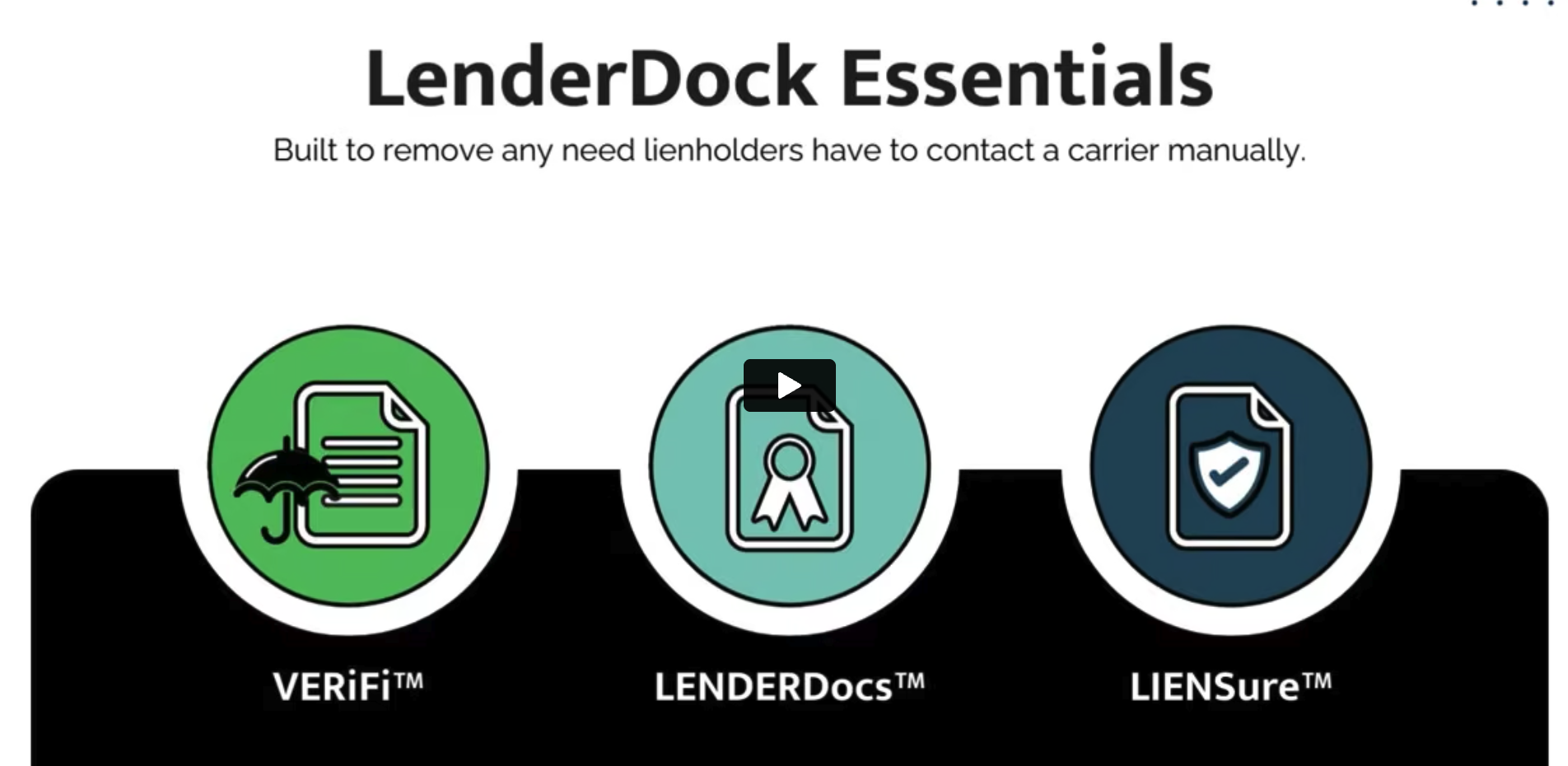
LIENSure sends corrections digitally, straight from the financial source of truth and in bulk for easy processing.

ESCROWPay verifies what’s actually due before the money moves, then sends the payment and reconciliation data digitally.

NOTiFi delivers required policy, coverage, and billing notices in the formats lienholders actually use
At least check out the genesis of LenderDock Video. It’ll all make sense, the eco-system, that is.
Learn more about our great leadership team and our amazing, people-first, company culture.
There’s a lot going on at LenderDock and in our industries. We threw it all here to make it easier to keep up.
We go to a lot of events and we love to eat. See our calendar of where we’ll be.
New webinars will be coming quite frequently. Educational, success, and sales.
Knowing and being ready for the effects of natural disasters depends on a networked ecosystem based on reliable data and analytics. To better address the most urgent requirements in the event of a crisis, restorative measures can be implemented more successfully.
With its path of devastation across the United States, Hurricane Idalia last year caused around $2 billion in total insured losses on the private market, not to mention thousands of people’s hardships.
In 2023, the United States had numerous costly natural disasters, Hurricane Idalia being only one of them. There have been 28 documented weather-related or climate-related disaster incidents in the United States so far in 2023 that have resulted in losses more than $1 billion. This contrasts with the previous five years’ average of eighteen events per year that resulted in losses surpassing $1 billion.
The financial cost of these occurrences is enormous: this year’s catastrophes resulted in insurance claims totaling $92.9 billion in losses from, among other things, 19 strong storms, two floods, one tropical cyclone, one wildfire, and one winter storm.
Insurance companies all around the United States are vital to the process of rebuilding communities and reducing the actual and relative magnitude of damage that follows natural catastrophes, especially as the business deals with the aftermath of more and more weather-related incidents such as Hurricane Idalia. Insurance companies can no longer successfully respond to rising demand and workloads using traditional techniques.
The restoration efforts of insurers can be impeded by the time-consuming and difficult nature of legacy operations. They frequently entail laborious or repetitive work, which is particularly difficult given the severe labor shortages and high employee turnover that the property insurance and repair industries are currently facing as a group.
Additionally, as more insurance companies deal with a lack of workers and an increase in storm-related claims, they must be able to rely on cutting-edge solutions from throughout the ecosystem to help them accomplish more with less. In addition to compensating for a deficiency of human resources throughout the insurance supply chain, contemporary solutions allow carriers to concentrate more on assisting the individuals making the claims.
To fully integrate their processes for best performance, carriers and contractors work together to resolve claims. To this end, all parties require advanced technologies. If carriers and contractors don’t have access to the newest advancements, they run the danger of using antiquated practices and ineffective technologies, which can prolong restoration project cycles and leave impacted folks without help.
Alternatives to the conventional status quo technologies, which frequently call for extensive human interaction, are becoming more and more popular. The most recent technologies offer AI-enhanced, data-driven strategies that help impacted communities recover more quickly. By collaborating with insurtech firms, insurance providers, and restoration contractors who are pursuing these more cutting-edge approaches, they can better navigate the changing landscape that is rife with issues like staffing shortages, employee turnover, and an increase in the frequency and intensity of natural disasters. For instance, carriers can control resource deployment to reduce fraud, increase efficiency, and shorten claims life cycles by utilizing extensive data assets and intelligent AI-driven technology.
High-quality data-enabled technology also makes it possible to forecast extreme weather events more accurately, allowing property owners to better protect their properties from the effects of natural catastrophes by identifying high-risk locations.
In any situation, carriers and contractors may fulfill their commitments to policyholders and achieve their business objectives with the support of an appropriate digital environment. Professionals in insurance and restoration are not only more productive and efficient thanks to technology; it also increases their ability to provide policyholders with individualized client experiences at critical times.
People encounter insurers during their most trying moments. Insurance professionals who deal with the public must put people first. A human-centered insurance industry uses the most recent advancements in artificial intelligence (AI), machine learning (ML), and data analytics to provide customers with streamlined services both before and after an occurrence, including quick, focused restoration. AI-driven technology and automation also free experts from manual, repetitive chores, giving them more time to concentrate on the people who create the policies. Professionals can spend more time assisting people in rebuilding their lives if they spend less time on tedious duties like updating records, discovering networks of contractors, and going through papers.
Insurers need to provide individualized client experiences and human engagement based on specific demands when communities are devastated. This can only be accomplished by utilizing cutting-edge, contemporary technical advancements.
To have a functional integrated ecosystem, insurance carriers need to strategically implement cutting-edge technologies. To ensure that all users and stakeholders have access to the most recent information regarding each policy and claim, an integrated ecosystem is a digital architecture made up of technologies that link and share data. In addition to helping communities recover and rebuild after disasters, this helps insurers to focus their efforts and show compassion while offering individuals consistent, straightforward experiences during otherwise confusing periods. What advantages do homeowners receive from tech-forward insurance specifically? They provide innovative services.
To provide families with the prompt confidence and support they require after a tragedy, forward-thinking businesses can provide explicit service level agreements with well-defined objectives and timetables.
As crucial as it is to mobilize efficient recovery mechanisms, property owners and the insurance companies also need to be proactive in anticipating and mitigating the extent and magnitude of any severe weather-related disaster. Insurance companies with risk-aware staff members are better able to build policyholder trust and proactively prepare them for catastrophe. By comprehending risk and property vulnerability, carriers can also better design their catastrophe response protocols.
Risk reduction is aided by an abundance of property data. Examples of data from which actionable insights can be extracted are market listing, geographic, building permit, occupancy, crime, demographics, mortgage transaction, construction cost, natural hazard risk, and catastrophe modeling data.
For insurers, assembling, integrating, and validating the numerous underlying data sources is a greater difficulty than simply gaining access to the data. This is the situation when obtaining the degree of detail in data needed for individual property insurance.
Data analytics businesses have created risk models with the required level of granularity and regular updates using AI and ML, making them dependable sources of information for insurers. Insurance companies can use this information to proactively contact policyholders who are literally in the line of fire.
Insurers can obtain detailed information about the risks associated with areas by adopting a data-led approach. Having the required quick reaction mechanisms in place allows them to underwrite policies more successfully. Using AI and ML-powered technology, insurers can more effectively evaluate risk and related mitigation measures at the property level, automate and streamline workflows for maximum efficiency, maintain open lines of communication with policyholders, and comply with regulatory requirements with ease.
Meeting the evolving needs of homeownership will fall to those operating throughout the insurance ecosystem as climate risk rises. Despite the common misconception that technology is impersonal, the truth is that with the correct data and technology, providers may devote more time and resources to their clients, resulting in a truly human-centered experience.
We’ve heard people in mortgage servicing use verification and tracking as if they’re interchangeable, and honestly, for a lot of daily work, treating them that way doesn’t break anything.
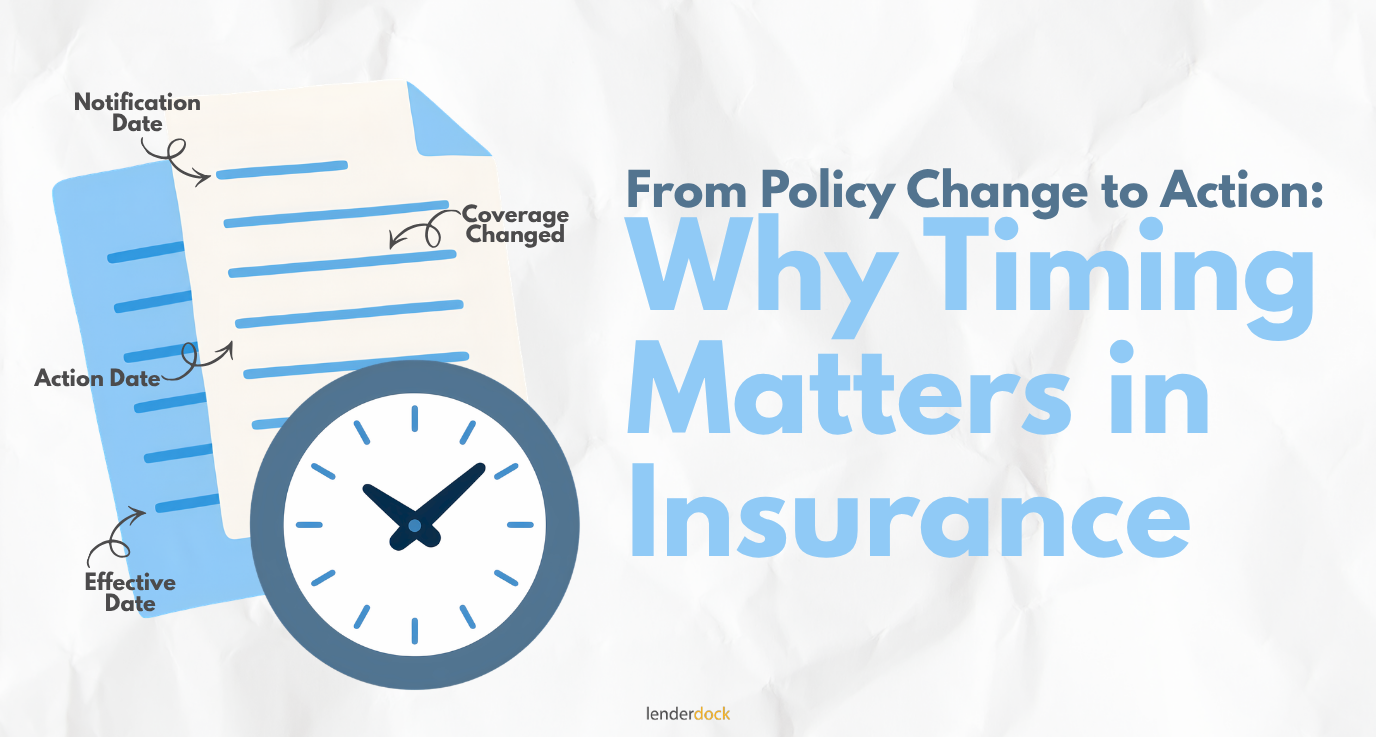
A two-day lag between a policy change and everyone finding out about it used to be annoying, not dangerous. Someone made a call, waited, got an answer, and moved on with their day.
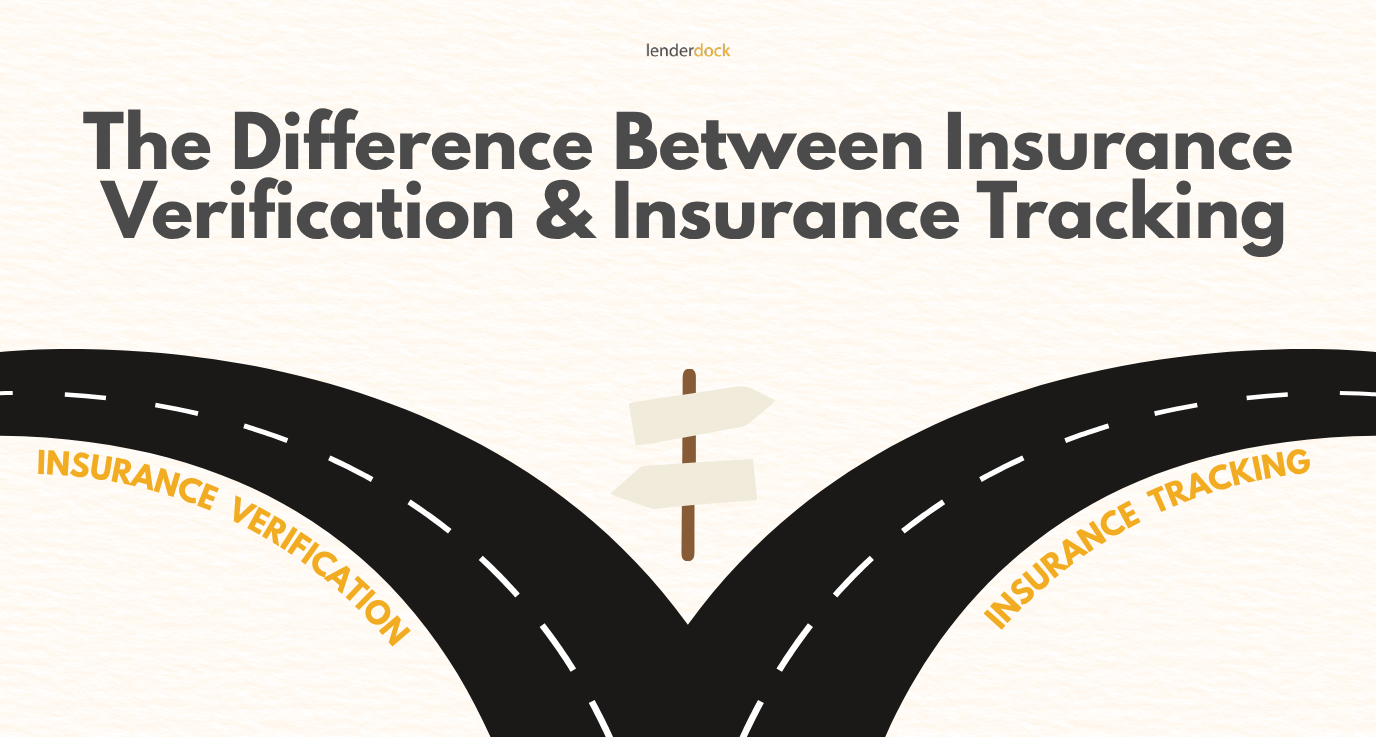
We’ve heard people in mortgage servicing use verification and tracking as if they’re interchangeable, and honestly, for a lot of daily work, treating them that way doesn’t break anything.
Insurance verification is a routine part of the lending and insurance process. A lender needs to know whether a policy is active. A mortgage servicer may need to confirm coverage or mortgagee information. An insurance…
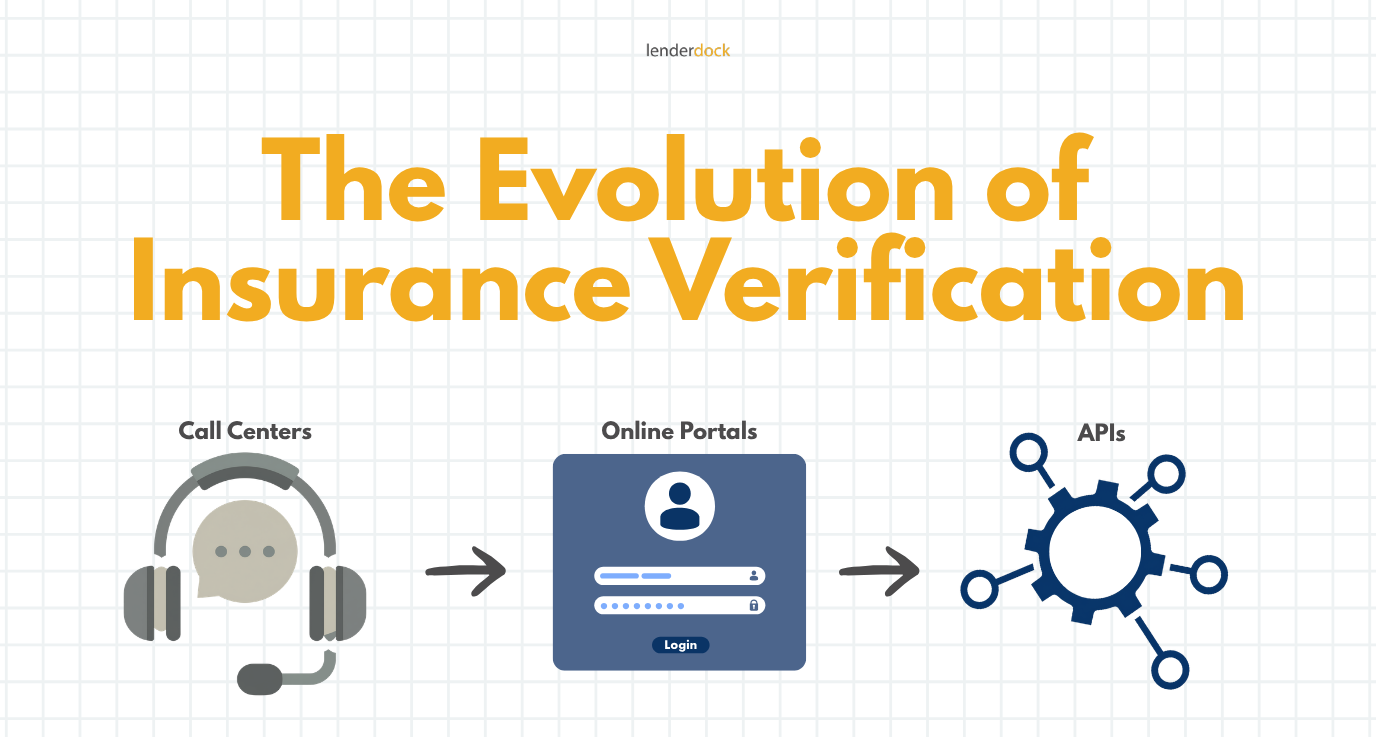
In the earliest version of insurance verification, the person answering the phone actually had to know things. They pulled a physical file, checked handwriting against a ledger, and made a judgment call about whether what…
Two insurers can each have perfectly accurate, well-maintained policy databases and still fail to exchange a single piece of usable data between them.
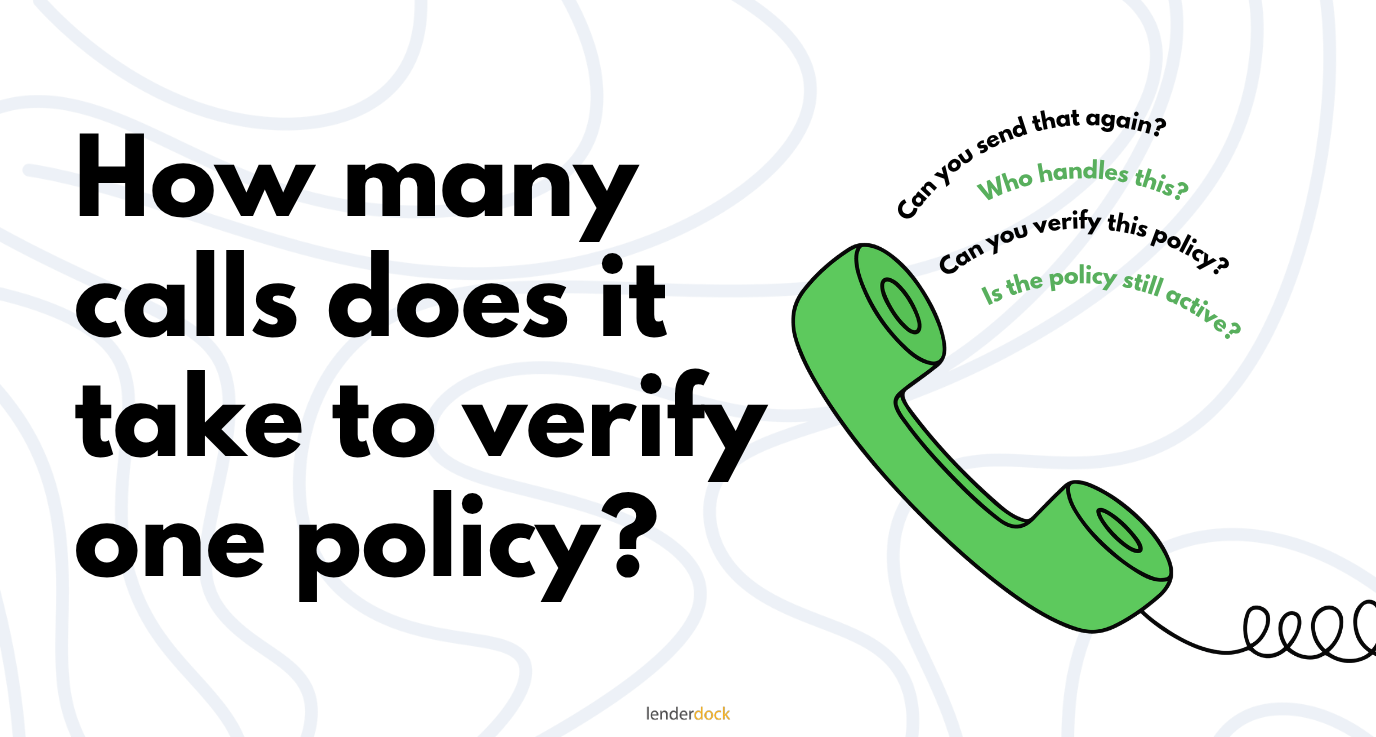
Every single day, insurance workers face a mountain of simple questions. Are they tired of answering the same questions about policy coverage all day long? Yes, they are. When banks or lenders need to check…
A title company closing a home sale needs to confirm the seller’s policy is active before the deal can move. An auto lender needs the same thing before releasing funds on a car loan. A…
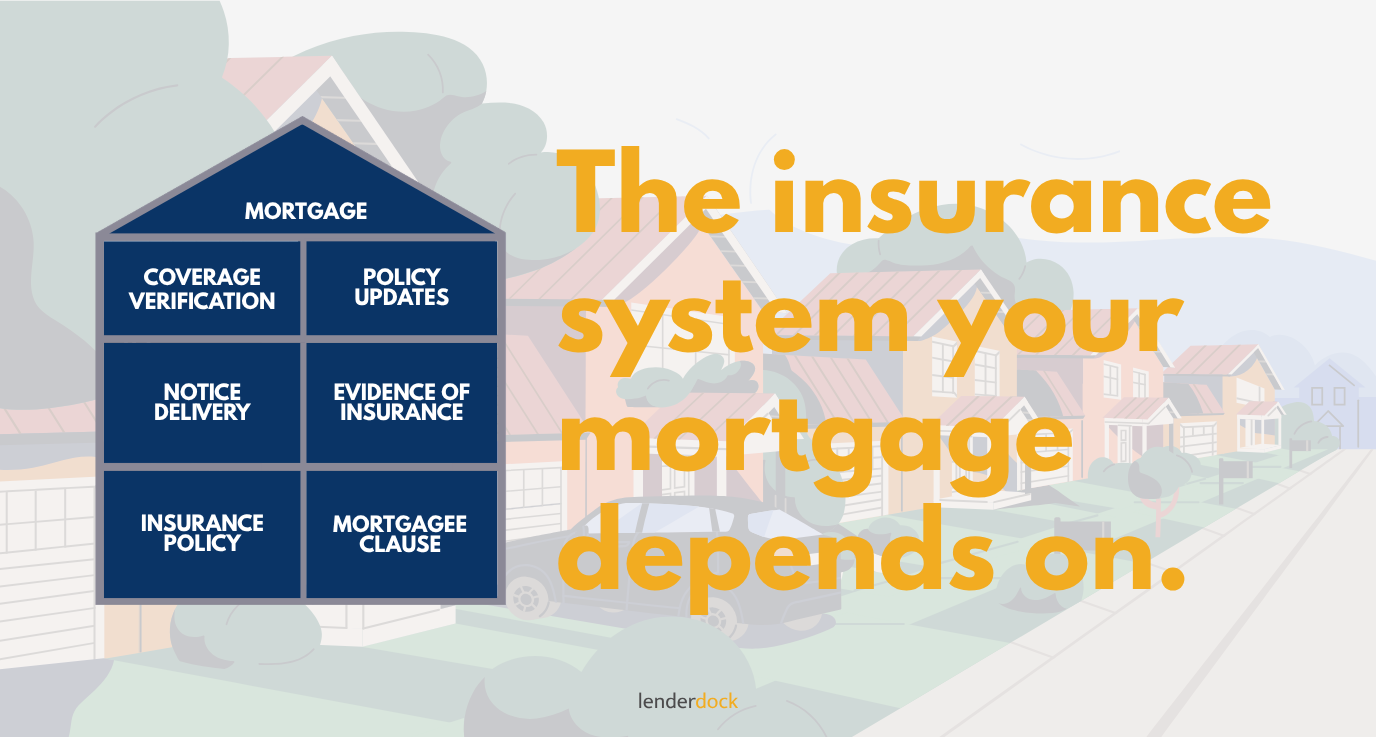
Most people who take out a mortgage never think about insurance as part of the loan itself. It feels adjacent, a separate purchase, something the lender requires but does not really participate in beyond checking…
Mortgagee corrections are a routine part of insurance servicing, but the process behind them is often anything but simple. A lender may find that the mortgagee’s name or address on a policy is out of…

We consectetur adipiscing elit tempor incididunt ut labore. Wondering ipsum dolor sit amet? We consectetur adipiscing ipsum nulla glavrida elit tempor incididunt.