
Welcome to LenderDock
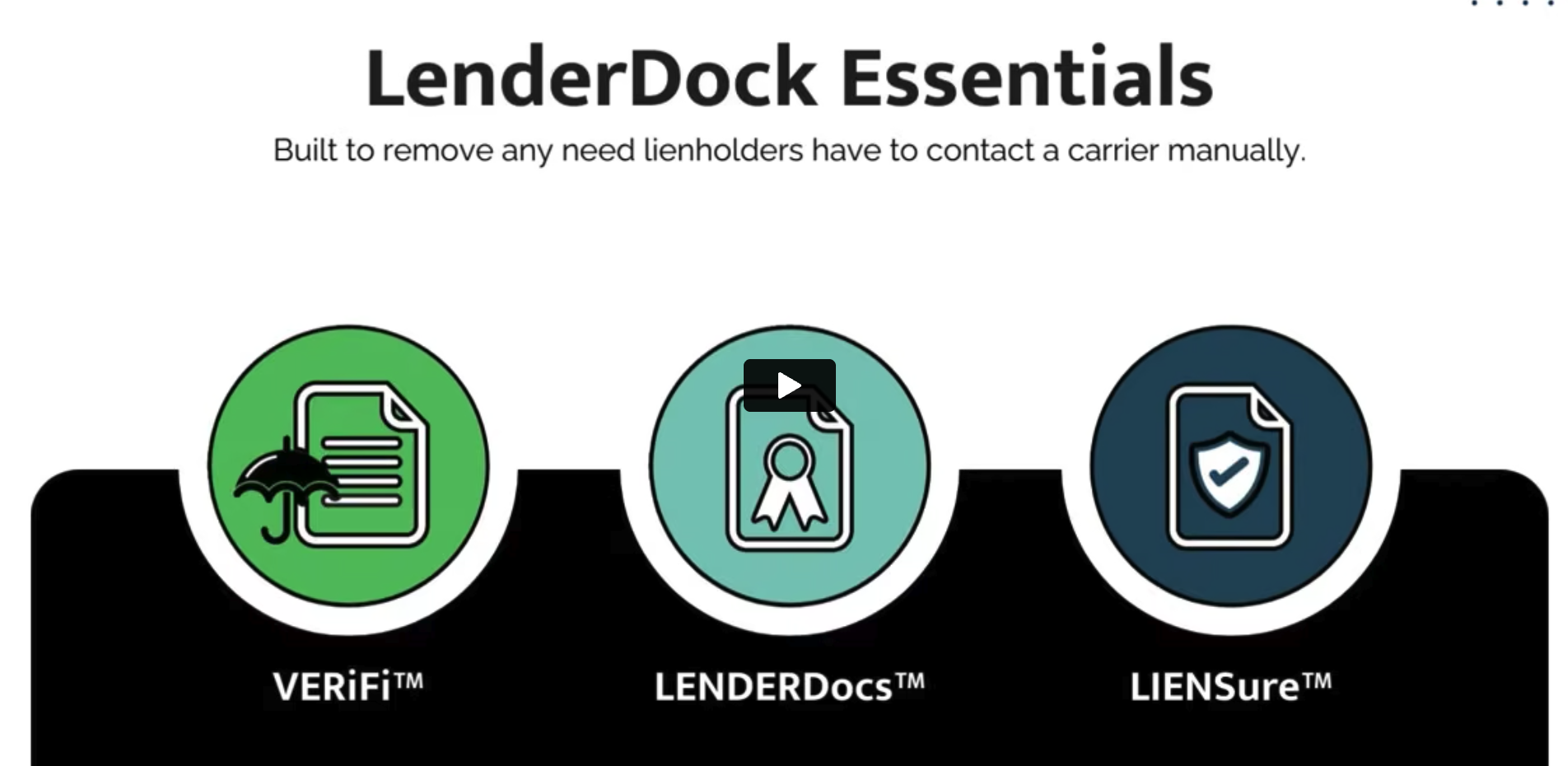
Learn more about the legs on the stool; The LenderDock Eco-System.

LenderDock provides real-time, insurance policy details through its magical web portal or its APIs.

LIENSure sends corrections digitally, straight from the financial source of truth and in bulk for easy processing.

ESCROWPay verifies what’s actually due before the money moves, then sends the payment and reconciliation data digitally.

NOTiFi delivers required policy, coverage, and billing notices in the formats lienholders actually use
At least check out the genesis of LenderDock Video. It’ll all make sense, the eco-system, that is.
Learn more about our great leadership team and our amazing, people-first, company culture.
There’s a lot going on at LenderDock and in our industries. We threw it all here to make it easier to keep up.
We go to a lot of events and we love to eat. See our calendar of where we’ll be.
New webinars will be coming quite frequently. Educational, success, and sales.

Robotic Process Automation (RPA) has emerged as a game-changing technology across various industries, including insurance. RPA is the use of low-code software bots to automate repetitive and rule-based tasks within business processes.
These bots are adept at mimicking human actions and seamlessly interact with different systems and applications to execute tasks like data entry and validation.
Studies indicate that financial services have experienced a potential ROI increase of up to 200% during the initial year following RPA implementation. In the insurance sector, RPA has garnered significant attention and adoption due to its capacity to streamline operations, enhance efficiency and drive cost reductions.
Insurers handle large volumes of customer data for a number of business processes ranging from underwriting, claims processing, sales and distribution, policy administration and even regulatory compliance.
By automating laborious and error-prone tasks, RPA empowers insurance companies to redirect their focus towards value-driven activities instead like decision-making and personalized customer service.
Policy administration
The manual underwriting process in insurance, historically time-consuming and labor-intensive, has been transformed by Robotic Process Automation (RPA).
RPA paired with OCR (Optical Character Recognition) will enable insurers to automatically digitize customer data from registration forms and other printouts. Afterwards, integration with Advanced Analytics and Machine Learning models will bring out useful data insights.
Automating administrative activities like rating and quoting with RPA saves time and resources, enhancing workflow efficiency in the insurance industry. Real-life case studies —covered in the next section—demonstrate significant reductions in time and effort, enabling quicker and more effective processing of applications.
Furthermore, RPA assists in policy renewals by automating communication, updates and premium collection, while also managing policy cancellations efficiently.
Customer service
Insurance companies are leveraging Robotic Process Automation (RPA) to transform customer service operations. By integrating conversational AI and RPA technologies, insurers expedite issue resolution and empower support teams with AI-driven assistants.
These assistants efficiently process unstructured data, generate customer profiles, and provide timely solutions, enhancing overall customer service effectiveness and satisfaction.
As customer expectations evolve towards personalized service, RPA tools play a crucial role in automating standardized and time-consuming tasks. This allows employees to focus on providing personalized interactions for complex grievances.
PZU
As one of Europe’s leading insurers, PZU Group harnessed UiPath’s RPA technology to improve customer service. By deploying RPA in its five critical applications, PZU realized a 50% boost in insurance consultants’ productivity. This efficiency enhancement significantly reduced call durations with customers while ensuring 100% accuracy in data entry.
Zurich Insurance Group
Zurich Insurance Group optimized its policy handling processes with Capgemini’s automation solution powered by BluePrism software. Integrating RPA robots early in policy management streamlined tasks like data entry, invoice generation and policy document drafting. This resulted in improved policy quality and a notable reduction in support desk inquiries.
Nsure.com
Nsure.com, an online insurance shopping platform, implemented RPA to automate customer communications. This initiative has transformed their sales and distribution, allowing half of their customers to complete transactions without agent interaction.
ADNIC
Abu Dhabi-based insurance provider, ADNIC, achieved a 30% reduction in work time by implementing RPA bots for quote generation and policy registration. This efficiency gain enabled employees to transition into decision-making roles, enhancing overall operational effectiveness.
Many employers overlook the inefficiency of manual tasks. McKinsey reports that workers spend 1.8 hours daily on non-impactful activities like data gathering and aggregation alone. By automating repetitive tasks and streamlining processes, insurance providers can realize significant cost savings and operational efficiencies.


Great video on the inception of LenderDock and how it came to pass.

CEO Frank Eubank explores the influence of AI on the insurance sector alongside special guest Benjamin Bomhoff from Fleming Insurance Holdings.

The internet has changed how we live, work, and connect with others. Now, with the proliferation of connected devices, we are entering a new era—the Internet of Things (IoT).
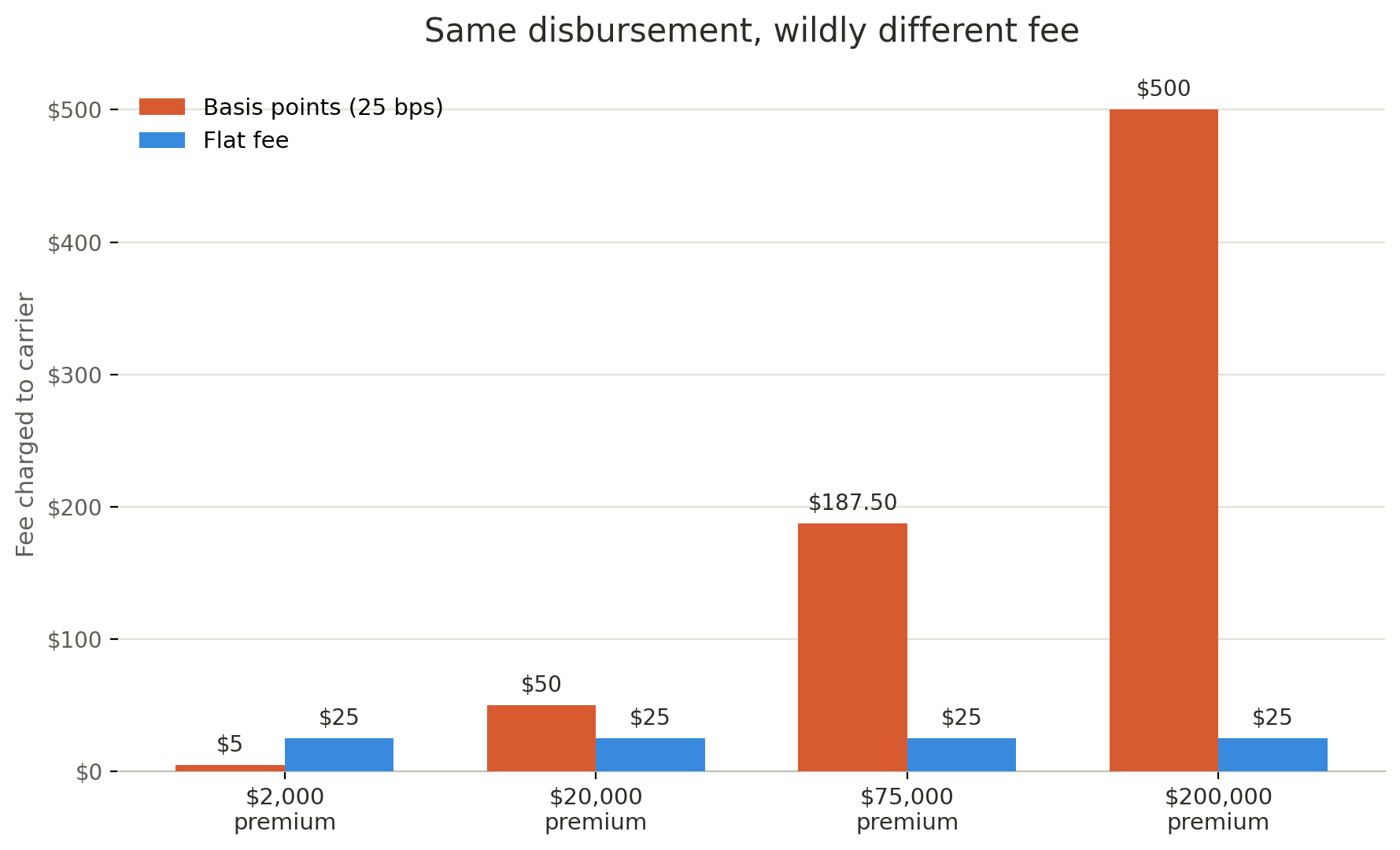
There’s a moment in almost every client relationship where the pricing model quietly reveals whose side you’re on. Basis points are one of those moments — and they reveal a lot.
RPA is the use of low-code software bots to automate repetitive and rule-based tasks within business processes.

We consectetur adipiscing elit tempor incididunt ut labore. Wondering ipsum dolor sit amet? We consectetur adipiscing ipsum nulla glavrida elit tempor incididunt.