From Policy Change to Action: Why Timing Matters in Insurance
We’ve heard people in mortgage servicing use verification and tracking as if they’re interchangeable, and honestly, for a lot of daily work, treating them that way doesn’t break anything.


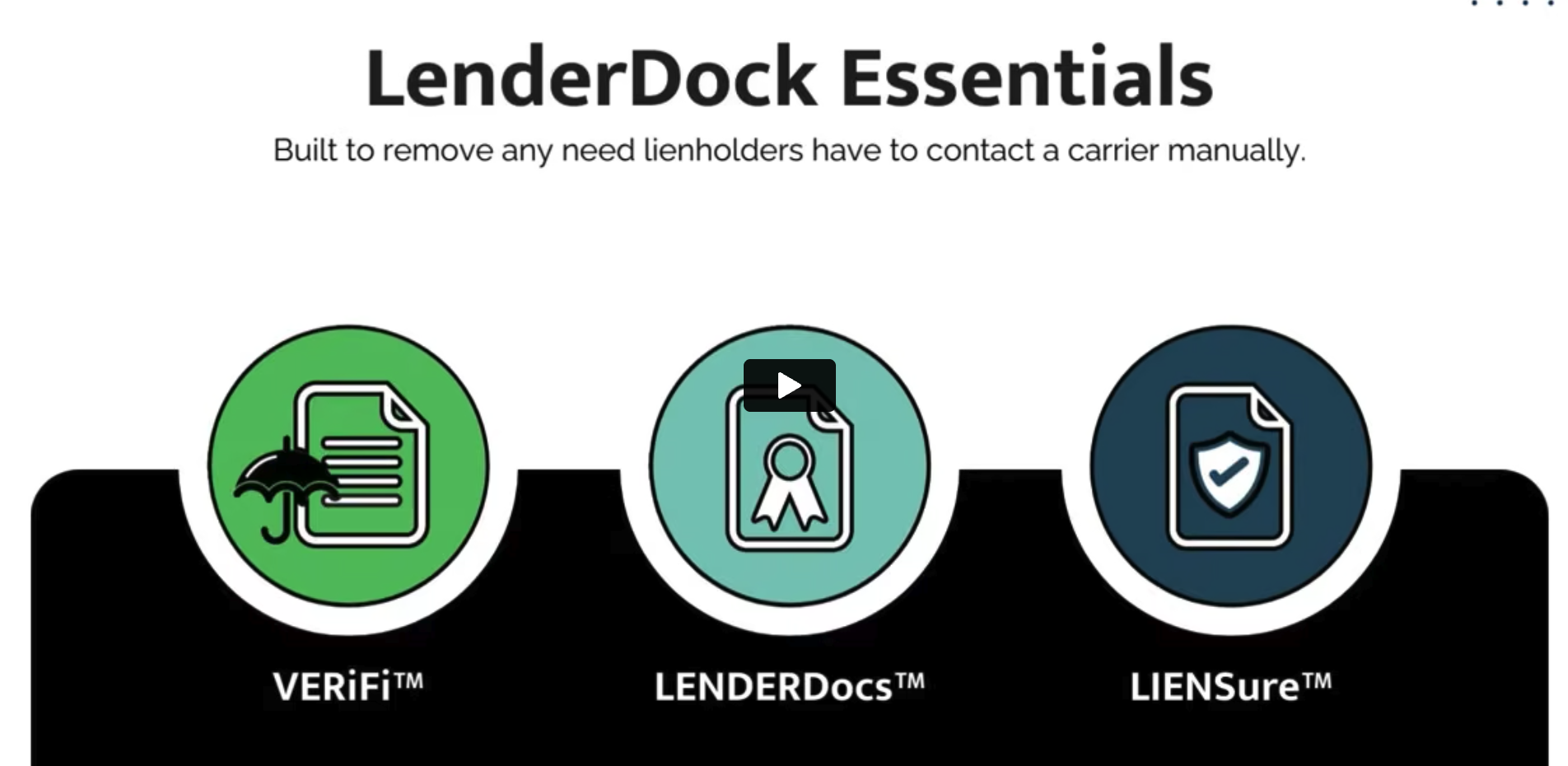
LenderDock provides real-time, insurance policy details through its magical web portal or its APIs.

LIENSure sends corrections digitally, straight from the financial source of truth and in bulk for easy processing.

ESCROWPay verifies what’s actually due before the money moves, then sends the payment and reconciliation data digitally.

NOTiFi delivers required policy, coverage, and billing notices in the formats lienholders actually use
At least check out the genesis of LenderDock Video. It’ll all make sense, the eco-system, that is.
Learn more about our great leadership team and our amazing, people-first, company culture.
There’s a lot going on at LenderDock and in our industries. We threw it all here to make it easier to keep up.
We go to a lot of events and we love to eat. See our calendar of where we’ll be.
New webinars will be coming quite frequently. Educational, success, and sales.
Why are insurance companies and brokers being inundated with requests for evidence of homeowner’s insurance?
It is complicated to keep track of homeowners insurance coverage for mortgage loans. This is because mortgage servicers frequently change, which makes it hard for insurers to maintain accurate records. Homeowners may have more than one loan, insurance coverage of different types, and different insurance providers. Specialized risks like flood coverage may be impacted by legal requirements modifications. Sharing insurance data for monitoring purposes currently involves high expenses and long waiting periods. However, automating these information exchanges can improve the overall customer experience and save costs.
The information below explains the technology that is advancing the industry of insurance.
What is the significance of homeowners insurance in the mortgage process?
Having insurance coverage is important when getting a mortgage as the mortgage company wants to protect their financial interest in the property. To do this, they transfer the risk of loss for all the properties they have loans on to a lender-placed insurance provider. The provider needs to monitor homeowners’ insurance coverage to manage their financial exposure.
What is the process for verifying insurance?
To verify insurance, there are different methods available including Electronic Data Interchange (EDI), phone, website, U.S. mail, and email. However, if evidence of insurance is missing, the homeowner, agent, or insurance company of record must be contacted to obtain the information. This can result in a high volume of disruptive phone calls. For example, in 2021, Assurant made 1.9 million calls to agents and carriers to obtain evidence of insurance.
Regarding EDI, what should be considered?
EDI is a popular standard in the industry that allows for batch exchange of information. However, it has not undergone significant changes in the 50 years it has existed. EDI only allows for one-way exchange of information and the process can be problematic due to incomplete coverage and policy number information, making it difficult to verify coverage. Up to 80% of the time, there is missing information that needs validation. Using technology can simplify tedious tasks and enhance the experiences of the agent, policyholder, and carrier by optimizing outdated processes.
Today, is there an improved alternative option available?
The technology based on Application Programming Interfaces (APIs) has effectively simplified the exchange of information. LenderDock has utilized this technology to create their Verifi™ platform, which acts as a connection between systems, removing the need for manual interfaces. This real-time solution offers functions such as easy search and review of policies and updates of mortgagee clauses. As a result, agents and carriers experience fewer complications.
What advantages can be gained?
LenderDock has observed that when a carrier adopts API technology, there is typically a 60-70% decrease in the need for manual data exchanges (like phone calls and paper) within the initial 30 days. The reduction of manual data exchanges can have positive downstream effects, including:
What are the results for carriers?
“LenderDock has been an absolute game-changer. We’re not only saving thousands of dollars in manual resources but have been able to refocus my entire team’s efforts around our service and client retention goals. It exceeded our highest expectations,” says Debbie England, Manager of Customer Service & Support at Indiana Farm Bureau.
“The amount of calls in our Customer Service Department has decreased by about 40%. The amount of paper changes we receive is almost down to zero after just 8 months with LenderDock,” said Stacey Manzo, AVP Customer Service & Corporate Secretary at The Philadelphia Contributionship.
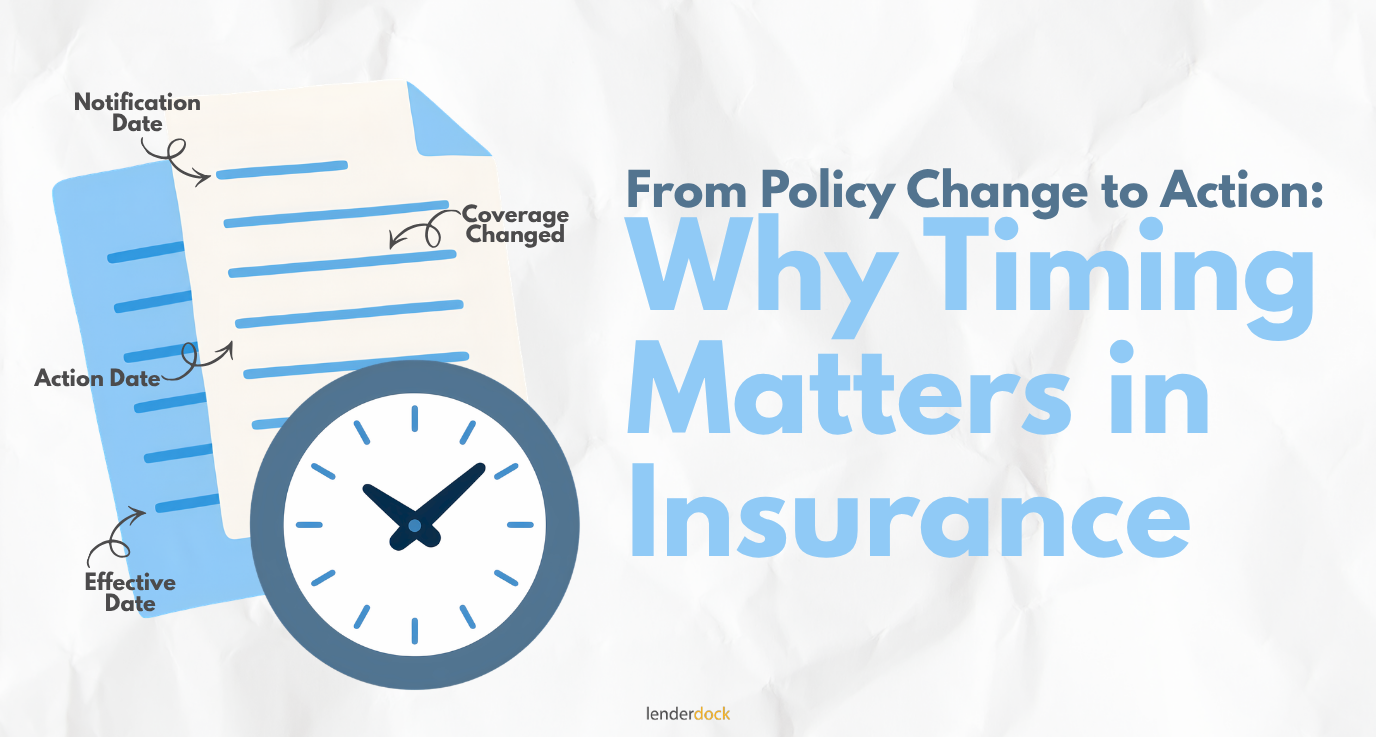
We’ve heard people in mortgage servicing use verification and tracking as if they’re interchangeable, and honestly, for a lot of daily work, treating them that way doesn’t break anything.
A two-day lag between a policy change and everyone finding out about it used to be annoying, not dangerous. Someone made a call, waited, got an answer, and moved on with their day.
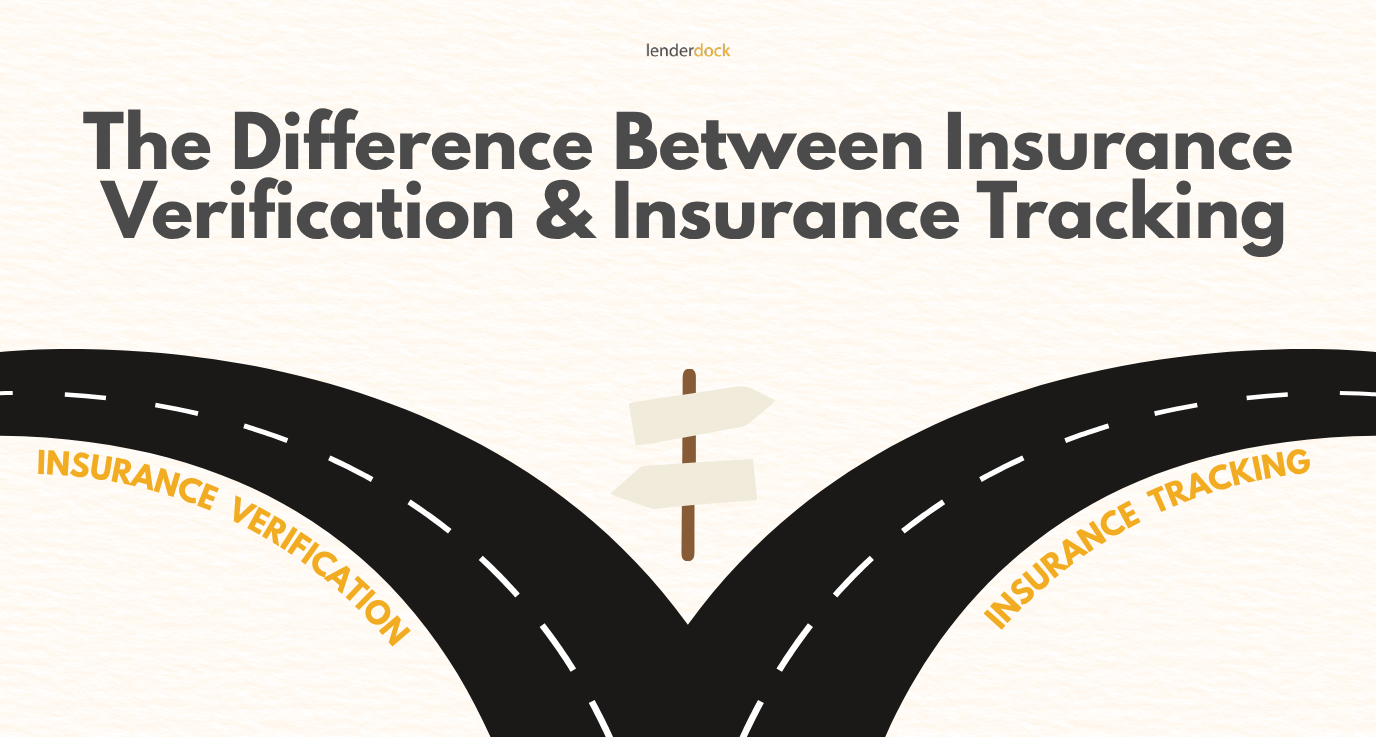
We’ve heard people in mortgage servicing use verification and tracking as if they’re interchangeable, and honestly, for a lot of daily work, treating them that way doesn’t break anything.
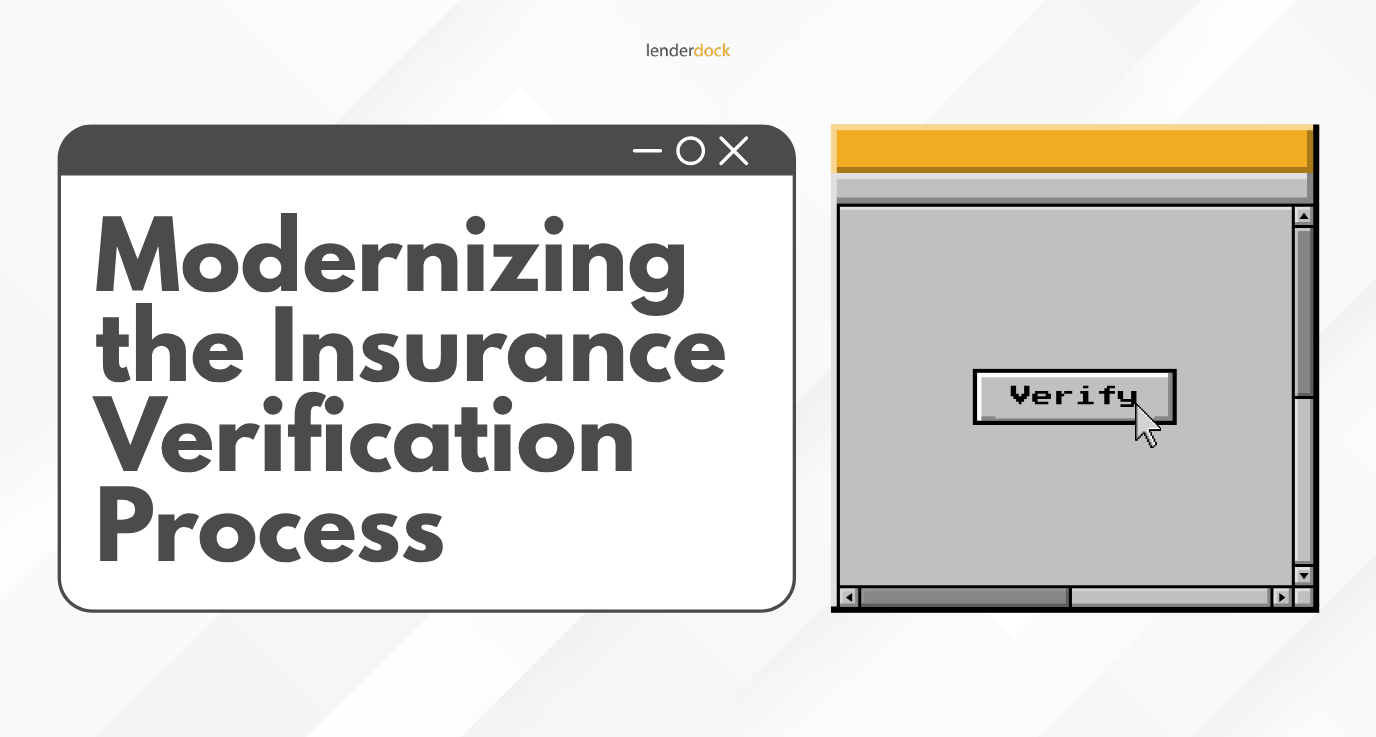
Insurance verification is a routine part of the lending and insurance process. A lender needs to know whether a policy is active. A mortgage servicer may need to confirm coverage or mortgagee information. An insurance…
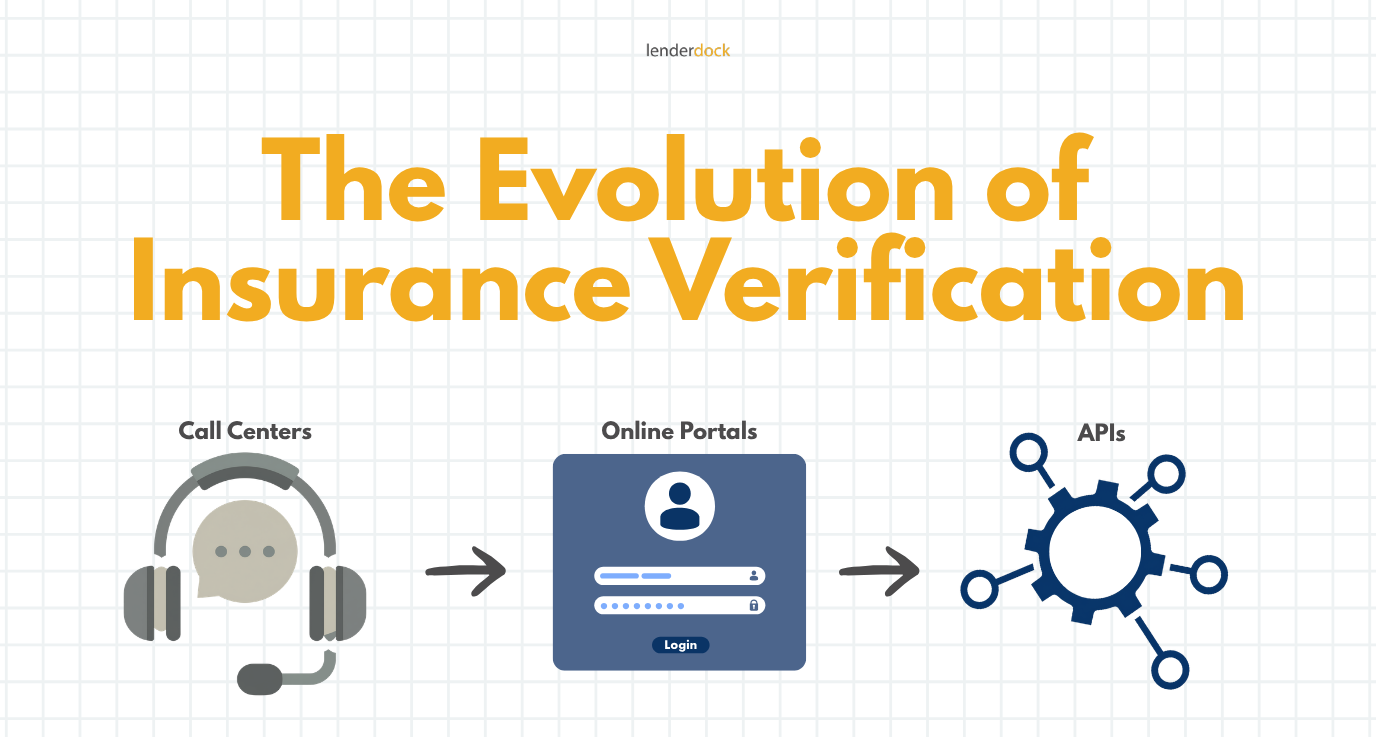
In the earliest version of insurance verification, the person answering the phone actually had to know things. They pulled a physical file, checked handwriting against a ledger, and made a judgment call about whether what…
Two insurers can each have perfectly accurate, well-maintained policy databases and still fail to exchange a single piece of usable data between them.
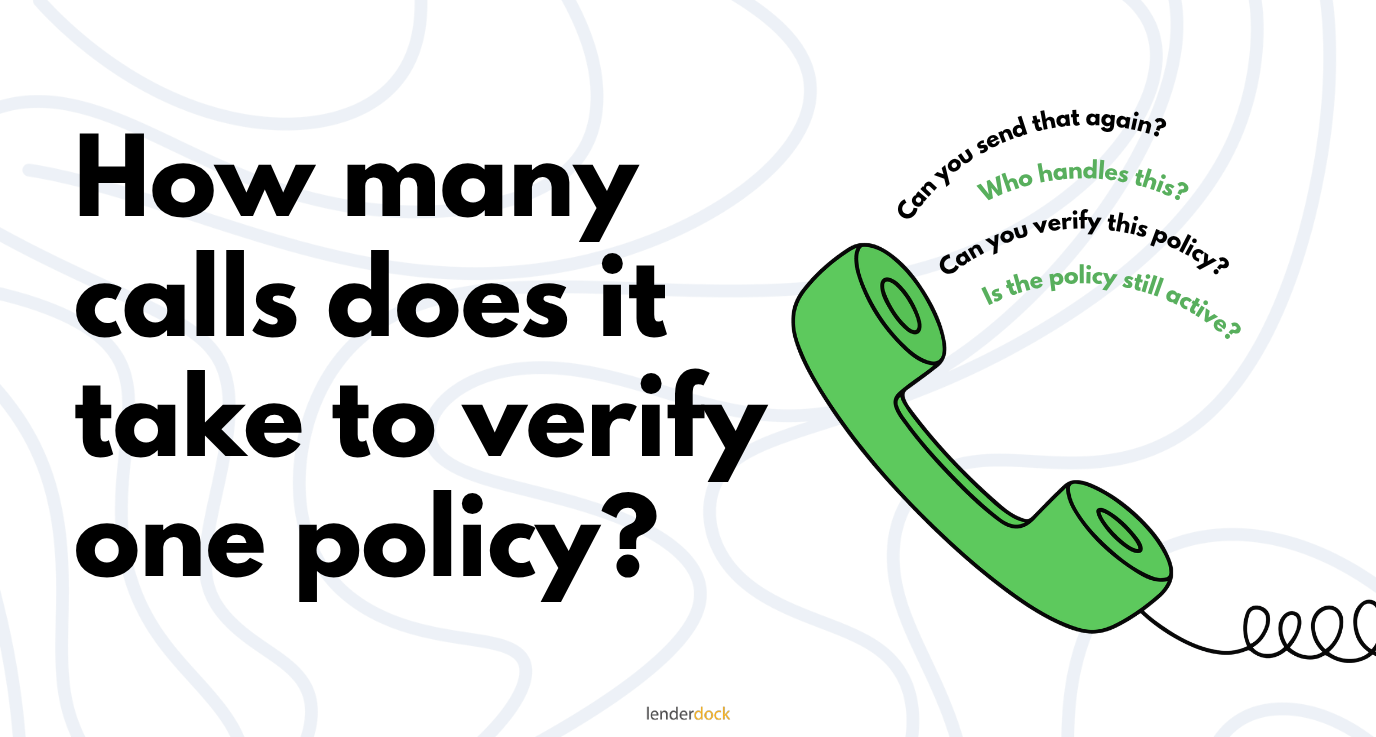
Every single day, insurance workers face a mountain of simple questions. Are they tired of answering the same questions about policy coverage all day long? Yes, they are. When banks or lenders need to check…
A title company closing a home sale needs to confirm the seller’s policy is active before the deal can move. An auto lender needs the same thing before releasing funds on a car loan. A…
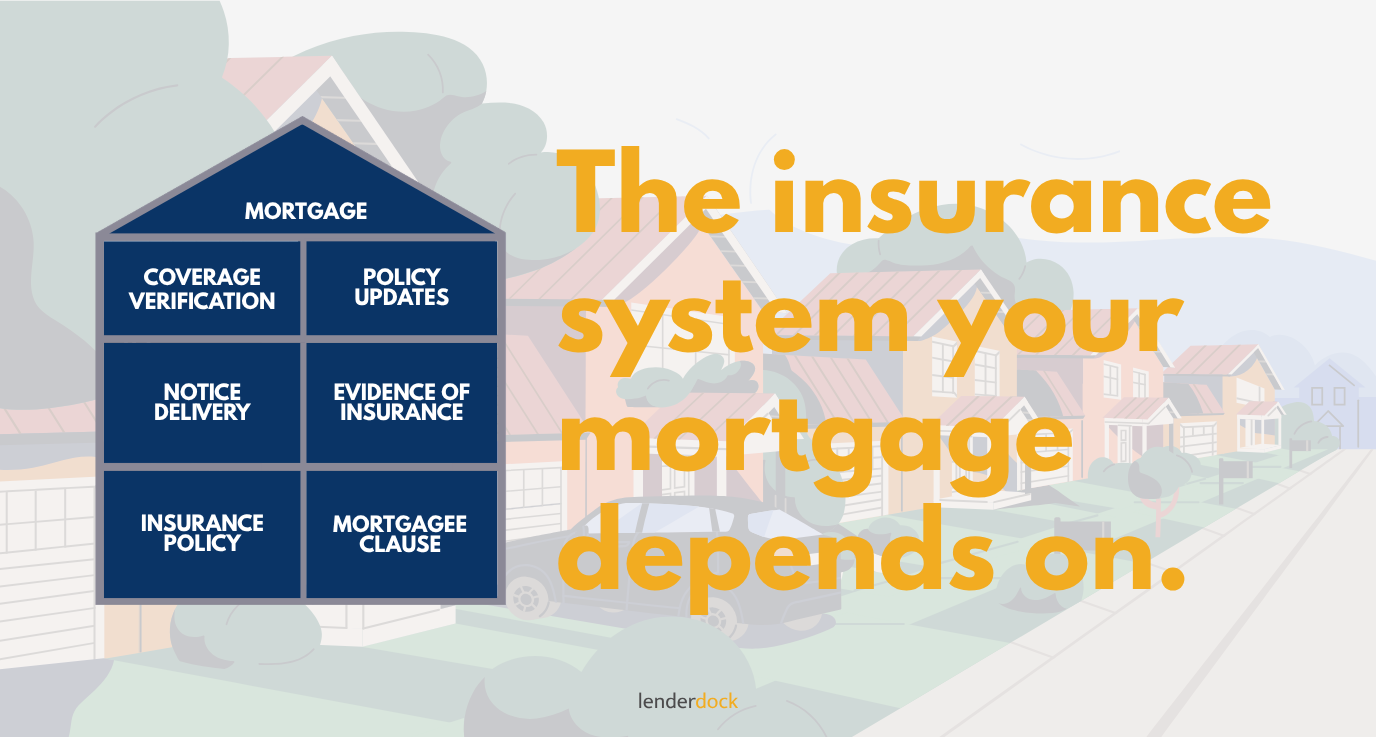
Most people who take out a mortgage never think about insurance as part of the loan itself. It feels adjacent, a separate purchase, something the lender requires but does not really participate in beyond checking…
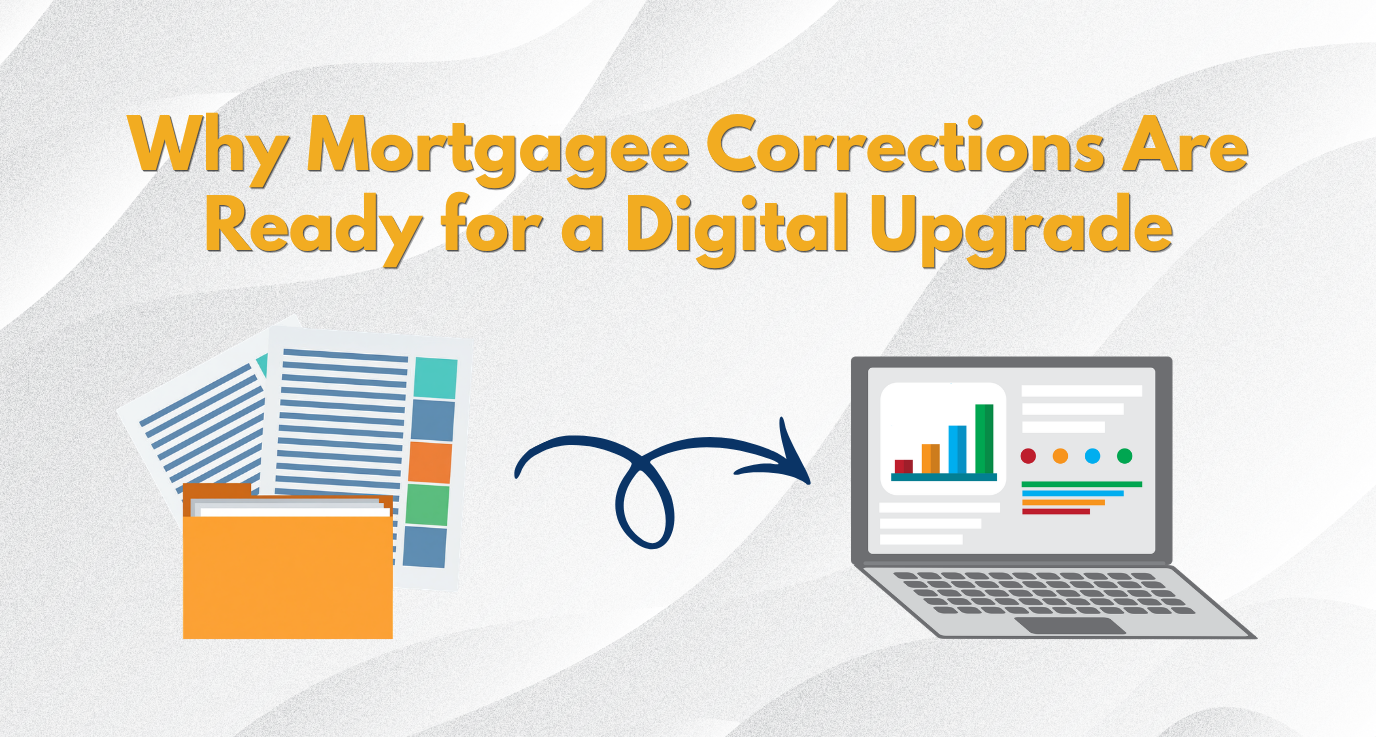
Mortgagee corrections are a routine part of insurance servicing, but the process behind them is often anything but simple. A lender may find that the mortgagee’s name or address on a policy is out of…


We consectetur adipiscing elit tempor incididunt ut labore. Wondering ipsum dolor sit amet? We consectetur adipiscing ipsum nulla glavrida elit tempor incididunt.