From Policy Change to Action: Why Timing Matters in Insurance
We’ve heard people in mortgage servicing use verification and tracking as if they’re interchangeable, and honestly, for a lot of daily work, treating them that way doesn’t break anything.


LenderDock provides real-time, insurance policy details through its magical web portal or its APIs.

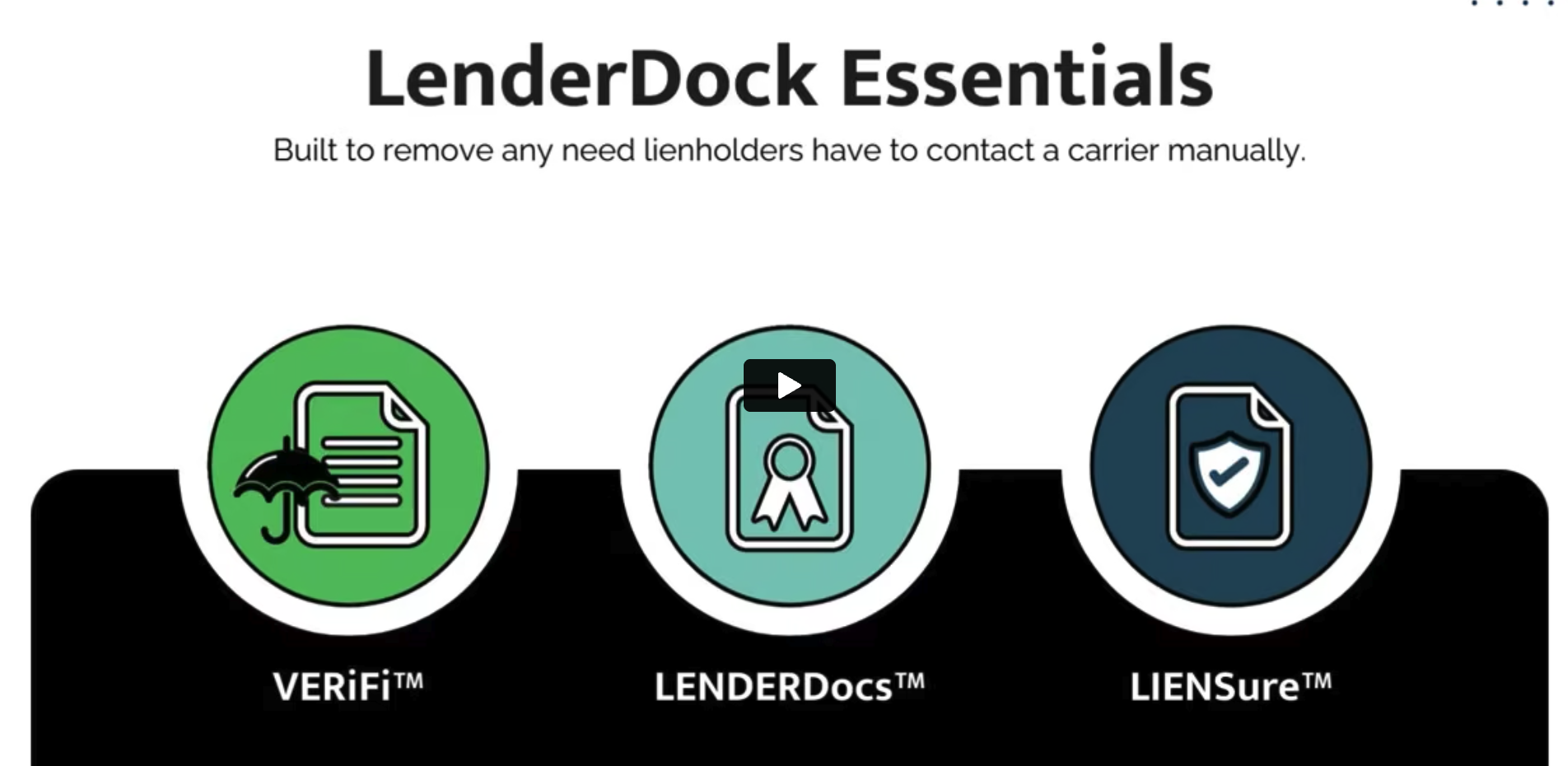
LIENSure sends corrections digitally, straight from the financial source of truth and in bulk for easy processing.

ESCROWPay verifies what’s actually due before the money moves, then sends the payment and reconciliation data digitally.

NOTiFi delivers required policy, coverage, and billing notices in the formats lienholders actually use
At least check out the genesis of LenderDock Video. It’ll all make sense, the eco-system, that is.
Learn more about our great leadership team and our amazing, people-first, company culture.
There’s a lot going on at LenderDock and in our industries. We threw it all here to make it easier to keep up.
We go to a lot of events and we love to eat. See our calendar of where we’ll be.
New webinars will be coming quite frequently. Educational, success, and sales.
Today, people are used to getting whatever they want within a few hours or less. This is not limited to physical objects: people also want immediate cost estimates for services, fast access to digital media, and quick responses from qualified experts when they have questions.
Speed has become such an important aspect to customers that they are now willing to spend more money for a speedy service. If your company doesn’t provide a fast customer experience, you can be positive that other businesses do – which will then lead to your company losing prospective and current customers.
Speed equals satisfaction in insurance
Quick issue resolution is a significant part of customer satisfaction and retention when it comes to insurance companies. People generally don’t like waiting, not even for a few minutes on hold, which can consequently lead to a negative Customer Satisfaction Score (CSAT).
The insurance industry SMS messaging provider “Hi Marley” found that the quickest time to first contact (TTFC) led to higher success rates for claims adjusters. Out of all their performers, those who reached out to clients within three minutes had an 80 percent chance of making initial contact within three and a half hours. However, it was noted that those at the bottom of the performance scale took up to two days before contacting customers- severely hurting any chances or relations with them.
What many don’t know is how much of an impact speed can have on not only customer satisfaction but also profitability. The Hi Marley study discovered that, generally, the best-performing claims adjusters were able to close out claims 10 percent faster than the lowest performers. This meant completing each claim three days sooner, on average.
If you want to improve your business in various ways, then get rid of any processes that frequently cause problems. This may involve employees being able to do more in a shorter amount of time or expanding their volume of work without needing extra staff members. By taking out these delays in your processes, everyone will likely be happier with their job and customers will enjoy the service they receive.
Insurance has a speed issue
According to a PwC 2018 study, nearly 80% of global survey participants said that “speed, convenience, knowledgeable help, and friendly service” were vital for an excellent customer experience. Customers think the insurance industry should prioritize these traits 18 points higher than where they currently stand.
The insurance industry is notoriously slow and Hi Marley’s data on claims satisfaction supports this conclusion. Part of the poor customer experience that insurance consumers have is due to the slowness of the industry.
Altogether, it is clear that the insurance industry’s lagging customer experience is evidently due to its inability to keep pace with customer expectations.
Increasing speed with modern insurance technology
By using SMS technology, insurance companies were able to dramatically increase customer satisfaction rates. This same concept can be applied to other areas of the business in order to speed up processes and maximize efficiency.
LenderDock takes speed and efficiency seriously and works to automate all processes for minimal human intervention. While “old school” workflows included the manual tasks of phone calls and fax machines, there’s no need for this type of insurance communication in the 21st century. LenderDock believes that the resources freed up from these kinds of tasks can be better allocated for meaningful provider or client tasks.
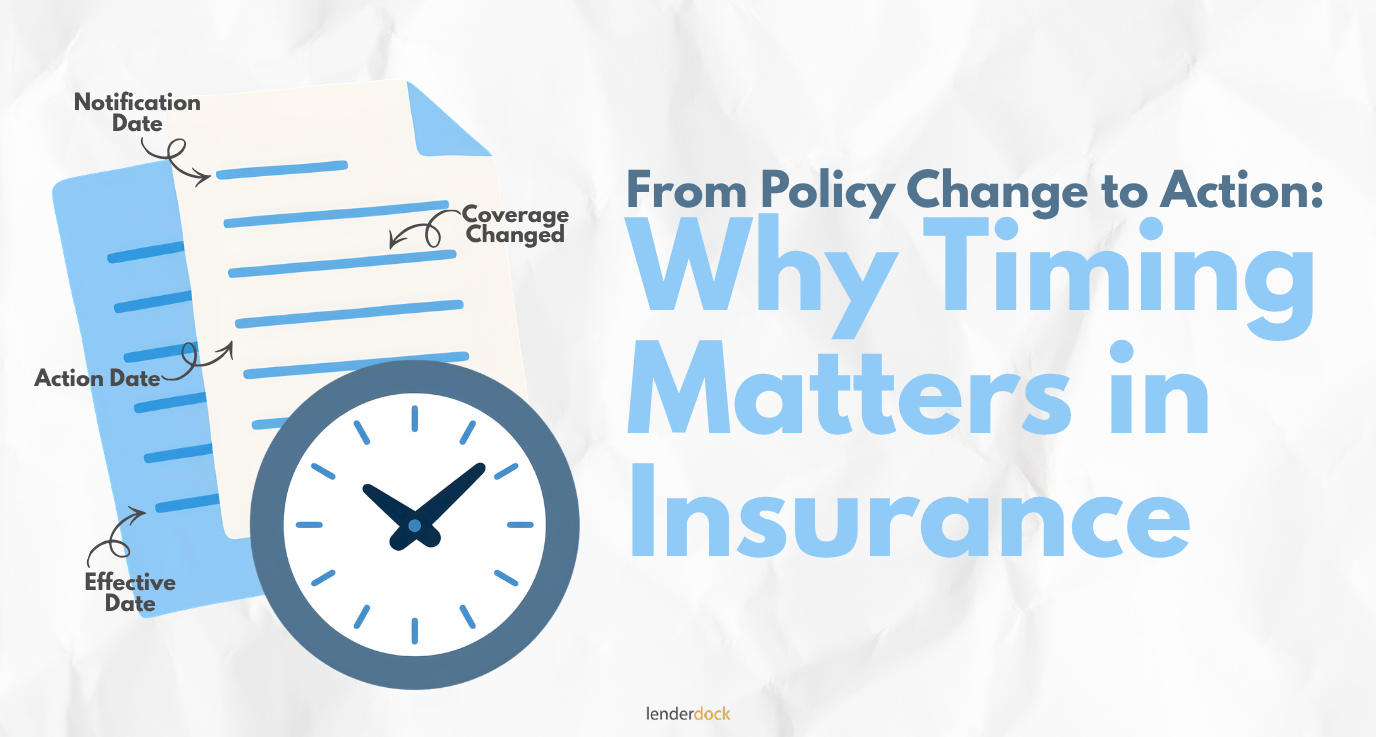
We’ve heard people in mortgage servicing use verification and tracking as if they’re interchangeable, and honestly, for a lot of daily work, treating them that way doesn’t break anything.
A two-day lag between a policy change and everyone finding out about it used to be annoying, not dangerous. Someone made a call, waited, got an answer, and moved on with their day.

We’ve heard people in mortgage servicing use verification and tracking as if they’re interchangeable, and honestly, for a lot of daily work, treating them that way doesn’t break anything.

Insurance verification is a routine part of the lending and insurance process. A lender needs to know whether a policy is active. A mortgage servicer may need to confirm coverage or mortgagee information. An insurance…
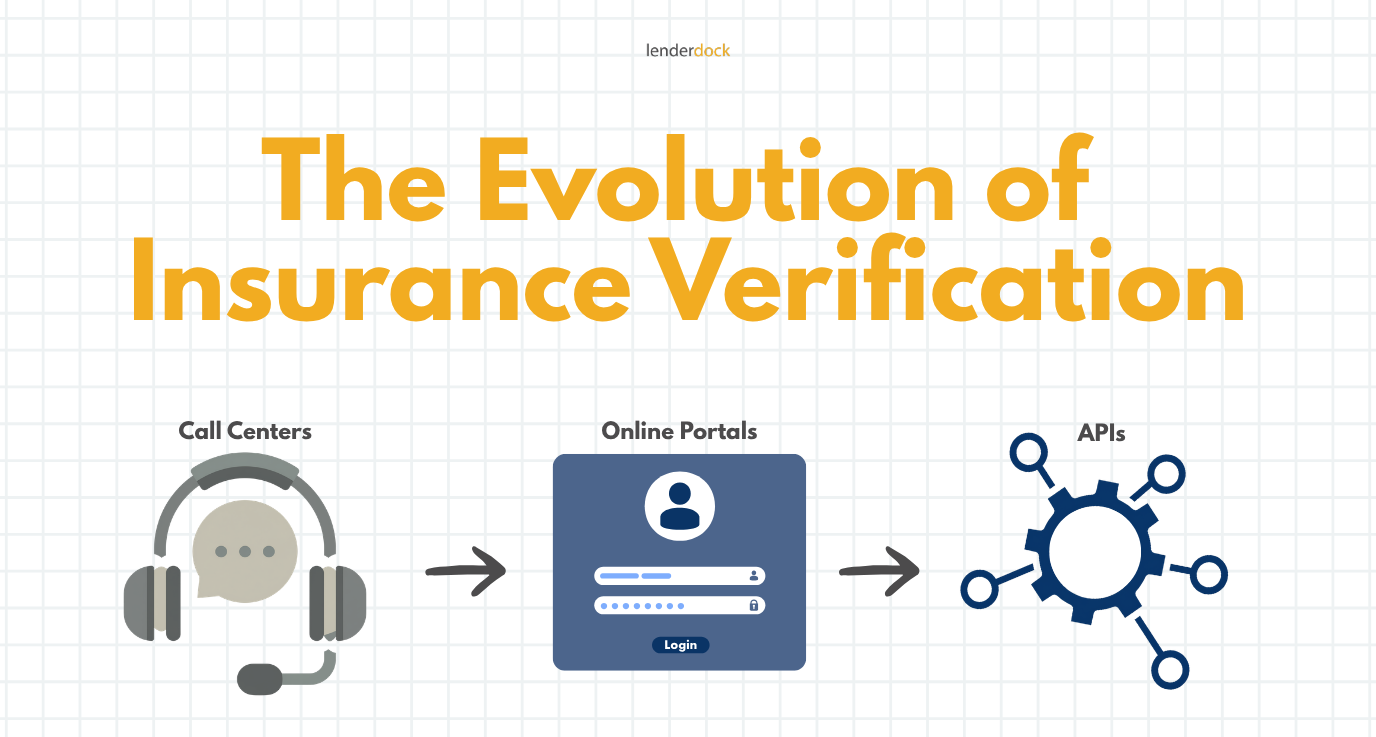
In the earliest version of insurance verification, the person answering the phone actually had to know things. They pulled a physical file, checked handwriting against a ledger, and made a judgment call about whether what…
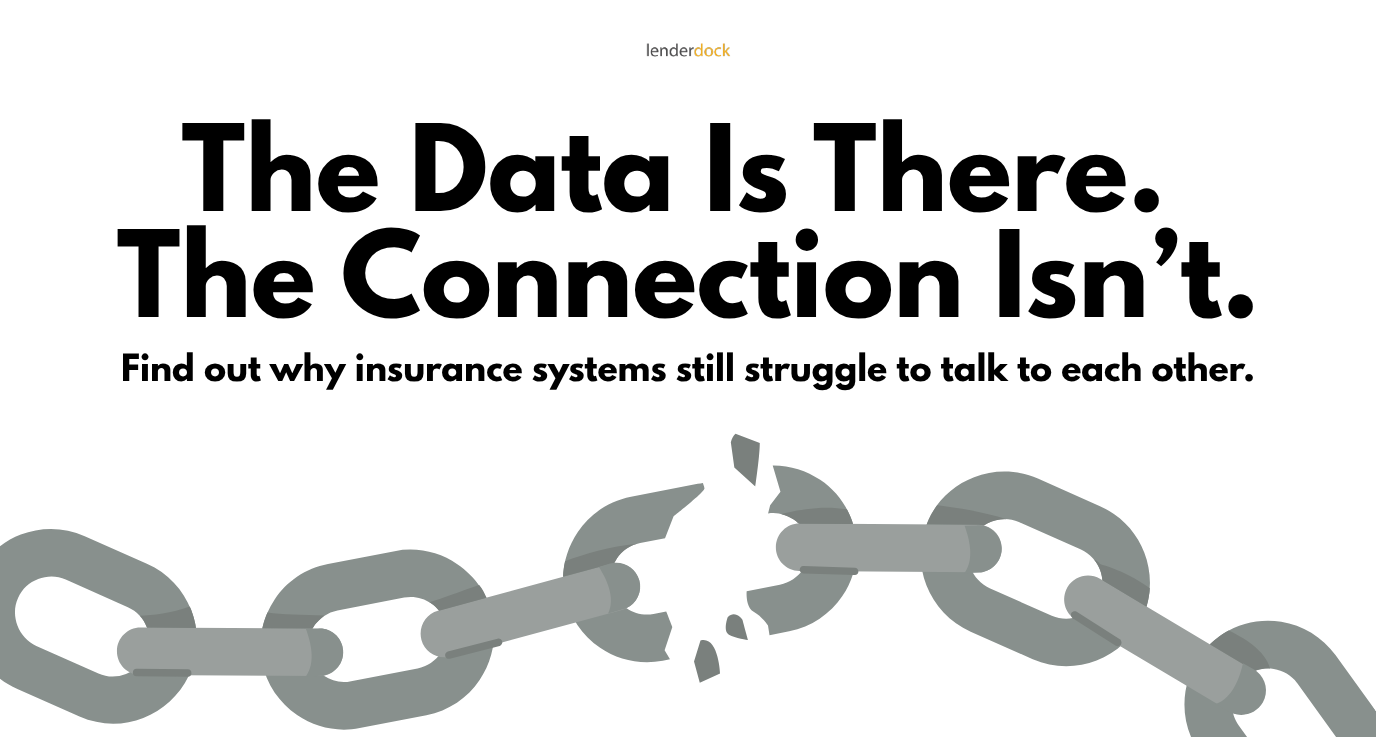
Two insurers can each have perfectly accurate, well-maintained policy databases and still fail to exchange a single piece of usable data between them.
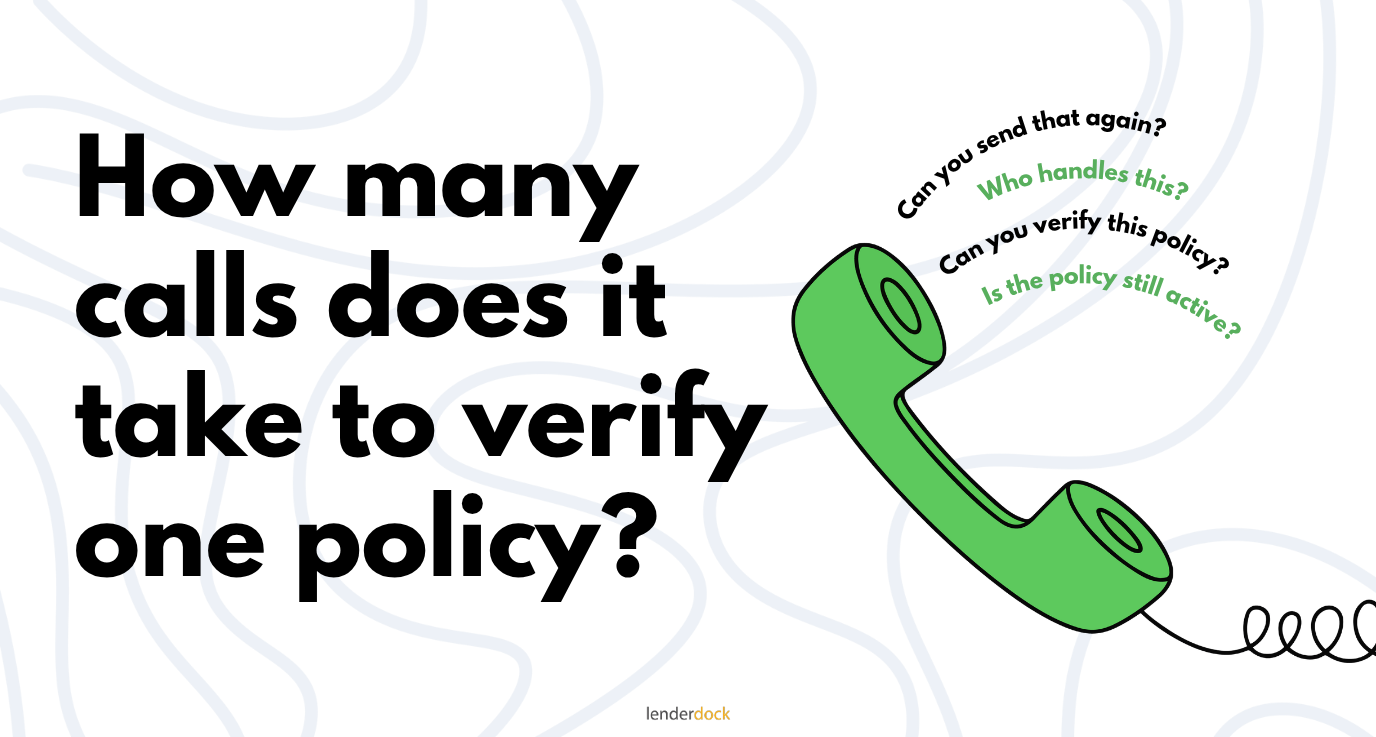
Every single day, insurance workers face a mountain of simple questions. Are they tired of answering the same questions about policy coverage all day long? Yes, they are. When banks or lenders need to check…
A title company closing a home sale needs to confirm the seller’s policy is active before the deal can move. An auto lender needs the same thing before releasing funds on a car loan. A…
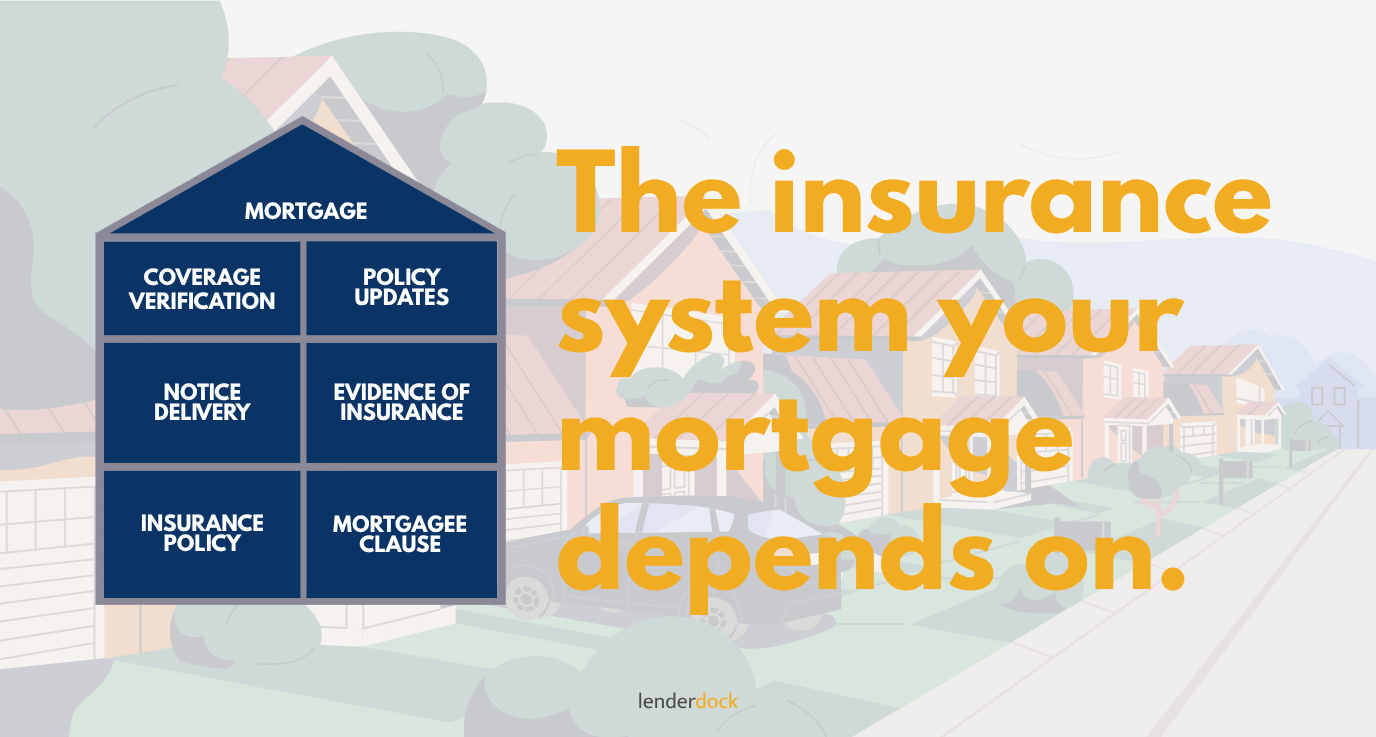
Most people who take out a mortgage never think about insurance as part of the loan itself. It feels adjacent, a separate purchase, something the lender requires but does not really participate in beyond checking…
Mortgagee corrections are a routine part of insurance servicing, but the process behind them is often anything but simple. A lender may find that the mortgagee’s name or address on a policy is out of…


We consectetur adipiscing elit tempor incididunt ut labore. Wondering ipsum dolor sit amet? We consectetur adipiscing ipsum nulla glavrida elit tempor incididunt.